





Posture Corrector for Better Breathing: A Practical Guide for 2026
If you spend hours writing, scrolling, or working at a desk, you know how quietly posture changes your day. Shoulders drift forward, the upper back rounds, and breathing gets smaller without you noticing. A posture corrector for better breathing can help by nudging you back into a taller, more open position so your ribs have room to move. It is not about standing perfectly straight. It is about giving your chest and diaphragm space to do their job with less effort.
Quick Answer
A posture corrector can make breathing feel easier by reducing the rounded, collapsed position that limits rib movement and encourages shallow chest breathing. It does not change lung tissue, but it can remove a mechanical barrier so you can use your natural breathing capacity more comfortably.
Top Picks
If you do not want to read a long guide, start here. These are the most useful “choose and go” options for desk days.
- Best for forward head posture awareness: Upright GO 2
Jump to review - Best for ribcage opening without feeling stiff: Mueller Adjustable Posture Support
Jump to review - Best for shoulder rounding and quick resets: Gaiam Restore Neoprene Posture Corrector
Jump to review - Best for diaphragmatic freedom while sitting: BackJoy SitSmart Posture Plus
Jump to review - Best ergonomic chair upgrade for long writing days: Steelcase Leap
Jump to review - Best breathable mesh chair for staying cool and upright: Herman Miller Aeron
Jump to review
At a Glance
| Pick | Type | Best for | What to keep in mind |
| Upright GO 2 | Wearable trainer | Awareness and habit change | Needs charging and adhesive refills |
| Mueller Adjustable Posture Support | Strap brace | Gentle ribcage opening cue | Keep it light, do not overtighten |
| Gaiam Restore Neoprene Corrector | Soft brace | Shoulder rounding resets | Best in short sessions if it feels warm |
| BackJoy SitSmart Posture Plus | Seat support | Better pelvic position | Not a full ergonomic setup on its own |
| Steelcase Leap | Ergonomic chair | All day adjustability | Setup matters as much as the chair |
| Herman Miller Aeron | Mesh ergonomic chair | Cool, breathable support | Sizing and fit matter |
Affiliate Disclosure
This post may contain affiliate links. If you buy through them, the site may earn a small commission at no extra cost to you. This article is educational and not medical advice.
Editor’s Pick
If your breathing feels tight mainly during sitting, fix sitting first. A seat support or a properly adjusted chair often makes the biggest difference quickly, because it reduces the slow collapse that happens hour after hour.
How We Chose These Options
These picks are based on manufacturer specifications, adjustability, comfort signals, warranty availability, and common user reported patterns from verified reviews. I also prioritized tools that support retraining instead of locking you into a rigid posture. Breathing feels best in a position you can actually hold without tension.

Why Posture Can Change How Breathing Feels
When your head drifts forward and your upper back rounds, the ribcage shape changes. Many people shift into shallower upper chest breathing and start “pulling air” with the neck and shoulder muscles, especially late in the day.
This is not a new idea, but it is becoming easier to document. For example, Kim et al. (2025) reported a meaningful relationship between forward head posture and measures used in pulmonary function testing, with worse posture linked to worse breathing metrics. That does not mean posture is the only factor, but it supports what many desk workers feel in real life.
Studies published in the Journal of Physical Therapy Science have also discussed how rounded upper-back posture can alter chest wall mechanics and encourage overuse of accessory breathing muscles. In plain language, posture can make breathing feel harder than it needs to be.
If you want an authoritative overview of spinal curvature and symptoms, it is worth reading the Mayo Clinic’s overview of kyphosis, and the NHS guidance on kyphosis, just to understand what is normal stiffness versus something that deserves a professional look.
How to Choose a Posture Corrector for Better Breathing
Most people buy the wrong thing because they buy for “straightness” instead of comfort and consistency. Use this checklist and you will make a smarter choice.
Choose reminder over restriction
The best tools are usually the ones that remind you. When a device forces you into a stiff position, your body often fights it. That can increase neck tension and make breathing feel worse.
- Wearable trainers are reminders. They teach awareness.
- Strap braces are support. They can help, but they should never feel like a cage.
Make sure you can take a full inhale
This is the fastest test. Put it on, stand tall, and take a slow inhale through your nose. If you feel restricted, loosen it or skip it. A posture tool should support rib movement, not compress it.
Match the tool to your weak link
- If you forget posture the moment you focus, a wearable reminder is often best.
- If shoulders roll forward when you get tired, a light brace can help in short sessions.
- If your posture collapses mainly while sitting, a seat support or ergonomic chair upgrade usually gives the cleanest win.
Use time limits, not all day wear
A back brace for posture works best like training wheels. Short sessions teach your body what “open and easy” feels like. Wearing it all day can reduce muscle engagement over time.
A solid starting point is 20 to 90 minutes during your slouchiest part of the day, then remove it and do one small movement reset.
Movement Snacks for Long Writing Days
When you write for hours, one workout at night does not undo a day of stillness. What works better is tiny resets that take less than two minutes. I use these between tasks.
Desk chest opener, 30 seconds
Stand up, lace your fingers behind your back, lift your chest gently, and take three slow breaths. Keep your ribs relaxed, not flared.
Seated wall angels, 60 seconds
Sit tall. Bring your arms into a loose “W” shape and slide them upward slowly, then back down. Keep your neck long and your shoulders down.
Thoracic extension with a towel, 90 seconds
Roll a towel into a firm cylinder and place it across your upper back while lying down. Support your head, relax your ribs, and breathe. Move the towel slightly higher and repeat.
The exhale sigh, 20 seconds
Inhale through your nose, then sigh the exhale out audibly and let your shoulders drop. Repeat two or three times. It is surprisingly good at resetting neck tension.
If you want to build a simple breathing habit alongside posture work, link this with your diaphragmatic breathing guide and a short calm-down breathing routine. Posture sets the space, breathing practice teaches your nervous system to use it.
Thoracic Kyphosis Exercises That Often Help
If your upper back is stiff, you can “sit tall” and still feel tight. These thoracic kyphosis exercises focus on extension and upper-back endurance without turning it into a workout.
- Wall angels, slow and controlled
- Towel thoracic extensions with calm breathing
- Doorway chest stretch, gentle and steady
- Chin tucks to reduce forward head posture
Consistency beats intensity here. A little every day is what changes your baseline.
Ergonomic Chair Setup That Helps Breathing
An ergonomic chair for lung health is not about “lungs,” it is about reducing posture collapse that makes your chest feel compressed.
Use this quick setup:
- Feet supported, flat on the floor or a footrest
- Pelvis stable, not rolling back into a tucked position
- Screen high enough that you are not jutting your chin forward
- Arm support so shoulders can relax instead of lifting
- Back support that feels like guidance, not a push
If you spend most of your day seated, a chair upgrade can be one of the highest leverage improvements you make, because it reduces the daily posture debt that builds up.
Product Reviews
Upright GO 2 Smart Posture Trainer
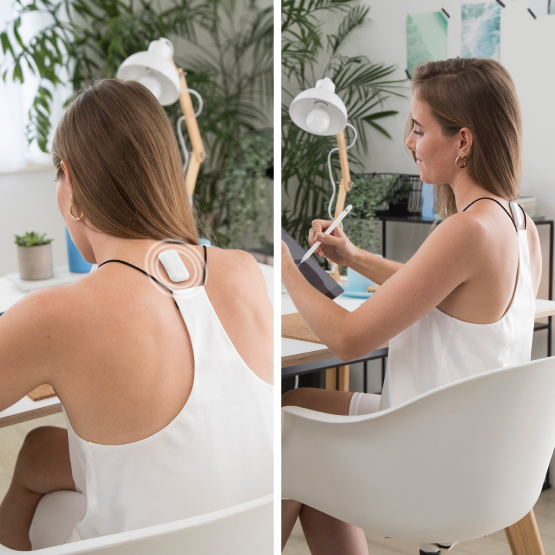
This is a small wearable device that gives gentle vibration feedback when you slouch. It is a strong choice if you want habit change, not bracing.
Why people like it
It catches the slouch you do not notice. That moment of awareness is what makes it useful.
What to keep in mind
- It requires charging and app setup
- It uses adhesives for attachment, so there is a small ongoing refill cost
- If you set reminders too aggressively, you can overcorrect and feel stiff
Best way to use it
Start with short sessions. Ten to twenty minutes a day is enough to build awareness without turning it into a posture punishment device.
Mueller Adjustable Posture Support
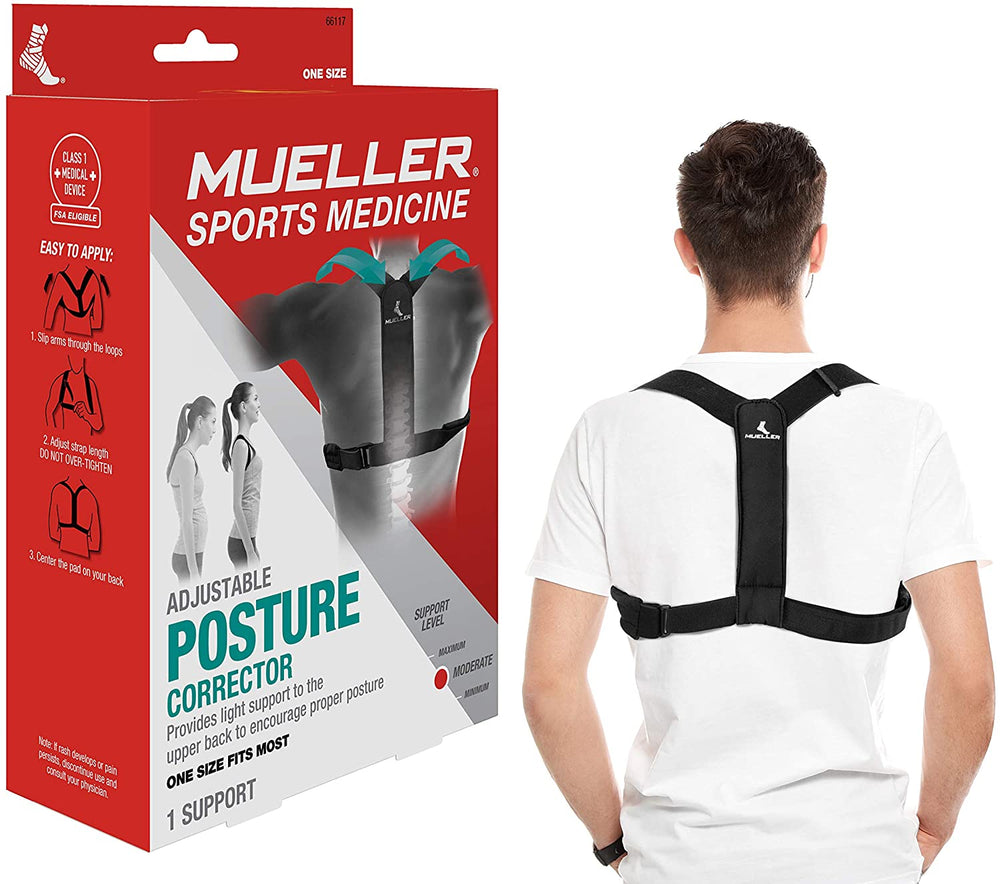
This is a strap-style brace that sits across the upper back and shoulders. It is designed to cue alignment gently.
Why people like it
It is simple, adjustable, and works as a lightweight reminder during desk work.
What to keep in mind
- The most common mistake is overtightening
- Use it in sessions rather than all day, so your muscles still do the work
Best way to use it
Wear it during your slouchiest window, then remove it and do one minute of wall angels or a chest opener.
Gaiam Restore Neoprene Posture Corrector

This is a soft neoprene posture corrector designed for shoulder rounding and mild upper-back support.
Why people like it
It is an easy try-it option and can feel like an instant shoulder reset.
What to keep in mind
- Neoprene can feel warm for some people
- Fit can vary depending on shoulder width and torso length
- Like any brace, it should never restrict a full breath
Best way to use it
Use it for short posture reset sessions. Twenty to forty-five minutes is often enough to get the reminder effect without discomfort.
BackJoy SitSmart Posture Plus

This is a seat support that helps position the pelvis so you naturally sit taller.
Why people like it
It is portable and changes posture without straps or pressure on the chest.
What to keep in mind
- It works best when feet are supported
- It is not a full ergonomic setup on its own
- Some people need a few days to adapt
Best way to use it
Start with one hour a day, then increase if it feels good. Pair it with a standing break once an hour.
Steelcase Leap
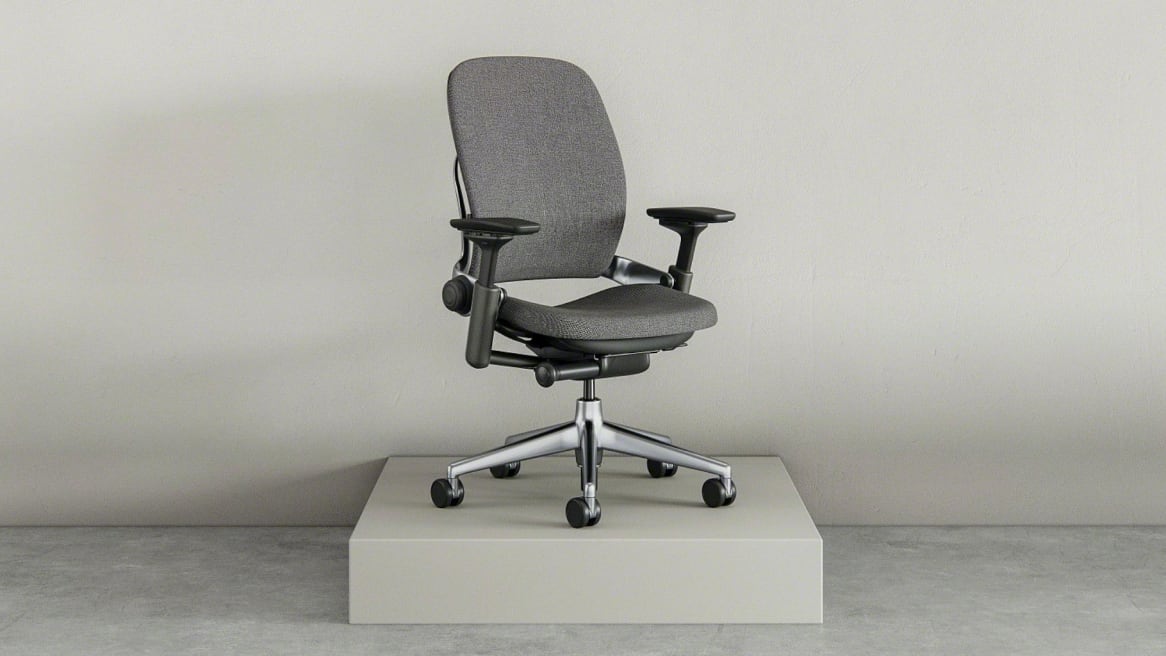
This is a highly adjustable ergonomic chair built for long workdays and frequent posture changes.
Why people like it
It offers a wide range of adjustments, which helps you find a position that supports your spine without forcing it.
What to keep in mind
- A great chair still needs a good setup
- It is a premium purchase, so it makes sense if you sit daily for hours
- Warranty terms can vary by region, so check official coverage where you live
Best way to use it
Set seat height and seat depth first, then adjust armrests so shoulders relax, then tune back support last. Small changes matter.
Herman Miller Aeron
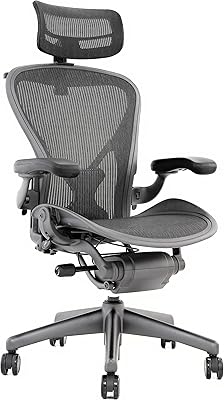
This is a premium mesh chair known for breathability and long-term durability.
Why people like it
Mesh feels cooler, and many people find it easier to stay upright without sinking.
What to keep in mind
- Sizing matters, many models come in different sizes
- Mesh feel is personal, some people prefer cushion
- As with any chair, setup matters more than brand
Best way to use it
Get the correct size, then adjust arm height and seat height so you are not reaching or shrugging.
Common Mistakes That Block Progress
If you want posture tools to actually help, avoid these patterns:
- Wearing a brace so tight that your inhale gets smaller
- Wearing a brace all day and skipping mobility work
- Buying a premium chair and never setting it up properly
- Doing posture work but keeping your screen too low and your chin forward
- Thinking the tool will replace movement and strength
FAQs
Can a posture tool improve oxygen levels?
It does not change lung tissue. It can improve how efficiently you use your existing capacity by removing a posture barrier that compresses the ribcage.
How long should I use a brace each day?
Start with short sessions. Many people do well with twenty to ninety minutes a day, focused on the time they slump most.
Is it safe to use a posture corrector if I have pain?
If you have sharp pain, numbness, tingling, or symptoms that radiate into an arm, get professional guidance before using braces or pushing exercises.
What is the fastest upgrade for desk breathing?
Usually the sitting setup. If your pelvis is stable and your screen is at the right height, breathing often feels easier immediately because you stop collapsing forward.
Final Verdict
A posture corrector for better breathing is most useful as a gentle reminder that helps you stop collapsing into your chest during desk hours. Choose a tool that allows full, comfortable rib movement, use it in short sessions, and pair it with simple mobility breaks. When posture stops stealing space from your ribs, breathing often feels easier without you forcing it.
References
Kim et al. (2025), forward head posture and pulmonary function association (PMC12467365)
Journal of Physical Therapy Science, posture mechanics and breathing patterns
Mayo Clinic, kyphosis overview
NHS, kyphosis guidance
Manufacturer product pages and warranty documentation for the products listed
About The Author