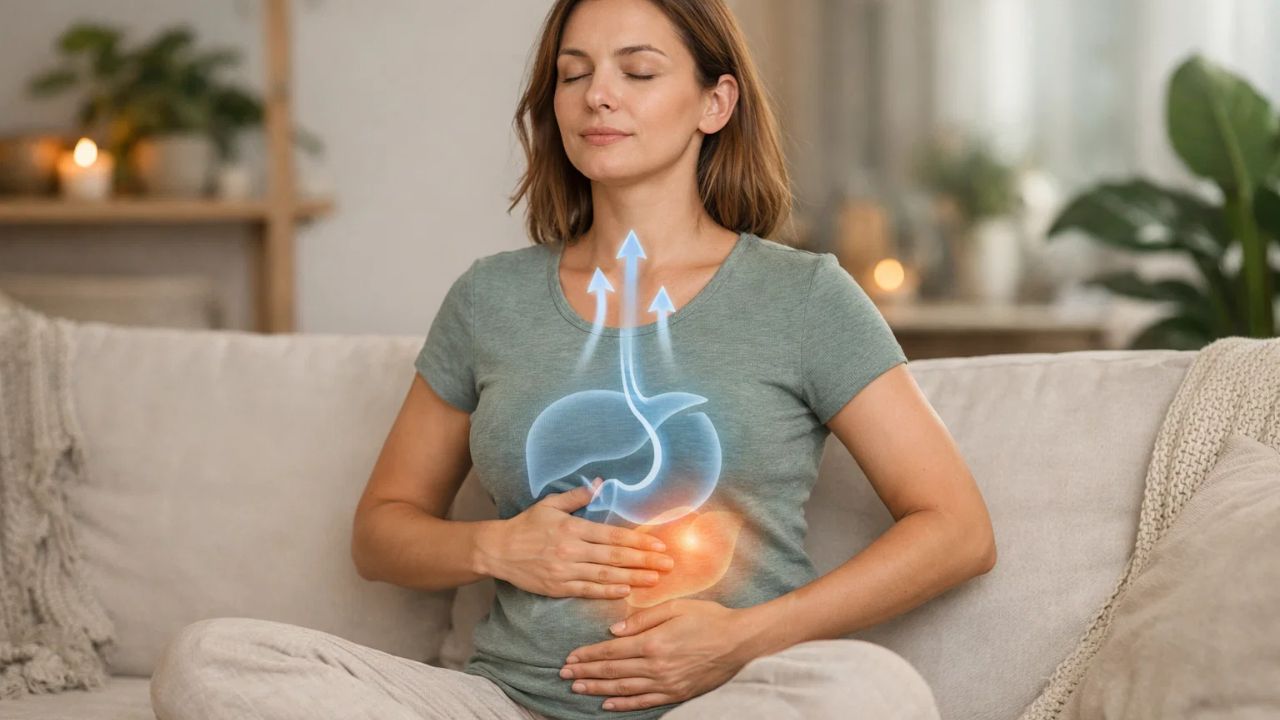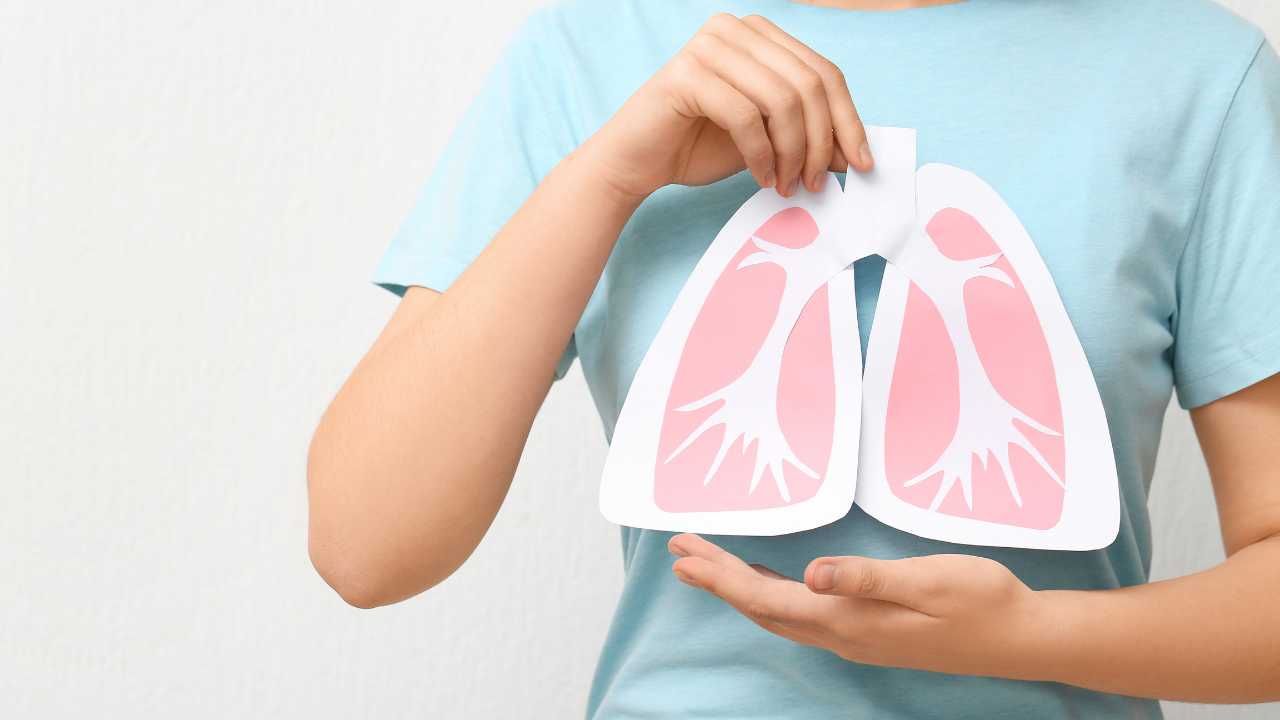
As someone who survived lung cancer and a lobectomy (the removal of my right lower lobe), I know exactly what it feels like to suddenly realize your lungs are a high-stakes organ. I used to take breathing for granted until I couldn’t. Whether you’re quitting vaping to prevent future illness or because you’re already feeling that tightness, I’m sharing a grounded roadmap based on reputable sources and my own experience with lung rehabilitation.
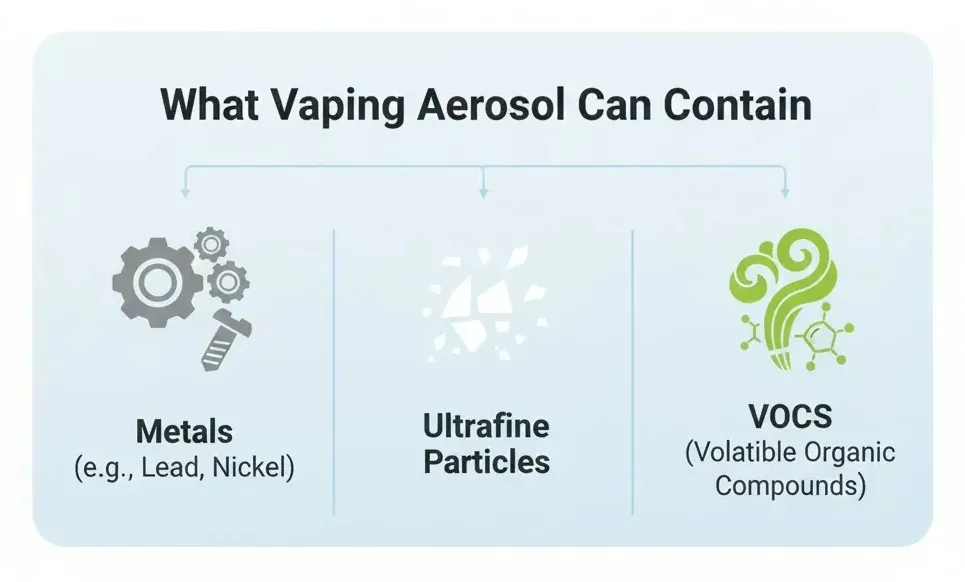
If you’re worried about your lungs after vaping, you’re not alone. This guide to lung health for vapers is designed to give you a clear, calm plan: what vaping aerosol can contain, what recovery can realistically look like after you quit, which breathing techniques actually help, and when symptoms deserve medical attention.
Transparency Note: If you buy through our links, we may earn a small commission at no extra cost to you. As a survivor, I only recommend products I genuinely believe can support lung-friendly living.
Medical disclaimer: This article is for educational purposes and does not replace medical advice.
Quick Answer
The most effective “lung reset” after vaping is simple: stop exposure, avoid dual use, and give your airways time to calm down. Support your recovery with gentle breathing exercises (especially pursed-lip and diaphragmatic breathing), clean indoor air, hydration, and a structured quit plan that includes behavioral support. In my recovery, I learned that small, consistent changes are more effective than “miracle” detoxes. For red-flag symptoms (worsening shortness of breath, chest pain, coughing blood, high fever), seek medical care promptly.
At a Glance
- Vaping aerosol is not “water vapor”; it can contain nicotine, heavy metals, volatile compounds, and ultrafineparticles that reach deep into the lungs.
- After quitting, expect changes in mucus and cough as your lungs “wake up.”
- Breathing tools like pursed-lip breathing were my lifeline during recovery—they help you regain control when you feel short of breath.
- “Popcorn lung” (bronchiolitis obliterans) is rare but serious; the nickname comes from occupational exposure to certain flavoring chemicals (not everyday popcorn).
- “Detox” supplements are mostly marketing. Your body’s best “detox” is clean air, hydration, and time.
Why vaping can irritate your lungs even if it’s “not smoke”
Public health agencies are clear on one point: no tobacco product, including e-cigarettes, is considered safe. Many vapes deliver nicotine (highly addictive), and the aerosol may include substances you don’t want in delicate lung tissue.
When I was in the hospital, my doctors explained a concept that changed how I think about my health: some flavorings are safe to eat but not necessarily safe to inhale. Your lungs don’t have a digestive system to filter chemicals. That’s why concerns around certain additives and inhaled irritants matter.
Still dealing with chest congestion or mucus? See How to Clear Phlegm From Lungs After Surgery: Active Cycle of Breathing.
The dual-use trap (vaping + smoking)
If you vape and still smoke sometimes, you’re doubling your exposure. The CDC warns that dual use is not a reliable harm reduction strategy. As a survivor, my advice is simple: commit to one goal—keeping your airway as clear as possible.
Lung Health for Vapers: What recovery can look like after you quit
What Recovery Looks Like (The Timeline)
Scientists are still learning the long-term effects, but many people notice a pattern similar to what I experienced during my post-surgery rehab:
- Days 1–7: Withdrawal can spike anxiety. Your cough might actually increase as your lungs begin clearing out debris.
- Weeks 2–4: Breathing often feels less “scratchy.” This is when I recommend focusing on indoor air quality.
- Months 2–3+: Stamina improves. Consistent, gentle movement is a huge lever here.
If symptoms are getting worse instead of slowly trending better—especially wheezing, breathlessness at rest, chest pain, fever, or coughing blood—don’t “wait it out.” That’s a clinician moment.
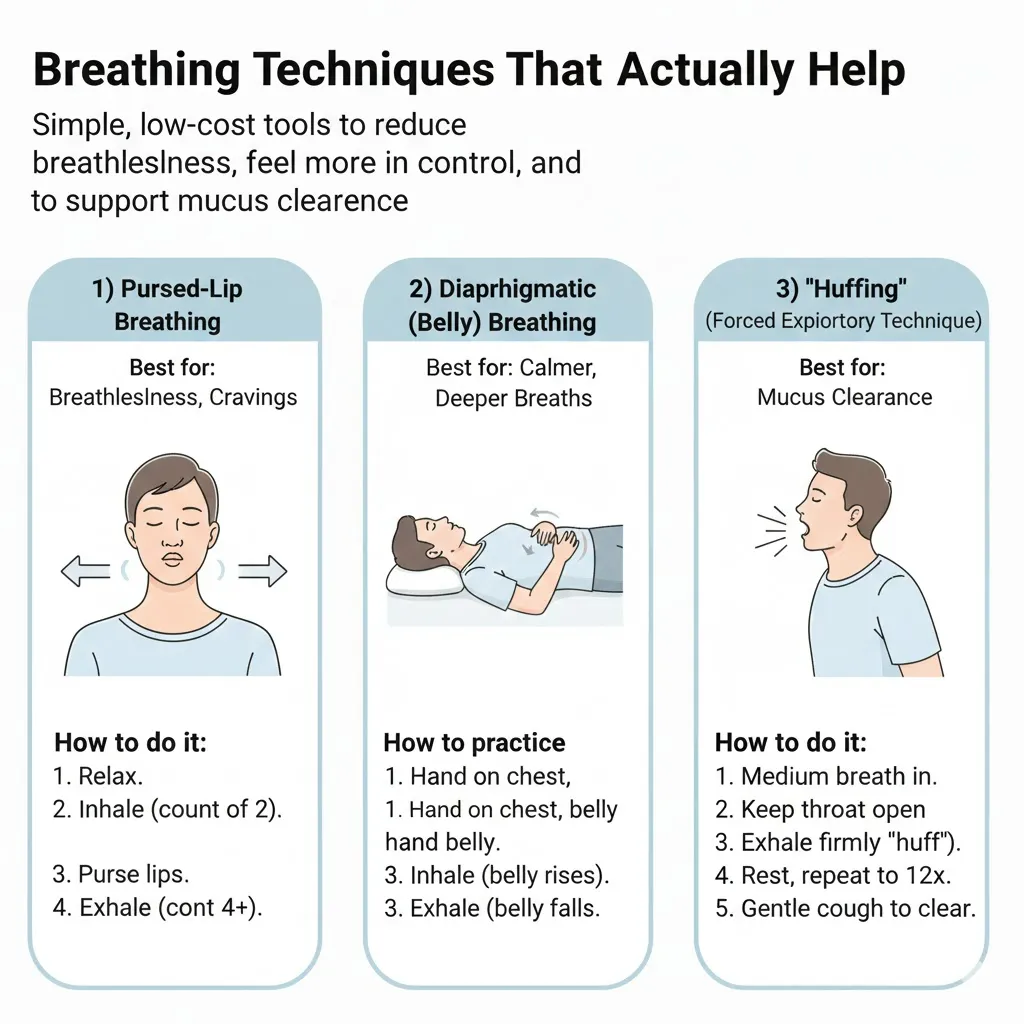
Breathing techniques that actually help (and how to do them)
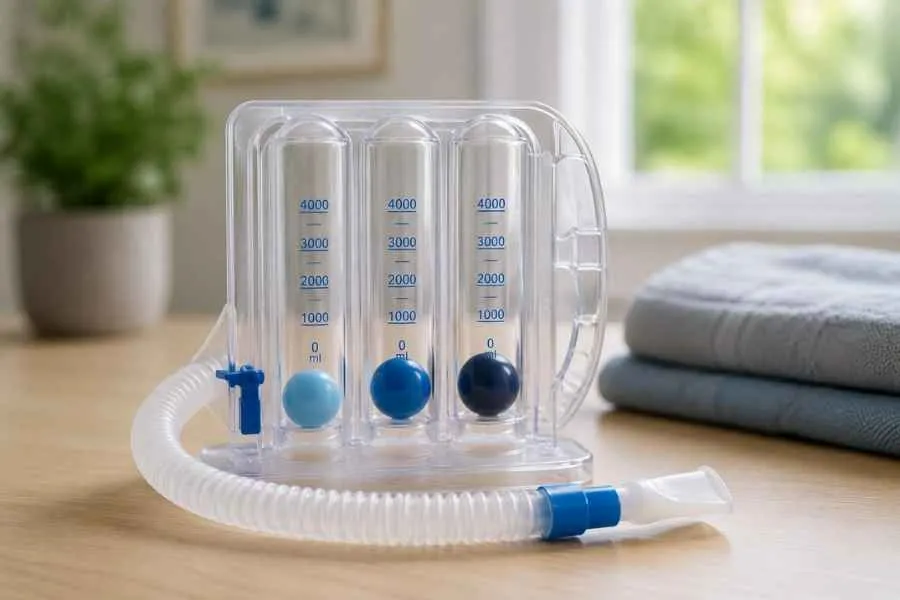
These are the tools I used daily after my lobectomy. They aren’t just for “relaxation”—they help your lungs move air more efficiently and can reduce the panic that often comes with “air hunger.”
1) Pursed-Lip Breathing (Best for breathlessness)
This keeps the airways open longer. Whenever I felt air hunger during recovery, this was my go-to.
- Inhale through your nose (count of 2).
- Purse your lips like you’re going to whistle.
- Exhale slowly (count of 4).
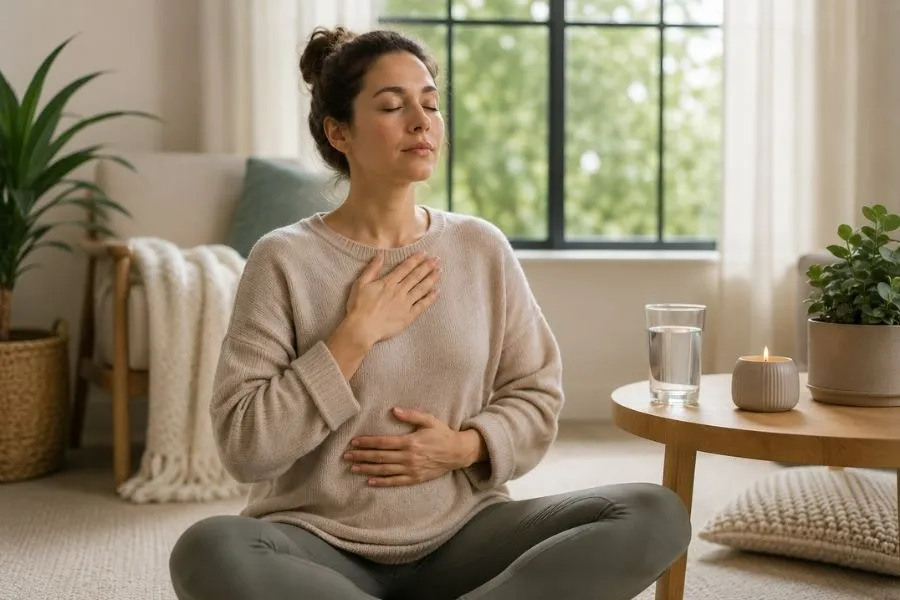
2) Diaphragmatic (Belly) Breathing
Vaping can train you into shallow “chest breaths.” This retrains your diaphragm.
- Place one hand on your chest and one on your belly.
- Inhale so the belly hand rises more than the chest hand.
- Exhale slowly (you can combine with a pursed-lip exhale).
3) “Huffing” for mucus clearance
After surgery, I wasn’t allowed to cough forcefully because it was too painful. My therapists taught me “huffing” instead. It’s gentler on your throat and chest.
- Exhale firmly through an open mouth (like you’re steaming up a mirror).
- Repeat 2–3 times, then do one gentle cough if needed.
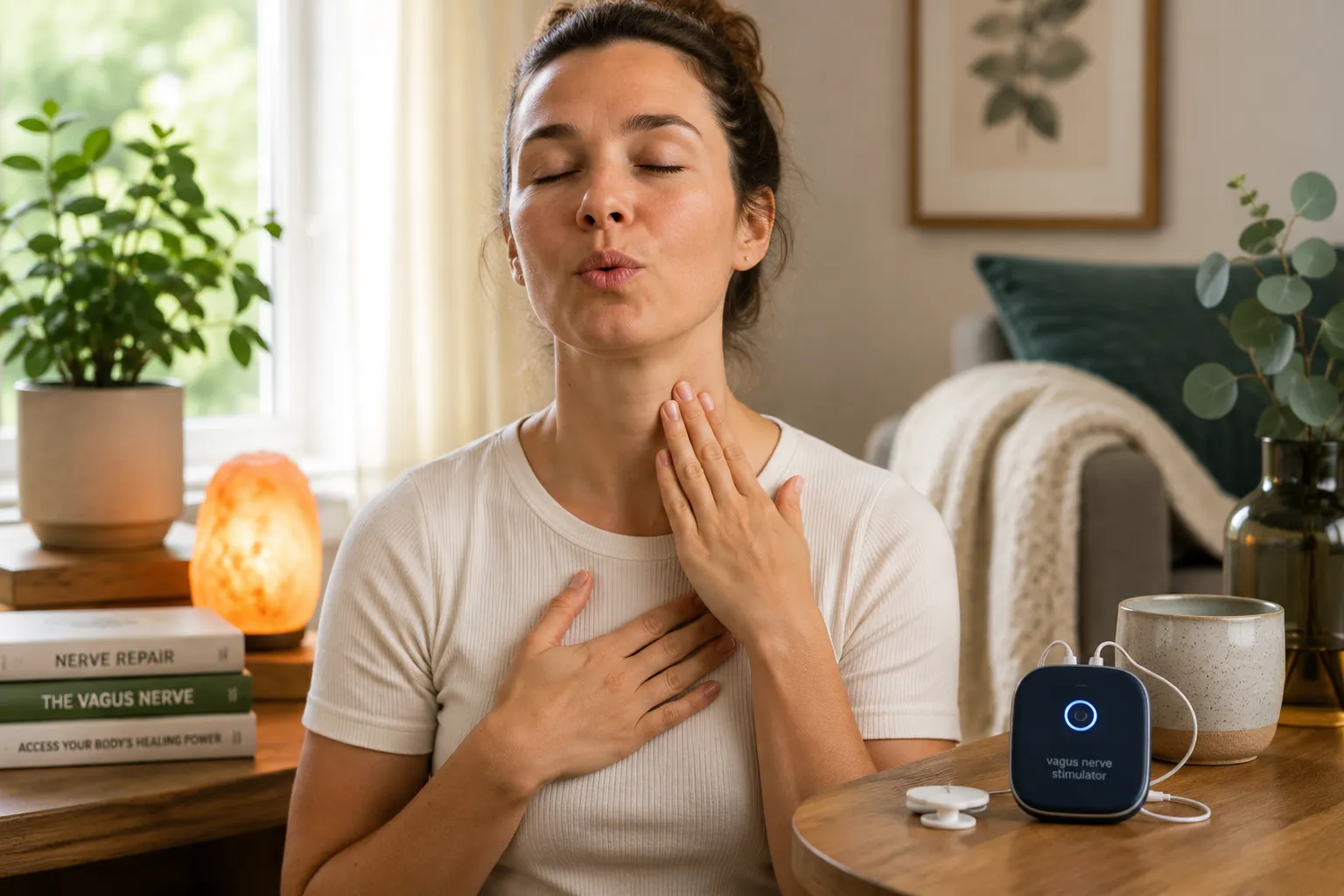
Quitting vaping can trigger anxiety and tight breathing. These simple breathing techniques for anxiety can helpque.
Popcorn Lung & EVALI: What You Need to Know
During my diagnosis, I spent hours researching lung diseases. “Popcorn lung” (bronchiolitis obliterans) and EVALI (linked to vitamin E acetate in some THC products) are two of the biggest fears for vapers. They’re rare, but serious.
The takeaway: avoid informal/modified vape liquids. Your lungs are too precious for mystery ingredients.
Why it’s called popcorn lung
The term became widely known after clusters of severe bronchiolitis obliterans were identified in workers at microwave-popcorn plants, where inhalation exposure to butter-flavoring chemicals (including diacetyl) was strongly suspected and studied.
Can vaping cause it?
This is where nuance matters:
- Public health guidance notes that some e-cigarette flavorings (including diacetyl) raise concern in inhalation settings.
- But bronchiolitis obliterans is still considered rare, and most people who vape will not develop it.
Popcorn lung symptoms people search for
If you’re worried, look for patterns—not one random bad day:
- Persistent dry cough that doesn’t improve
- Shortness of breath out of proportion to your fitness
- Wheezing that keeps returning
- Unusual fatigue with exertion
These symptoms overlap with asthma, bronchitis, reflux, and anxiety-breathing. The key is persistence and progression—then medical evaluation matters.
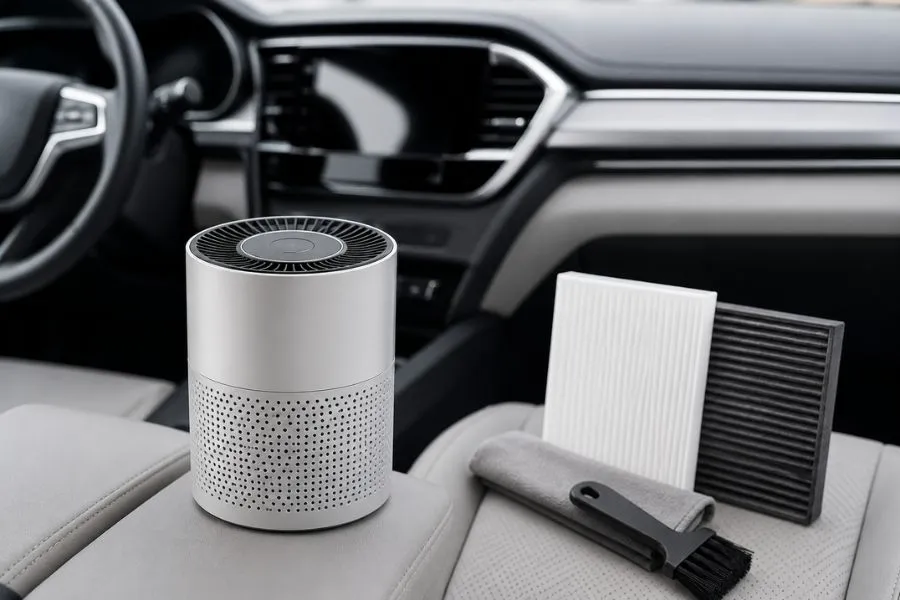
Clean air speeds lung healing. See the Best Large Room Air Purifier Buy: High-CADR Guide 2026
EVALI: the 2019–2020 “wake-up call” about inhalation risks
EVALI (e-cigarette or vaping product use–associated lung injury) is not the same as popcorn lung—but it matters because it showed how fast an inhaled additive can cause serious harm. Major health agencies and peer-reviewed summaries linked the outbreak strongly to vitamin E acetate used in some THC vaping products.
Practical takeaway: avoid informal/unknown vape liquids and “modified” products, and treat your lungs as a high-stakes organ—because they are.
Heavy Metals and “Detox”: My Honest Perspective
You’ll see many “lung detox” supplements online. As a lung cancer survivor who has been under the care of pulmonologists and respiratory therapists, I want to be honest: there is no pill that reliably “scrubs” heavy metals from your lungs.
The only evidence-aligned “detox” is:
- Stop exposure: quit vaping (and avoid dual use).
- Hydration: helps keep mucus thinner and easier to clear.
- Clean air: I turned my home into a “lung rehab” with HEPA filtration to reduce the inflammatory load while the body recalibrates.
Nicotine replacement therapy (NRT) and other quit supports (without judgment)
If nicotine is the hook, you want a plan that doesn’t rely on willpower alone.
What to use first (practical ladder)
- Behavioral support + a clear quit plan (triggers, coping scripts, an emergency plan). Smokefree has dedicated quit-vaping support.
- NRT options (patch, gum, lozenge) can reduce withdrawal while you break the hand-to-mouth ritual.
- Clinician options (for some people): prescription medications and structured counseling.
A note on e-cigarettes for quitting nicotine
Cochrane reviews suggest nicotine e-cigarettes can increase quit rates compared with traditional NRT for people quitting smoking. But if your goal is to quit vaping specifically, switching devices may keep the nicotine loop alive. Some people use a step-down approach—it just helps to be honest about whether you’re reducing dependence or simply changing the delivery.
Your home as lung rehab (small changes, big payoff)
Recovery isn’t only “inside your lungs.” It’s also the air you breathe most of the day.
Start simple:
- Ventilate daily
- Reduce fragrance aerosols and harsh cleaning sprays
- Control dampness/mold triggers
- Consider HEPA filtration in the bedroom + main living area
This is the perfect place to connect to your “Air & Environment” cluster:
- Indoor Air Purification
- Mold & Allergen Control
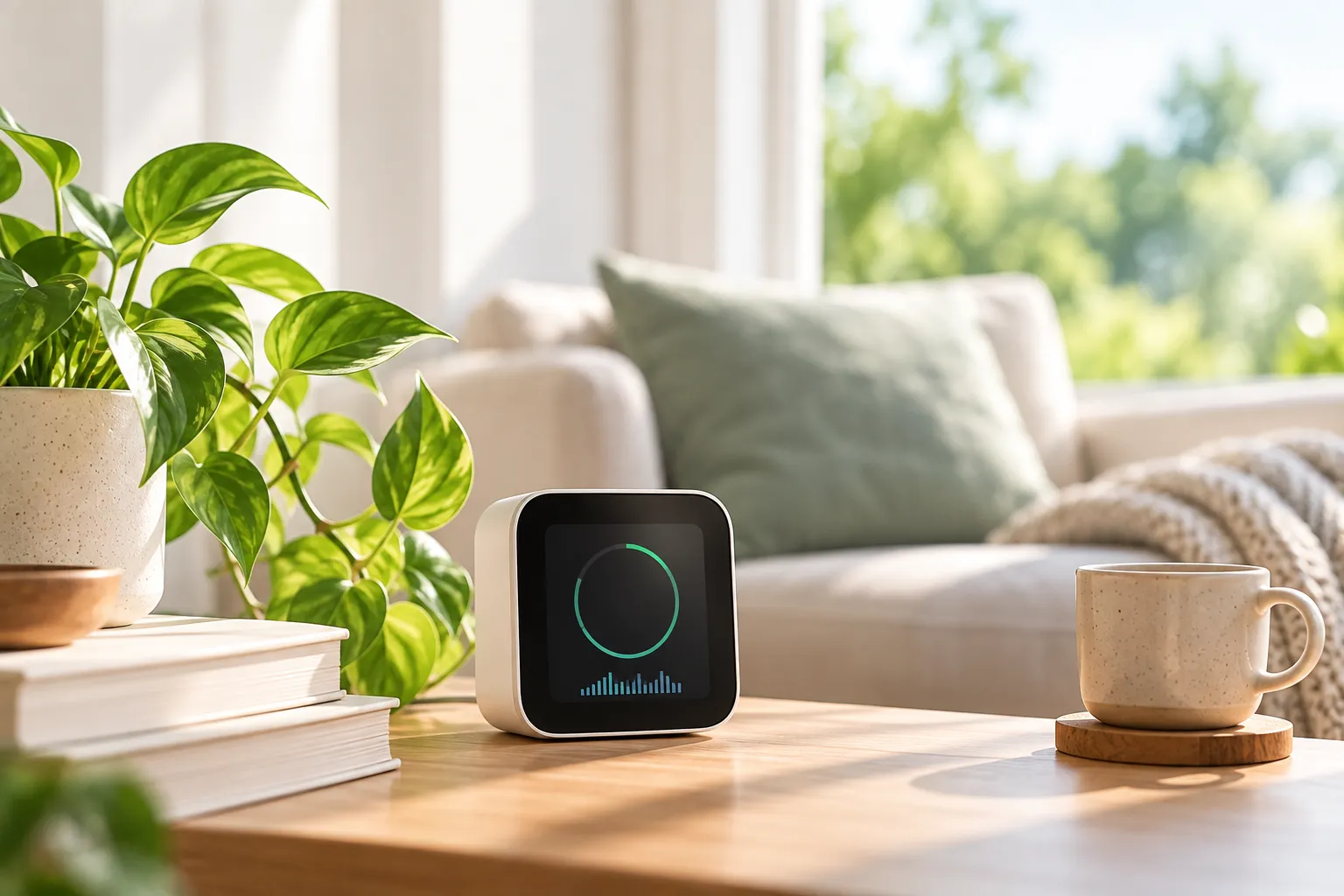
- Air Quality Monitoring
When to see a clinician
Get medical advice urgently if you have:
- Shortness of breath at rest, worsening rapidly
- Chest pain, fainting, blue lips, confusion
- Coughing blood
- High fever plus breathing difficulty
Book a non-urgent appointment if:
- Persistent cough/wheeze lasting longer than 3–4 weeks after quitting
- Exercise tolerance keeps declining
- Night sweats, unexplained weight loss, or ongoing chest tightness
I am only here today because my cancer was caught early. Please don’t “wait it out” if something feels wrong and persists.
FAQs
How long does it take for lungs to heal after quitting vaping?
There’s no single timeline. Many people feel meaningful changes within weeks, but longer histories and higher exposure can take months. The trend line matters: slowly better is common; progressively worse deserves evaluation.
Is coughing after quitting vaping normal?
It can be. Airway irritation patterns can change after you stop exposure. If cough is severe, worsening, or paired with fever, chest pain, or shortness of breath at rest, get checked.
What are popcorn lung symptoms?
Persistent dry cough, shortness of breath (especially with exertion), wheeze, and fatigue are commonly described. It’s rare, and symptoms overlap with other conditions—so persistent patterns should be assessed by a clinician.
Are flavored vapes more harmful?
Some flavorings raise concern because inhalation safety isn’t the same as ingestion safety. If you’re quitting, reducing airway irritants is the most lung-friendly direction.
What breathing exercise should I start with today?
Pursed-lip breathing is the simplest, fastest win—especially for breathlessness.
Conclusion
Recovery isn’t just about what you stop doing (vaping); it’s about what you start doing to support the body that carries you. If you want a grounded plan, focus on what moves the needle: stop exposure, avoid dual use, support your nervous system during cravings, and use simple breathing tools daily. Add clean indoor air and gentle movement, and get medical guidance if symptoms are persistent or escalating. That’s the core of lung health for vapers—simple, consistent steps that give your lungs the best conditions to recover.
References
- CDC – Health Effects of Vaping
- CDC – Vaping and Quitting
- Smokefree.gov – Quit Vaping resources
- Kreiss et al., NEJM (2002) – Bronchiolitis obliterans in microwave-popcorn workers
- Cochrane Review – Electronic cigarettes for smoking cessation (updated)
- American Lung Association – Breathing exercises (pursed-lip breathing)
- NHS – Active Cycle of Breathing / Huff technique
- CDC archive/MMWR on EVALI and vitamin E acetate