
Living with asthma means the air inside your home isn’t just “nice to have” – it’s a daily factor in how easily you breathe. A good HEPA air purifier can reduce airborne triggers like dust, pet dander, pollen and smoke, and when used together with your medication and asthma plan, that can mean calmer lungs and better sleep.
This guide explains what HEPA really means, the difference between true HEPA vs H13 filter, how to read a HEPA air cleaner review, and how to choose the best HEPA filter for asthma in your home.
Quick answer: best HEPA filter for asthma
The best HEPA filter for asthma is a certified H13 (or higher) HEPA filter in a fully sealed, ozone-free air purifierthat:
- Is correctly sized for the room (aim for 4–5+ air changes per hour, based on CADR and room size).
- Combines HEPA + activated carbon, so you reduce both particles and irritating gases/odors.
- Has independent testing or clear standards (e.g., EN1822 H13/H14 in Europe, or “99.97% at 0.3 microns” from a reputable manufacturer).
- Is quiet enough on the setting that actually delivers good filtration, so you can run it day and night.
Use it in the rooms where the person with asthma sleeps and spends the most time, keep doors and windows mostly closed in that zone, and replace filters on schedule.
Important medical note: An air purifier is a supportive tool – it does not replace your inhalers or prescribed treatment. Always follow your asthma action plan and talk to your doctor before making changes to medication.

How HEPA filters help when you have asthma
What does “HEPA” actually mean?
HEPA stands for High Efficiency Particulate Air. In practice, it means:
- A true HEPA filter is designed to capture at least 99.95–99.97% of tiny particles around 0.3 microns in size (depending on the standard used).
- 0.3 microns is often called the “most penetrating particle size” – if a filter can grab those, it usually performs even better on both slightly smaller and larger particles.
On a live site, you can link phrases like “research published in the National Library of Medicine on HEPA air cleaners and asthma” to your chosen scientific source so readers (and Google) can see where the numbers come from.
Why particles matter for asthma
Many asthma triggers ride on airborne particles that HEPA filters are good at capturing:
- House dust and dust mites
- Pet dander (from cats, dogs, etc.) – here you can internally link to a guide on reducing pet allergens at home
- Pollen
- Mold spores
- Smoke and fine particulate pollution (PM2.5)
When you reduce these in the air, many people with asthma report fewer symptoms, less night-time coughing, and fewer flare-ups – especially when they also control triggers in bedding, carpeting and cleaning routines.
True HEPA vs H13 filter: what’s the difference?
“True HEPA”
“True HEPA” started as a way to distinguish real HEPA filters from cheaper “HEPA-type” or “HEPA-like” filters that don’t meet the strict standards.
Today, the term “True HEPA” is often used as a marketing phrase. Some products labelled “True HEPA” really do meet the high standard; others are vague. That’s why numbers and certifications matter more than slogans.
H13 and H14 according to EN1822
In Europe, the EN1822 standard defines:
- H13: at least 99.95% of 0.3 µm particles captured
- H14: at least 99.995% of 0.3 µm particles captured
For a typical home with asthma, a well-designed H13 HEPA filter in a good air purifier is already a very strong level of protection.
So which is better for asthma – true HEPA or H13?
Instead of thinking true HEPA vs H13 filter as a fight between labels, think in this order:
- Is there a real standard behind it?
- Look for “H13” or “H14” (EN1822), or a clearly stated “99.97% at 0.3 microns” from a trusted brand.
- Is the purifier sealed properly?
- Air should be forced through the filter, not leaking around the edges.
- Is the airflow strong enough for your room?
- A slightly lower-grade HEPA with high airflow can beat a perfect filter with poor airflow in real rooms.
For asthma, the combination of good HEPA + enough clean air per hour is what counts most.
Want to strengthen your lungs beyond air filtration? Learn – Understanding Asthma & Lung Function
Key features to look for in the best HEPA filter for asthma
Use this as your mental checklist when reading any HEPA air cleaner review.
1. Certified, high-efficiency filtration
- Clear wording like “H13 HEPA”, “H14 HEPA”, or “99.97% at 0.3 microns”.
- Avoid vague phrases like “HEPA-like,” “HEPA-style,” or “99% efficiency” with no particle size mentioned.
On the site, you can link phrases like “how HEPA filters are tested” to your own explainer post.
2. Correct room size and CADR
CADR (Clean Air Delivery Rate) tells you how much clean air the purifier can deliver.
- Check the manufacturer’s recommended room size.
- Aim for around 4–5 air changes per hour (ACH) in the room where the asthma sufferer spends the most time (often the bedroom).
- A mini desktop purifier will not adequately clean a large open-plan living room, no matter how good the filter is.
3. Sealed design
Look for features such as:
- Fully sealed filter compartments
- Rubber gaskets or airtight frames
- Marketing phrases like “zero air bypass” or “sealed filtration system”
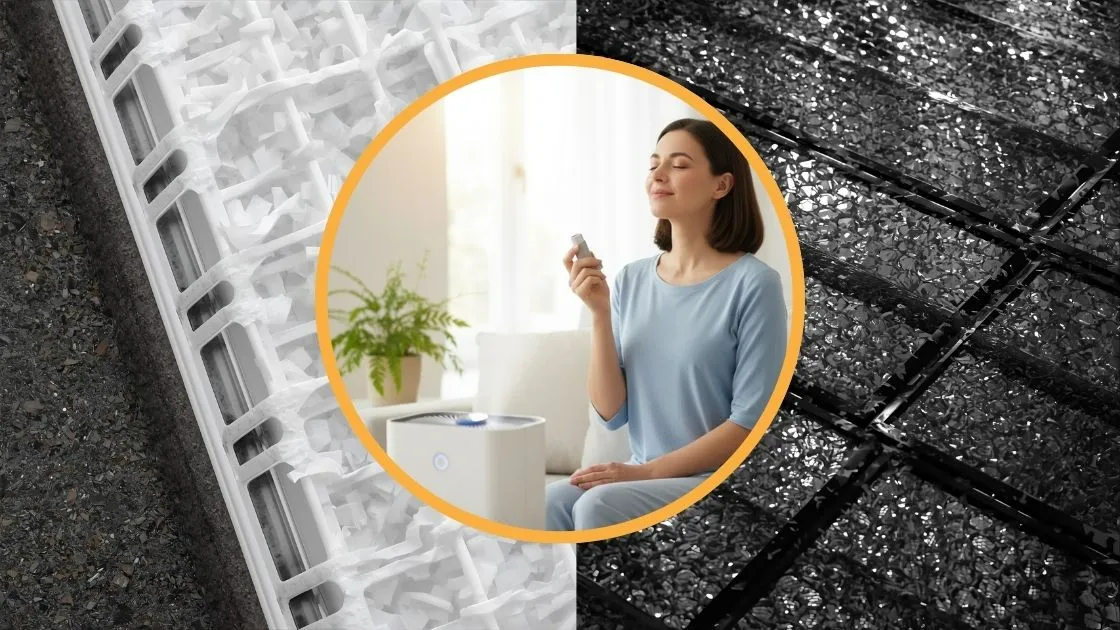
4. Activated carbon for gases and odors
For many people with asthma, irritating gases and smells are just as problematic as particles.
Choose a purifier that combines:
- HEPA for particles
- Activated carbon (or similar adsorbent) for:
- VOCs (volatile organic compounds)
- Traffic or wildfire smoke
- Strong cooking smells and household chemicals
You can internally link to content on indoor VOCs and lung health from this section.
5. Noise levels you can live with
A purifier that’s too loud at effective settings will simply be turned off.
- Check dB(A) levels for each fan speed.
- Look for “night mode” or “sleep mode” and make sure it still delivers decent airflow.
6. Ozone-free operation
Avoid devices that rely on ozone generation as a cleaning mechanism. Ozone is a known lung irritant and can worsen asthma symptoms.
Look for:
- “Ozone-free” in the specs
- No “ozone generator” or “super ionizer” as the main selling point
7. Running costs and filter replacement
- Check the price and lifetime of replacement HEPA and carbon filters.
- Look for a filter change indicator, which makes it easier to keep performance high.
Recovering from lung surgery or severe respiratory illness? These Best Air Purifier for Post-Lobectomy Lung Recovery
Examples of HEPA air cleaners for asthma homes (mini review)
These examples are here so you can see how the above principles look in real products. Always check current models, specs and availability in your region before buying.
1. IQAir HealthPro Plus – very high filtration for serious asthma/allergies
- Filtration: IQAir’s “HyperHEPA” technology, with filtration claims down to ultrafine particles.
- Strengths:
- Excellent particle filtration for fine pollution, dust, and allergens.
- Robust gas/odor filter stage for VOCs and smoke.
- Best for:
- Severe asthma or multiple allergies, where you want the strongest possible filtration and are comfortable with a premium price.
A soft CTA you can use near this section:
“Once you know your room size and triggers, compare high-performance HEPA purifiers like IQAir models on specialist retailers such as Sylvane or a trusted local air-quality store.”
2. Coway Airmega 400 – high CADR for larger rooms
- Filtration: Pre-filter + activated carbon + high-efficiency HEPA.
- Strengths:
- Strong airflow and CADR for bigger spaces.
- Real-time air-quality indicator and auto mode that boosts power when needed.
- Best for:
- Living rooms, family rooms or open-plan spaces where you want smart controls and high coverage.
You can internally link “large-room air purifiers for asthma” to a dedicated comparison article.
Struggling with thick mucus and inflammation? See how NAC Supplement Benefits for Lungs: Best NAC Brand for Mucus, N-Acetyl Cysteine Dosage for COPD & NAC vs Glutathione
3. Blueair Blue Pure 211i Max / 511 – quiet and simple for bedrooms
- Filtration: Blueair’s combination of mechanical and electrostatic filtration (HEPASilent®-style) designed to reach HEPA-level performance while remaining quiet.
- Strengths:
- Very quiet on low and sleep modes – ideal for night-time use in bedrooms.
- Simple design and easy filter changes.
- Best for:
- Bedrooms, kids’ rooms and home offices where noise and simplicity are top priorities.
Here, a call to action could be:
“If night-time noise is your biggest concern, look for HEPA purifiers specifically tested for low noise levels in bedroom settings before you buy.”
How to use a HEPA air purifier so it actually helps
Even the best HEPA filter for asthma won’t perform if the device is used badly.
- Run it continuously in key rooms
- Aim to keep the purifier running whenever the room is occupied, especially in bedrooms.
- Place it correctly
- Give the unit some space (not jammed into a corner).
- Avoid blocking the intake or outlet with furniture or curtains.
- Place it where the airflow can circulate (not under a shelf or behind a sofa).
- Keep doors and windows mostly closed in the “treated” zone
- You don’t need a hermetically sealed room, but a wide-open window next to the purifier will reduce its effectiveness.
- Combine with good cleaning habits
- Use a vacuum with its own HEPA filter to remove settled dust from floors and textiles.
- Wash bedding weekly at high temperatures to reduce dust mites.
- Here you can link internally to a “dust-mite control for asthma” guide.
- Change filters on schedule
- A dirty HEPA filter restricts airflow and lowers real-world performance.
- Follow the manufacturer’s time or usage indicators – don’t wait until the air smells dusty again.
A traditional herbal ally for asthma and congestion: Learn how Thyme for the Lungs: Benefits & How to Use It
Common mistakes and marketing traps to avoid
- Buying too small for the space
- A tiny desktop unit in a large living room won’t deliver the ACH you need. Always check square metres/feet and CADR.
- Trusting “HEPA-type” or “HEPA-like” filters
- These often have much lower capture efficiency. Look for exact numbers and standards.
- Choosing an ozone generator
- Devices marketed as “ozone air cleaners” are not recommended for asthma homes.
- Ignoring noise levels at useful settings
- Some devices are whisper-quiet on low but barely move air. Try to find reviews that show noise levels and CADR together.
- Forgetting filter costs
- Very cheap devices with very expensive filters can lead to “filter delay” – waiting too long to replace them and losing performance.
Step-by-step checklist: choosing the right HEPA purifier
Use this quick checklist before you buy (this can also work beautifully as a graphic or carousel on social media):
- Identify your key rooms
- Bedroom, living room, home office, kids’ rooms.
- Measure room size
- Length × width × height if you want to calculate ACH, or at least square metres/feet.
- List your main triggers
- Pet dander, dust mites, pollen, smoke, chemical smells, or a mix.
- Set your budget (device + yearly filters)
- Shortlist 3–5 models that are:
- H13/H14 or “99.97% at 0.3 microns”
- Ozone-free
- Within your room-size and CADR needs
- Compare noise levels, features and filter costs
- Check authentic reviews from asthma/allergy users
- Discuss your top choice with your doctor or asthma nurse
- Especially if you’re planning changes to bedroom environment or cleaning routines.
FAQ: HEPA filters and asthma
Do HEPA filters really help asthma?
They don’t cure asthma, but they can reduce airborne triggers like dust, pollen, pet dander and smoke. Many people report fewer symptoms and better sleep when HEPA filtration is combined with medication and other trigger control at home.
Is H13 HEPA better than “True HEPA”?
H13 is a defined standard (99.95% at 0.3 microns). “True HEPA” is a marketing term that may or may not correspond to a real standard. Your best bet is to look for clear numbers and certifications rather than relying on slogans.
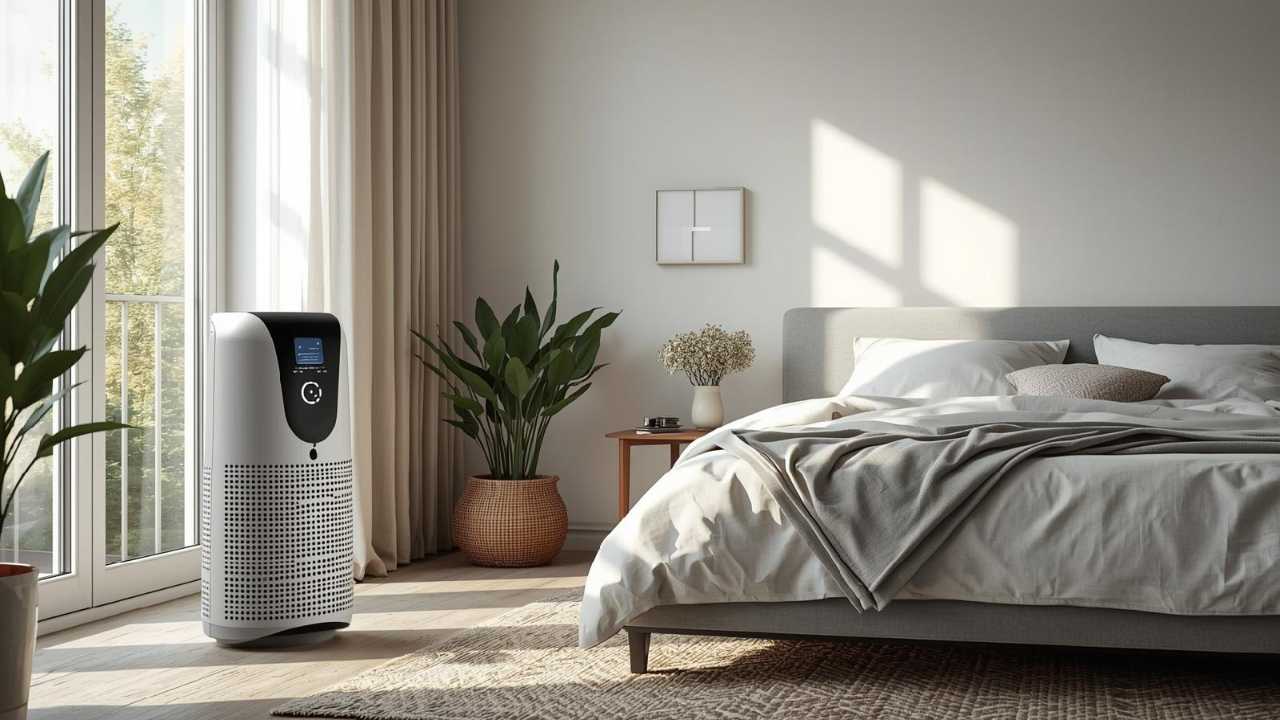
Where should I place a HEPA air purifier in a bedroom?
Place it where air can flow freely – usually a short distance from the bed, away from walls and large furniture, with the outlet pointing into the room. Avoid blocking the intake or placing it in a corner with poor circulation.
Can I stop using my inhaler if I buy a HEPA purifier?
No. Air purifiers are a support tool only. Never change or stop your asthma medication without medical advice.
Final thoughts
Choosing the best HEPA filter for asthma at home is less about chasing the most expensive machine and more about matching:
- Real HEPA performance (H13/H14 or 99.97% at 0.3 microns)
- Enough clean air per hour for your rooms
- Quiet, ozone-free operation you actually use every day
Combined with good cleaning habits, trigger control, and a solid medical plan, a HEPA air purifier can quietly become one of your most loyal allies in everyday lung health.
About The Author