
Unsubscribe anytime, privacy guaranteed.

Breathe Better, Live Stronger – Your Path to Healthy Lungs

Discover expert-backed tips, exercises, and care solutions to enhance your lung health. From breathing techniques to air quality improvement, we help you breathe easier every day. Take control of your well-being with science-backed insights and wellness practices.

Welcome to this space dedicated to health —
particularly lung health.

About Me

My decision to create this platform is deeply personal, shaped by an experience that changed my life forever.

Some time ago, I was diagnosed with lung cancer, and to save my life, I had to undergo a lobectomy. They removed the entire lower lobe of my right lung. It was a terrifying and overwhelming experience—one that no one ever truly prepares for. The word “cancer” alone carries so much weight, and in that moment, life as I knew it was turned upside down. But I was one of the lucky ones. If you can call it that when facing such a disease. My cancer was caught early, and because of that, I was given a chance—a chance that so many others never get.

You Don't Have To Be Worried And Frustrated

Breathing Techniques

Stress & Mental Focus

Fitness & Lung Health

Health Conditions & Preventive Care

Understanding Your Body

Recommended Products

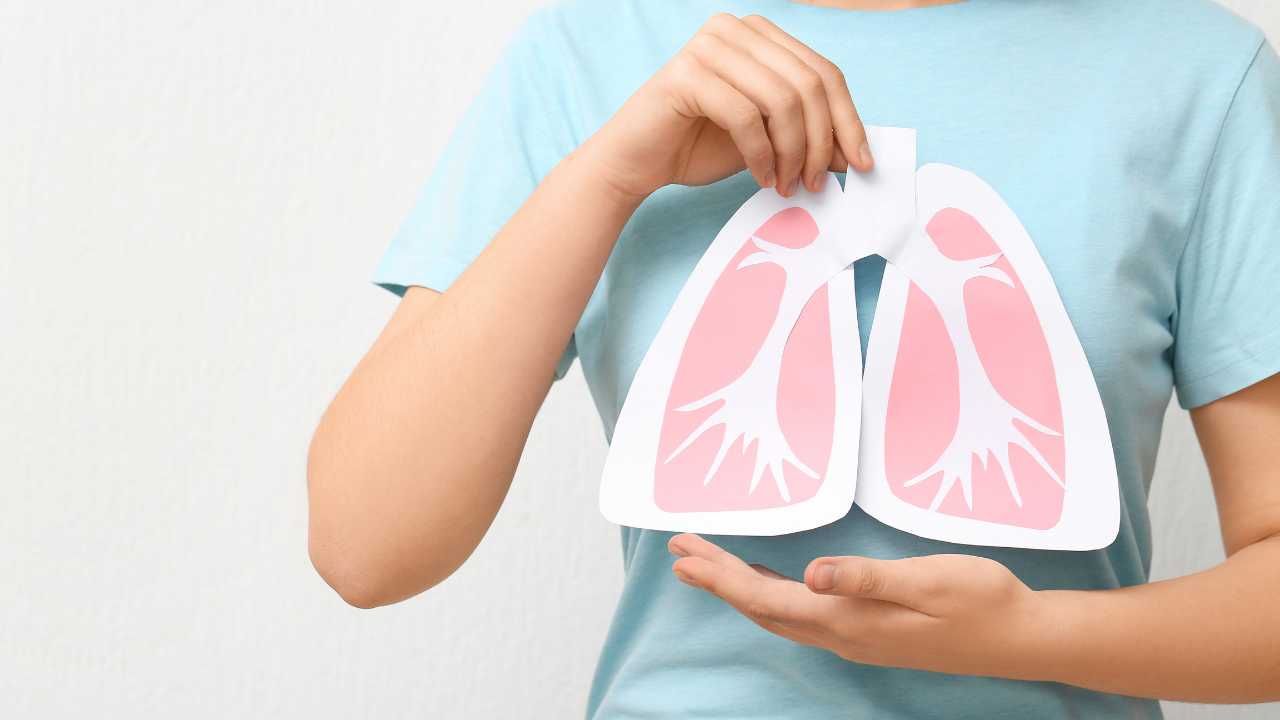
Explore how your lungs work, why they matter,
and how to keep them healthy.

Posture Corrector for Better Breathing: A Practical Guide for 2026

Posture Corrector for Better Breathing: 6 Desk-Friendly Picks (Updated 2026)

Posture Corrector for Better Breathing: A Practical Guide for 2026 If you spend hours writing, scrolling, or working at a desk, you know how quietly posture changes your day. Shoulders drift forward, the upper back rounds, and breathing gets smaller without you noticing. A posture corrector for better breathing can help by nudging you back into a taller, more open position so your ribs have room to move. It is not about standing perfectly straight. It is about giving your chest and diaphragm space to do their job with less effort. Quick Answer A posture corrector can make breathing feel easier by reducing the rounded, collapsed position that limits rib movement and encourages shallow chest breathing. It does not change lung tissue, but it can remove a mechanical barrier so you can use your natural breathing capacity more comfortably. Top Picks If you do not want to read a long guide, start here. These are the most useful “choose and go” options for desk days. Best for forward head posture awareness: Upright GO 2 Jump to review Best for ribcage opening without feeling stiff: Mueller Adjustable Posture Support Jump to review Best for shoulder rounding and quick resets: Gaiam Restore Neoprene Posture Corrector Jump to review Best for diaphragmatic freedom while sitting: BackJoy SitSmart Posture Plus Jump to review Best ergonomic chair upgrade for long writing days: Steelcase Leap Jump to review Best breathable mesh chair for staying cool and upright: Herman Miller Aeron Jump to review At a Glance Pick Type Best for What to keep in mind Upright GO 2 Wearable trainer Awareness and habit change Needs charging and adhesive refills Mueller Adjustable Posture Support Strap brace Gentle ribcage opening cue Keep it light, do not overtighten Gaiam Restore Neoprene Corrector Soft brace Shoulder rounding resets Best in short sessions if it feels warm BackJoy SitSmart Posture Plus Seat support Better pelvic position Not a full ergonomic setup on its own Steelcase Leap Ergonomic chair All day adjustability Setup matters as much as the chair Herman Miller Aeron Mesh ergonomic chair Cool, breathable support Sizing and fit matter Affiliate Disclosure This post may contain affiliate links. If you buy through them, the site may earn a small commission at no extra cost to you. This article is educational and not medical advice. Editor’s Pick If your breathing feels tight mainly during sitting, fix sitting first. A seat support or a properly adjusted chair often makes the biggest difference quickly, because it reduces the slow collapse that happens hour after hour. How We Chose These Options These picks are based on manufacturer specifications, adjustability, comfort signals, warranty availability, and common user reported patterns from verified reviews. I also prioritized tools that support retraining instead of locking you into a rigid posture. Breathing feels best in a position you can actually hold without tension. Why Posture Can Change How Breathing Feels When your head drifts forward and your upper back rounds, the ribcage shape changes. Many people shift into shallower upper chest breathing and start “pulling air” with the neck and shoulder muscles, especially late in the day. This is not a new idea, but it is becoming easier to document. For example, Kim et al. (2025) reported a meaningful relationship between forward head posture and measures used in pulmonary function testing, with worse posture linked to worse breathing metrics. That does not mean posture is the only factor, but it supports what many desk workers feel in real life. Studies published in the Journal of Physical Therapy Science have also discussed how rounded upper-back posture can alter chest wall mechanics and encourage overuse of accessory breathing muscles. In plain language, posture can make breathing feel harder than it needs to be. If you want an authoritative overview of spinal curvature and symptoms, it is worth reading the Mayo Clinic’s overview of kyphosis, and the NHS guidance on kyphosis, just to understand what is normal stiffness versus something that deserves a professional look. How to Choose a Posture Corrector for Better Breathing Most people buy the wrong thing because they buy for “straightness” instead of comfort and consistency. Use this checklist and you will make a smarter choice. Choose reminder over restriction The best tools are usually the ones that remind you. When a device forces you into a stiff position, your body often fights it. That can increase neck tension and make breathing feel worse. Wearable trainers are reminders. They teach awareness. Strap braces are support. They can help, but they should never feel like a cage. Make sure you can take a full inhale This is the fastest test. Put it on, stand tall, and take a slow inhale through your nose. If you feel restricted, loosen it or skip it. A posture tool should support rib movement, not compress it. Match the tool to your weak link If you forget posture the moment you focus, a wearable reminder is often best. If shoulders roll forward when you get tired, a light brace can help in short sessions. If your posture collapses mainly while sitting, a seat support or ergonomic chair upgrade usually gives the cleanest win. Use time limits, not all day wear A back brace for posture works best like training wheels. Short sessions teach your body what “open and easy” feels like. Wearing it all day can reduce muscle engagement over time. A solid starting point is 20 to 90 minutes during your slouchiest part of the day, then remove it and do one small movement reset. Movement Snacks for Long Writing Days When you write for hours, one workout at night does not undo a day of stillness. What works better is tiny resets that take less than two minutes. I use these between tasks. Desk chest opener, 30 seconds Stand up, lace your fingers behind your back, lift your chest gently, and take three slow breaths. Keep your ribs relaxed, not flared. Seated wall angels, 60 seconds Sit tall. Bring your arms into

Read More »
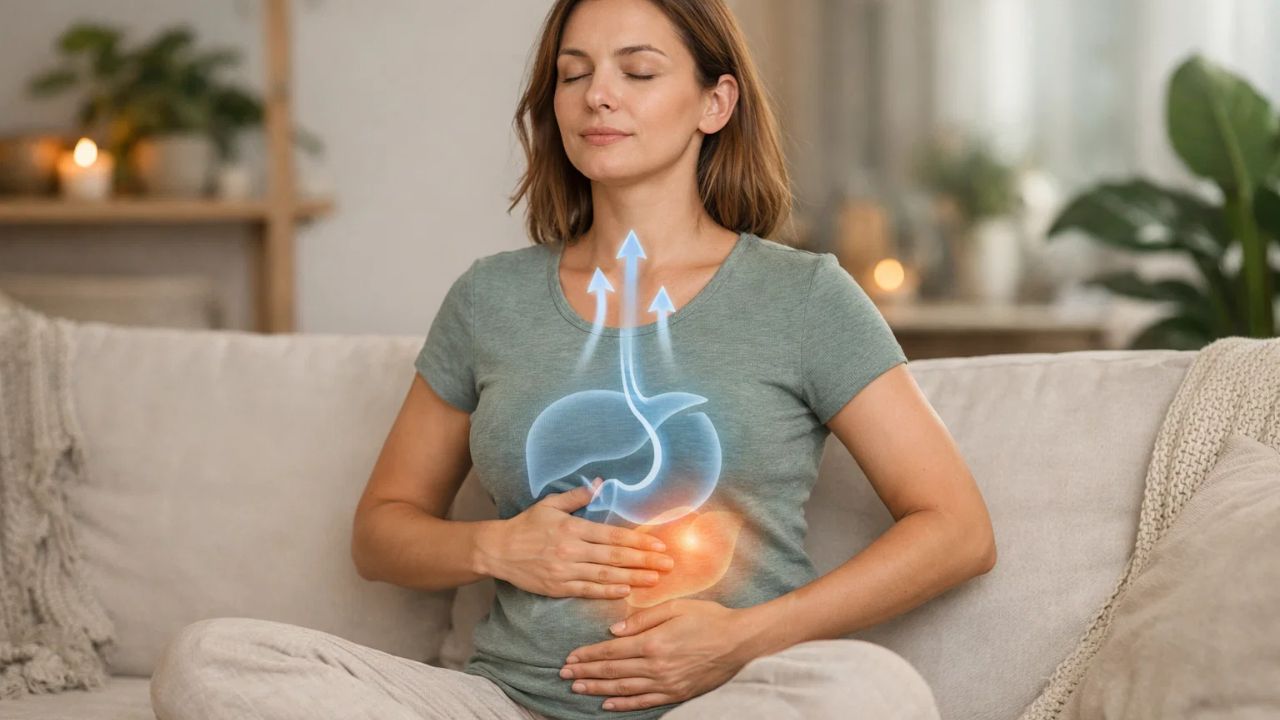
Person practicing diaphragmatic breathing to support digestion and reduce bloating

Breathing Techniques for Digestion (2026 Guide)

Breathing Techniques for Digestion (2026 Guide): GERD Relief, Vagus Nerve Support, and a Simple 3-Minute Humming Add-On Digestion isn’t only about what you eat — it’s also about how your nervous system is behaving while you eat. If you’re stressed, rushed, or breathing high in the chest, your gut can feel slow, tight, or reactive. This guide pulls together practical, research-supported breathing techniques that may help support calmer digestion, including gentle options for reflux (GERD), bloating, and that “wired but tired” feeling that makes meals sit heavy. If you buy through our links, we may earn a small commission at no extra cost to you. We only recommend resources we genuinely believe can support a healthier, calmer life. Quick Answer If you want one simple breathing strategy for digestion, start with diaphragmatic (belly) breathing and a longer exhale. Evidence suggests diaphragmatic breathing training can reduce belching and reflux symptoms in some people with PPI-refractory GERD (especially when supragastric belching is involved). Add a short humming practice after your session — humming has been shown to increase nasal nitric oxide about 15-fold during the hum compared with quiet exhalation, and many people experience it as a calming “reset.” At a Glance Best starting point: 3–5 minutes of diaphragmatic breathing before meals If you deal with reflux/GERD: breathe low and slow; avoid tight belly bracing; consider a post-meal gentle walk If you swallow air (burping/bloating): slow the pace and reduce mouth-breathing (aerophagia is common when we rush or breathe fast)  Fastest add-on: 3 minutes of humming (“mmm” on the exhale) Food support that pairs well: simple meals, enough fiber, fermented foods if tolerated; be careful with peppermint if reflux is your main issue. Why breathing affects digestion more than most people realize Your digestive system is heavily influenced by the autonomic nervous system — the same system that shifts you between “go mode” (sympathetic) and “rest-and-digest” (parasympathetic). The vagus nerve is a major communication pathway between brain, heart, and gut, and it plays a key role in parasympathetic regulation.  When you’re rushed or anxious, it’s common to: breathe faster or higher in the chest swallow more air tense the abdominal wall eat quickly (which adds even more swallowed air) This doesn’t mean breathing is a magic fix. But it does mean that changing your breathing can be a practical, low-risk way to support better conditions for digestion. GERD basics, in a calm and practical way GERD (gastroesophageal reflux disease) is common and usually managed with a combination of lifestyle strategies and (when needed) medications like PPIs. The American College of Gastroenterology guideline includes practical recommendations for evaluation and treatment, and also highlights when “alarm symptoms” require medical review (like trouble swallowing, bleeding, or unexplained weight loss).  A key idea for reflux: anything that increases pressure upward or relaxes the lower esophageal sphincter (LES) can make symptoms worse for some people. That’s one reason peppermint can be tricky: it may relax the LES and worsen reflux in susceptible people.  So when we talk about breathing for GERD, the goal is not “force more air.” The goal is often: less strain (especially in the belly and throat) less air swallowing more relaxed, lower breathing Diaphragmatic breathing is one of the most effective tools in our Breathing Techniques library Breathing Techniques that support digestion (without hype) Below are the core practices that tend to help the widest range of people. Start with the first two before you experiment with anything more intense. 1) Diaphragmatic (belly) breathing This is the foundation. In simple terms: your belly gently expands on the inhale, and softens on the exhale. You’re reducing upper-chest effort and letting the diaphragm do more of the work. Why this matters for reflux and belching: in a prospective study, a standardized diaphragmatic breathing training protocol reduced belching and reflux symptoms in a group of patients with PPI-refractory GERD (especially those with excessive supragastric belching). How to do it (2 minutes): Sit upright with a relaxed jaw and shoulders. One hand on the belly, one on the chest. Inhale through the nose: try to move the belly hand more than the chest hand. Exhale slowly through the nose (or softly through pursed lips if your nose feels blocked). Keep it easy. No “big performance breath.” 2) Longer exhale breathing (the quickest calming lever) A longer exhale is one of the simplest ways to shift your body toward “safe enough to digest.” Try this: Inhale 3–4 seconds Exhale 6–8 seconds Repeat 6–10 times If you tend toward reflux, avoid clenching your abs on the exhale. Think: “soft belly.” Calming the breath helps calm the mind. Learn how breathing builds mental resilience 3) Pursed-lip breathing (useful if you feel tight or air-hungry) This can be helpful when your breathing feels shallow, anxious, or “stuck.” How: Inhale through the nose for 2 counts Exhale through gently pursed lips for 4 counts It slows you down and often reduces the urge to gulp air. 4) “Pre-meal reset” breathing (tiny habit, big payoff) If you only do one thing, do this before the first bite: 5 slow nasal breaths slightly longer exhales shoulders drop on every exhale This is not spiritual. It’s simply creating a calmer baseline before food arrives. Breathing works best alongside proper nourishment. Explore Nutrition & Support strategies Aerophagia: the hidden reason some people feel bloated from “breathing exercises” If you’re burping a lot or feeling gassy after breathwork, you might be swallowing air. Aerophagia is the medical term for excessive air swallowing, and it can contribute to belching, bloating, and discomfort.  Common causes include fast breathing, mouth-breathing, rushed eating, anxiety, and even certain breathing patterns that encourage “gulping.” If you suspect aerophagia: slow the pace keep the inhale softer try nasal breathing more often stop the session if you feel pressure building in the upper belly Certain foods naturally reduce bloating. See our guide to Functional Foods for digestion My personal 20-minute morning routine (free, anywhere) In my own routine, I do Wim Hof–style breathing in

Read More »
Lung Health for Vapers: A 2026 Recovery Guide After Quitting

Lung Health for Vapers: A 2026 Recovery Guide After Quitting

As someone who survived lung cancer and a lobectomy (the removal of my right lower lobe), I know exactly what it feels like to suddenly realize your lungs are a high-stakes organ. I used to take breathing for granted until I couldn’t. Whether you’re quitting vaping to prevent future illness or because you’re already feeling that tightness, I’m sharing a grounded roadmap based on reputable sources and my own experience with lung rehabilitation. If you’re worried about your lungs after vaping, you’re not alone. This guide to lung health for vapers is designed to give you a clear, calm plan: what vaping aerosol can contain, what recovery can realistically look like after you quit, which breathing techniques actually help, and when symptoms deserve medical attention. Transparency Note: If you buy through our links, we may earn a small commission at no extra cost to you. As a survivor, I only recommend products I genuinely believe can support lung-friendly living. Medical disclaimer: This article is for educational purposes and does not replace medical advice. Quick Answer The most effective “lung reset” after vaping is simple: stop exposure, avoid dual use, and give your airways time to calm down. Support your recovery with gentle breathing exercises (especially pursed-lip and diaphragmatic breathing), clean indoor air, hydration, and a structured quit plan that includes behavioral support. In my recovery, I learned that small, consistent changes are more effective than “miracle” detoxes. For red-flag symptoms (worsening shortness of breath, chest pain, coughing blood, high fever), seek medical care promptly. At a Glance Vaping aerosol is not “water vapor”; it can contain nicotine, heavy metals, volatile compounds, and ultrafineparticles that reach deep into the lungs. After quitting, expect changes in mucus and cough as your lungs “wake up.” Breathing tools like pursed-lip breathing were my lifeline during recovery—they help you regain control when you feel short of breath. “Popcorn lung” (bronchiolitis obliterans) is rare but serious; the nickname comes from occupational exposure to certain flavoring chemicals (not everyday popcorn). “Detox” supplements are mostly marketing. Your body’s best “detox” is clean air, hydration, and time. Why vaping can irritate your lungs even if it’s “not smoke” Public health agencies are clear on one point: no tobacco product, including e-cigarettes, is considered safe. Many vapes deliver nicotine (highly addictive), and the aerosol may include substances you don’t want in delicate lung tissue. When I was in the hospital, my doctors explained a concept that changed how I think about my health: some flavorings are safe to eat but not necessarily safe to inhale. Your lungs don’t have a digestive system to filter chemicals. That’s why concerns around certain additives and inhaled irritants matter. Still dealing with chest congestion or mucus? See How to Clear Phlegm From Lungs After Surgery: Active Cycle of Breathing. The dual-use trap (vaping + smoking) If you vape and still smoke sometimes, you’re doubling your exposure. The CDC warns that dual use is not a reliable harm reduction strategy. As a survivor, my advice is simple: commit to one goal—keeping your airway as clear as possible. Lung Health for Vapers: What recovery can look like after you quit What Recovery Looks Like (The Timeline) Scientists are still learning the long-term effects, but many people notice a pattern similar to what I experienced during my post-surgery rehab: Days 1–7: Withdrawal can spike anxiety. Your cough might actually increase as your lungs begin clearing out debris. Weeks 2–4: Breathing often feels less “scratchy.” This is when I recommend focusing on indoor air quality. Months 2–3+: Stamina improves. Consistent, gentle movement is a huge lever here. If symptoms are getting worse instead of slowly trending better—especially wheezing, breathlessness at rest, chest pain, fever, or coughing blood—don’t “wait it out.” That’s a clinician moment. Breathing techniques that actually help (and how to do them) These are the tools I used daily after my lobectomy. They aren’t just for “relaxation”—they help your lungs move air more efficiently and can reduce the panic that often comes with “air hunger.” 1) Pursed-Lip Breathing (Best for breathlessness) This keeps the airways open longer. Whenever I felt air hunger during recovery, this was my go-to. Inhale through your nose (count of 2). Purse your lips like you’re going to whistle. Exhale slowly (count of 4). 2) Diaphragmatic (Belly) Breathing Vaping can train you into shallow “chest breaths.” This retrains your diaphragm. Place one hand on your chest and one on your belly. Inhale so the belly hand rises more than the chest hand. Exhale slowly (you can combine with a pursed-lip exhale). 3) “Huffing” for mucus clearance After surgery, I wasn’t allowed to cough forcefully because it was too painful. My therapists taught me “huffing” instead. It’s gentler on your throat and chest. Exhale firmly through an open mouth (like you’re steaming up a mirror). Repeat 2–3 times, then do one gentle cough if needed. Quitting vaping can trigger anxiety and tight breathing. These simple breathing techniques for anxiety can helpque. Popcorn Lung & EVALI: What You Need to Know During my diagnosis, I spent hours researching lung diseases. “Popcorn lung” (bronchiolitis obliterans) and EVALI (linked to vitamin E acetate in some THC products) are two of the biggest fears for vapers. They’re rare, but serious. The takeaway: avoid informal/modified vape liquids. Your lungs are too precious for mystery ingredients. Why it’s called popcorn lung The term became widely known after clusters of severe bronchiolitis obliterans were identified in workers at microwave-popcorn plants, where inhalation exposure to butter-flavoring chemicals (including diacetyl) was strongly suspected and studied. Can vaping cause it? This is where nuance matters: Public health guidance notes that some e-cigarette flavorings (including diacetyl) raise concern in inhalation settings. But bronchiolitis obliterans is still considered rare, and most people who vape will not develop it. Popcorn lung symptoms people search for If you’re worried, look for patterns—not one random bad day: Persistent dry cough that doesn’t improve Shortness of breath out of proportion to your fitness Wheezing that keeps returning Unusual fatigue with

Read More »
How to Clear Phlegm From Lungs After Surgery

How to Clear Phlegm From Lungs After Surgery

Recovering from lung or chest surgery can make your own breathing feel unfamiliar. Sticky phlegm that will not move, a heavy chest, and fear of taking a deep breath because it might hurt or “pull” on the scar are all common experiences. The good news: simple, evidence-based breathing techniques can help you clear mucus more gently, improve lung expansion, and reduce the risk of complications. One of the most powerful tools is the Active Cycle of Breathing Technique (ACBT) – and, later in recovery, selected breathing trainers can support your respiratory muscles. Quick answer – how to clear phlegm from your lungs after surgery After surgery, one of the safest ways to clear phlegm is to combine gentle deep breathing, chest-expansion breaths, and a controlled “huff cough” in a structured sequence called the Active Cycle of Breathing Technique (ACBT). ACBT helps air get behind mucus, move it from smaller airways to larger ones, and clear it with fewer, more effective coughs. In many hospitals across Europe, the UK, North America and Australia, ACBT is part of standard physiotherapy. Later in recovery, your team may also recommend respiratory muscle training (RMT) with a device to strengthen breathing muscles and lower the risk of future complications. Always follow the plan agreed with your doctor or physiotherapist. My lung surgery story: why breathing training mattered I am not writing this as a distant observer. I am a lung surgery patient myself. After having part of my right lung removed for early-stage cancer, I walked into recovery with two big questions: “Is the tumor really gone?” “Will I ever feel safe in my own breath again?” In the first weeks after surgery, every deep breath felt huge. I was afraid of pulling on the scar. I coughed carefully because I did not want to feel pain. Lying in bed, I could sense the heaviness in my chest and the sticky phlegm that did not want to move. A few things changed the trajectory for me: A kind physiotherapist who sat by my bed and taught me breathing control, deep chest expansion and huffing so I could clear mucus without brutal coughing. Nurses who gently insisted that I sit up, stand and walk even when I was tired – because movement is medicine for lungs. Later in my recovery, when I was back home and past the acute phase, I added a breathing trainer (Airofit) on and off. On days when my chest felt “lazy” or my breathing felt shallow, those short sessions reminded my lungs how to work — and reminded me that I was not powerless. Airofit did not replace surgery, scans, or medical care. But it gave me: A structured way to strengthen my breathing muscles A feeling of agency and progress in a long recovery A way to reconnect with my breath instead of fearing it If you’ve undergone surgery or suffer from lung disease, it’s crucial to discuss any device or training plan with your team. I share my story because I know how powerful it can feel to have a simple, daily breathing practice that supports both your lungs and your courage. Why phlegm builds up after surgery – and why it matters Under normal circumstances, your lungs have a smart self-cleaning system: Tiny hairs (cilia) constantly move mucus upwards You take regular deep breaths without thinking You move, stretch, and naturally clear small amounts of secretions when you cough or clear your throat After surgery, that system is disrupted: Anaesthesia slows the breathing drive and cough reflex Pain encourages shallow, protective breaths Fear of hurting the incision makes you avoid deep breathing and coughing Bed rest reduces lung expansion and circulation, especially in the lower lung zones When you breathe too shallowly for too long, mucus can settle in the airways. This raises the risk of: Atelectasis – small areas of lung collapse Infections and pneumonia Longer hospital stays and slower recovery In major chest surgeries, postoperative pulmonary complications (PPCs) are unfortunately common. Studies of complex procedures such as cardiac and major abdominal surgery show that, without targeted breathing training, a significant percentage of patients develop PPCs like pneumonia and atelectasis. When structured inspiratory muscle training is added before surgery, these complications and the length of hospital stay can be reduced in many patients. The takeaway: mucus and shallow breathing after surgery are not just uncomfortable – they are risk factors. And they are not just “bad luck”: they are modifiable with the right support. Breathing mechanics 101: understanding your foundation To make sense of ACBT, it helps to understand what is actually moving when you breathe. Think of three key players: 1. The diaphragm Your diaphragm is a dome-shaped muscle sitting under your lungs. When it contracts: It moves downward Your belly softens and rises Air is drawn into the lower parts of your lungs After surgery, pain, fear, and guarding can make the diaphragm move less. You may shift into shallow, upper-chest breathing instead. 2. The ribs and chest wall Your ribs form a flexible cage. They can expand: Forward Sideways Backwards In a healthy deep breath, your lower ribs widen in all directions, like an umbrella opening. After surgery, we often see: Stiffness around scars Protective muscle tension A “frozen” feeling on one side of the chest Gentle chest-expansion breaths help reopen these areas. 3. The airways and mucus Your lungs branch like a tree: Large airways near the top Smaller and smaller branches deep inside To clear phlegm effectively, air needs to: Reach behind the mucus Push it upwards, step by step Bring it into larger airways where a cough can clear it If you only take tiny breaths, air never reaches the lower branches, and mucus stays trapped. What is the Active Cycle of Breathing Technique (ACBT)?   The Active Cycle of Breathing Technique (ACBT) is a structured sequence of breathing that combines three elements: Breathing control Thoracic expansion exercises (deep chest breaths) Forced expiration technique (“huffing”) Together, these steps help you:

Read More »
Best Large Room Air Purifier Buy

Best Large Room Air Purifier Buy: High-CADR Guide 2026

If you simply want the best large room air purifier buy and do not have time to read the whole guide, here is the short answer: For most homes, the Coway Airmega 400S is the best all-round large room air purifier buy, with the Levoit Core 600S as the best high-CADR value pick, and the Blueair Blue Pure 211i Max as the quietest and most stylish choice for open-plan rooms. Now for the longer, more human version. When you live with a big living room, an open kitchen–dining area or a high-ceiling apartment, you start to notice air quality in a different way. Cooking smells drift into the sofa area, fine dust hangs where the sun comes in, and if someone in the family has asthma or allergies, you can feel when the air is “heavy”. A small desktop purifier might look reassuring, but it simply cannot move enough air to keep a large room feeling clean and light. That is why a high-CADR air purifier for large rooms can make such a difference. The right unit quietly turns over the air in your main living space several times per hour, strips out fine particles and a good share of odours, and helps your home feel calmer on the lungs. In this guide we walk through the top 5 high-CADR models worth considering in 2025 and how to choose the best large room air purifier buy for your budget and lifestyle. Quick Answer: Best Large Room Air Purifier Buy If you are standing in a store or scrolling an online shop right now and must decide quickly, this is the practical short list: Overall best large room air purifier buy: Coway Airmega 400S – strong CADR, true HEPA + carbon, smart app control and excellent coverage for most open-plan living rooms. Best value high-CADR option: Levoit Core 600S – high CADR and modern features at a lower price point. Quietest stylish choice for open-plan spaces: Blueair Blue Pure 211i Max – high airflow with very low noise on realistic settings. Best luxury design and sensing package: Dyson Purifier Big+Quiet Formaldehyde – for large, design-led homes. Best for ultra-fine particle removal in polluted areas: IQAir Atem X – HyperHEPA filtration for serious air-quality concerns. Each of these models is a strong large room air purifier buy; the best one for you depends on room size, sensitivity, budget and how much you care about design and smart features. At a Glance – Top 5 Large Room Air Purifiers Star ratings below are an overall balance of performance, coverage, usability and value (5★ maximum). Model Rating Price Level Ideal Room Size (approx.) Key Strengths Best For Coway Airmega 400S ★★★★☆ (4.7/5) $$$ Up to ~70 m² / 750 ft² Strong CADR, true HEPA + large carbon, reliable app Overall best large room air purifier buy Levoit Core 600S ★★★★☆ (4.5/5) $$ Around 40–60 m² / 430–650 ft² High CADR at a friendlier price, compact cylinder design Best value for big rooms Blueair Blue Pure 211i Max ★★★★☆ (4.6/5) $$$ About 60–70 m² / 650–750 ft² Quiet, stylish, HEPASilent tech, strong performance Open-plan rooms where noise and aesthetics matter Dyson Purifier Big+Quiet Formaldehyde ★★★★☆ (4.4/5) $$$$ Up to 90–100 m² / 900–1,000+ ft² Long-throw airflow, advanced sensing, luxury build Large, design-driven homes wanting one “hero” unit IQAir Atem X ★★★★☆ (4.4/5) $$$$ Roughly 60–80 m² / 650–850 ft² HyperHEPA fine-particle filtration, slim profile City apartments and wildfire-prone areas Detailed Reviews of Top 5 High-CADR Large Room Purifiers 1. Coway Airmega 400S – Overall Best Large Room Air Purifier Buy Rating: ★★★★☆ (4.7/5) The Coway Airmega 400S is the model that most often ticks every important box at once: strong CADR for large rooms, true HEPA filtration, a substantial carbon filter, smart features and a price that becomes very attractive when discounts are available. Overview Dual-sided air intake pulls dirty air from both sides. Max2 filter system combines a HEPA filter with a thick activated carbon layer. Wi-Fi connection with app control for scheduling, air-quality history and remote control. Front-facing LED ring shows real-time air quality at a glance. Performance and coverage In practical use, the Airmega 400S can comfortably handle a typical open-plan living room, or a combined kitchen–dining space, up to around 60–70 m² (650–750 ft²) while still giving good air changes per hour. The dual intake design helps it pull air from more than one direction, which is useful if your furniture layout is not perfectly symmetrical. Real-life impression In a busy family room with regular cooking, TV time and pets moving around, the Airmega 400S tends to sit quietly on lower speeds most of the day. When someone cooks or uses cleaning products, the colour ring changes and the fan ramps up, then gradually settles back again once the air clears. It becomes something you stop thinking about, which is exactly what you want. Pros Strong coverage for genuinely large rooms True HEPA plus a meaningful carbon filter for odours and gases Simple air-quality indicator and intuitive controls App control, smart scheduling and auto mode Washable pre-filters to catch hair and larger particles Cons Large footprint; needs some breathing room around it Replacement Max2 filters sit in the mid–high price range Highest fan speed is noticeable, although not needed constantly Best for The Coway Airmega 400S is ideal if you want one main purifier to handle your living room or open-plan area, care about both particles and odours, and appreciate app control. For many households this is the best large room air purifier buyoverall. Where to check price Look for the Airmega 400S at major online retailers, Coway’s own website and specialist air-quality shops. It is often discounted during seasonal sales, which can make the value even stronger. Wondering whether True HEPA or H13 is better for asthma? This full buyer’s guide breaks it down – Best HEPA Filter for Asthma: Ultimate Buyer’s Guide (True HEPA vs H13) 2. Levoit Core 600S – Best Value High-CADR Option Rating: ★★★★☆ (4.5/5)

Read More »
Best HEPA Filter for Asthma Ultimate Buyer’s Guide (True HEPA vs H13)

Best HEPA Filter for Asthma: Ultimate Buyer’s Guide (True HEPA vs H13)

Living with asthma means the air inside your home isn’t just “nice to have” – it’s a daily factor in how easily you breathe. A good HEPA air purifier can reduce airborne triggers like dust, pet dander, pollen and smoke, and when used together with your medication and asthma plan, that can mean calmer lungs and better sleep. This guide explains what HEPA really means, the difference between true HEPA vs H13 filter, how to read a HEPA air cleaner review, and how to choose the best HEPA filter for asthma in your home. Quick answer: best HEPA filter for asthma The best HEPA filter for asthma is a certified H13 (or higher) HEPA filter in a fully sealed, ozone-free air purifierthat: Is correctly sized for the room (aim for 4–5+ air changes per hour, based on CADR and room size). Combines HEPA + activated carbon, so you reduce both particles and irritating gases/odors. Has independent testing or clear standards (e.g., EN1822 H13/H14 in Europe, or “99.97% at 0.3 microns” from a reputable manufacturer). Is quiet enough on the setting that actually delivers good filtration, so you can run it day and night. Use it in the rooms where the person with asthma sleeps and spends the most time, keep doors and windows mostly closed in that zone, and replace filters on schedule. Important medical note: An air purifier is a supportive tool – it does not replace your inhalers or prescribed treatment. Always follow your asthma action plan and talk to your doctor before making changes to medication.   How HEPA filters help when you have asthma What does “HEPA” actually mean? HEPA stands for High Efficiency Particulate Air. In practice, it means: A true HEPA filter is designed to capture at least 99.95–99.97% of tiny particles around 0.3 microns in size (depending on the standard used). 0.3 microns is often called the “most penetrating particle size” – if a filter can grab those, it usually performs even better on both slightly smaller and larger particles. On a live site, you can link phrases like “research published in the National Library of Medicine on HEPA air cleaners and asthma” to your chosen scientific source so readers (and Google) can see where the numbers come from. Why particles matter for asthma Many asthma triggers ride on airborne particles that HEPA filters are good at capturing: House dust and dust mites Pet dander (from cats, dogs, etc.) – here you can internally link to a guide on reducing pet allergens at home Pollen Mold spores Smoke and fine particulate pollution (PM2.5) When you reduce these in the air, many people with asthma report fewer symptoms, less night-time coughing, and fewer flare-ups – especially when they also control triggers in bedding, carpeting and cleaning routines. True HEPA vs H13 filter: what’s the difference? “True HEPA” “True HEPA” started as a way to distinguish real HEPA filters from cheaper “HEPA-type” or “HEPA-like” filters that don’t meet the strict standards. Today, the term “True HEPA” is often used as a marketing phrase. Some products labelled “True HEPA” really do meet the high standard; others are vague. That’s why numbers and certifications matter more than slogans. H13 and H14 according to EN1822 In Europe, the EN1822 standard defines: H13: at least 99.95% of 0.3 µm particles captured H14: at least 99.995% of 0.3 µm particles captured For a typical home with asthma, a well-designed H13 HEPA filter in a good air purifier is already a very strong level of protection. So which is better for asthma – true HEPA or H13? Instead of thinking true HEPA vs H13 filter as a fight between labels, think in this order: Is there a real standard behind it? Look for “H13” or “H14” (EN1822), or a clearly stated “99.97% at 0.3 microns” from a trusted brand. Is the purifier sealed properly? Air should be forced through the filter, not leaking around the edges. Is the airflow strong enough for your room? A slightly lower-grade HEPA with high airflow can beat a perfect filter with poor airflow in real rooms. For asthma, the combination of good HEPA + enough clean air per hour is what counts most. Want to strengthen your lungs beyond air filtration? Learn – Understanding Asthma & Lung Function Key features to look for in the best HEPA filter for asthma Use this as your mental checklist when reading any HEPA air cleaner review. 1. Certified, high-efficiency filtration Clear wording like “H13 HEPA”, “H14 HEPA”, or “99.97% at 0.3 microns”. Avoid vague phrases like “HEPA-like,” “HEPA-style,” or “99% efficiency” with no particle size mentioned. On the site, you can link phrases like “how HEPA filters are tested” to your own explainer post. 2. Correct room size and CADR CADR (Clean Air Delivery Rate) tells you how much clean air the purifier can deliver. Check the manufacturer’s recommended room size. Aim for around 4–5 air changes per hour (ACH) in the room where the asthma sufferer spends the most time (often the bedroom). A mini desktop purifier will not adequately clean a large open-plan living room, no matter how good the filter is. 3. Sealed design Look for features such as: Fully sealed filter compartments Rubber gaskets or airtight frames Marketing phrases like “zero air bypass” or “sealed filtration system” 4. Activated carbon for gases and odors For many people with asthma, irritating gases and smells are just as problematic as particles. Choose a purifier that combines: HEPA for particles Activated carbon (or similar adsorbent) for: VOCs (volatile organic compounds) Traffic or wildfire smoke Strong cooking smells and household chemicals You can internally link to content on indoor VOCs and lung health from this section. 5. Noise levels you can live with A purifier that’s too loud at effective settings will simply be turned off. Check dB(A) levels for each fan speed. Look for “night mode” or “sleep mode” and make sure it still delivers decent airflow. 6. Ozone-free operation Avoid devices that rely on ozone

Read More »

Frequently Asked Questions

Is the information on this website medically verified?

No, I am not a doctor. All the content on this website is for informational purposes only and should not be considered medical advice. Always consult a qualified healthcare professional for medical concerns.

The information shared here is meant for general knowledge only. It should not replace professional medical guidance or treatment.

While I strive to provide accurate and helpful information, some content may be based on personal experiences, general knowledge, or publicly available sources rather than clinical studies.

📩 Stay Informed, Stay Healthy

Get the latest lung health tips, expert advice, and wellness insights delivered straight to your inbox.