When duffel bags of hospital memories live inside your chest, you look at supplements differently.
In 2022 I had the lower lobe of my right lung removed because of early-stage lung cancer. I woke up from surgery not even knowing yet if it truly was cancer – my surgeon had done a frozen biopsy while I was asleep and only removed the whole lobe once the lab confirmed it.
When I finally heard the word cancer, the room went very quiet.
After shock came practical questions:
- How do I protect the lung tissue I still have?
- Is there anything I can do besides waiting for the next CT scan?
- How can I keep my airways clear and my energy up?
That’s when N-acetyl cysteine (NAC) stepped into my life.
I started NAC shortly after my lobectomy, using it on and off to help with mucus and to support my lungs while I tried to rebuild my health. Today, I’m not using NAC at all. Instead, I focus on eating as clean and organic as possible and building my “natural NAC” through food and lifestyle. But NAC is still a part of my story – and a supplement many people with lung issues ask about.
This article gathers what I’ve learned from research, my own experience, and conversations with doctors, so you can have a grounded starting point for your own decisions.
Important disclaimer
This article is for information and education only. It is not a recommendation to start NAC or any other supplement. NAC is a drug-level substance with real effects, side-effects and interactions. Everyone is different. You should always discuss NAC – including dose, brand and duration – with your doctor or pulmonologist before using it.
For a basic medical overview of NAC as a medicine, you can also look up major health sites such as WebMD’s N-acetyl cysteine monograph.
What Is NAC, Really?
NAC is a stabilised form of the amino acid cysteine.
In hospitals it is used as:
- the antidote for paracetamol/acetaminophen overdose, and
- a mucus-thinning drug (mucolytic) in some patients with chronic bronchitis, COPD or heavy postoperative mucus.
As a supplement, people often take NAC because of four main ideas:
- NAC supplement benefits for lungs – especially chronic cough, thick mucus and COPD.
- Best NAC brand for mucus – choosing a clean, reliable product.
- N-acetyl cysteine dosage for COPD – understanding what was actually used in trials.
- NAC vs glutathione – deciding whether to take NAC or glutathione directly.
We’ll walk through each of these without getting lost in chemistry.
How NAC Helps the Lungs
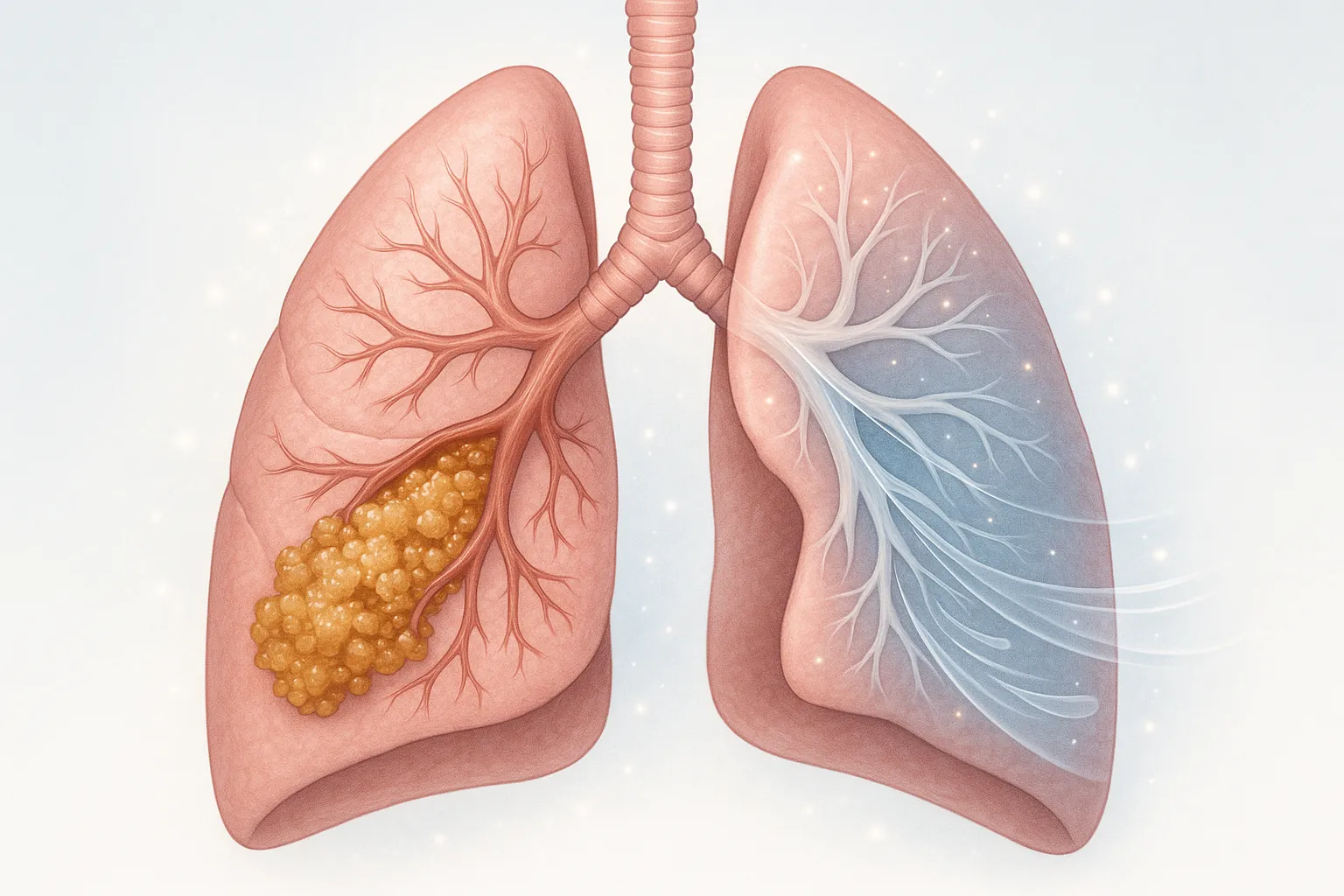
1. NAC melts sticky mucus
The mucus in your airways is held together by tiny sulphur “bridges” called disulfide bonds. NAC can break these bonds, which makes mucus less thick and easier to cough up.
Reference: SAGE Journals+3NCBI+3NCBI+3
Systematic reviews of mucolytic medicines still describe NAC as a classic option when people struggle to clear secretions – from chronic bronchitis and COPD to some intubated and post-operative patients.
Reference: NCBI+1
For me, right after my lobectomy, this was the biggest difference: coughing hurt less, my chest felt less “full,” and nights were less scary.
2. NAC supports your built-in defence system
Inside cells, NAC turns back into cysteine and is used to build glutathione, one of the body’s main internal antioxidants. Glutathione helps protect lung tissue from inflammation, infection and pollution.
I like to think of it this way: NAC doesn’t replace your body’s systems; it gives them extra raw material so they can cope with stress.
Evidence: NAC Supplement Benefits for Lungs in COPD & Chronic Bronchitis
Most of the strong data for NAC and lungs comes from people with chronic bronchitis and COPD.
A large meta-analysis of patients with chronic bronchitis/COPD found that NAC significantly reduced the number of patients who had at least one COPD exacerbation compared with placebo.
A 2024 meta-analysis that separated different COPD phenotypes concluded that NAC both improved symptoms and quality of life and helped prevent exacerbations, especially in patients with chronic bronchitis or high mucus production. Reference: SAGE Journals+3Arch Bronconeumología+3Ciència i Salut+3
Another review on acute exacerbations of COPD (AECOPD) reported that NAC improved lung function (FEV₁ and FEV₁/FVC) and enhanced antioxidant capacity when used as an add-on to standard therapy.
Taken together, the pattern looks like this:
- NAC works best where mucus and hypersecretion are a central problem.
- Benefits are seen when it is taken regularly over months, not as a one-week experiment.
- It is a supporting treatment, never a replacement for inhalers, oxygen, pulmonary rehab or smoking cessation.
For mild COPD with little mucus, results are more mixed.
N-Acetyl Cysteine Dosage for COPD: What Studies Actually Used
Supplement labels can be confusing, and it helps to know what is used in research. These are study ranges, not personal prescriptions:
- Many chronic bronchitis/COPD studies used 600 mg of NAC once daily, especially in milder disease.
- Others used 600 mg twice daily (1200 mg/day) in patients with more severe disease or frequent exacerbations.
- Some acute COPD exacerbation trials in hospital used higher or IV doses, always under close supervision.
In my own case, I started closer to the 600–1200 mg/day range immediately after surgery, then stepped down and finally stopped completely as my lungs stabilised and my lifestyle became more supportive.
Your dose – or whether you should use NAC at all – depends on:
- diagnosis and lung function,
- other medications,
- bleeding risk and upcoming surgery,
- past medical history (including cancer).
Those are decisions only your own healthcare team can safely make.
NAC vs Glutathione: Which Makes More Sense for Lungs?
Because NAC is a building block for glutathione, many people wonder whether they should take NAC or glutathione.
A few simple points can help:
- Traditional oral glutathione is often broken down in the gut, so its absorption is limited, although newer liposomal and sublingual forms improve this somewhat.
- NAC is well absorbed, inexpensive and has decades of use as a medicine in lung and liver conditions.
- For lungs specifically, NAC has a double benefit: it supports glutathione and directly thins mucus. Glutathione alone does not have this mucolytic effect.
This is why, when the focus is lung health, many clinicians and researchers still place NAC at the centre of the conversation – with food and lifestyle around it.
Can You “Make NAC Naturally” with Food?
You can’t grow NAC capsules on a tree, but you can absolutely feed the same system NAC works in.
Strictly speaking, NAC does not occur naturally in food. It is a synthesised form of cysteine developed to be stable and effective as a drug and supplement.
What you can do is eat in a way that gives your body plenty of:
- cysteine, and
- other sulphur-containing amino acids and co-factors.
Research on sulphur and cysteine shows that we get most of our intake from protein-rich foods such as meat, eggs, dairy, legumes and some grains, with extra support from brassica vegetables like broccoli and cabbage.
If your digestion is good and your appetite is strong, it is possible to give your NAC/glutathione system a big boost through diet alone. For example:
- Breakfast with eggs, oats and berries
- Lunch with lentils or beans and leafy greens
- Dinner with fish or poultry plus broccoli, onions and garlic
But not everyone can eat this way all the time. Chronic illness, low appetite, food intolerances, financial constraints or emotional eating can make it hard to “eat your way” to optimal cysteine intake. For some people, this is where a carefully chosen NAC supplement – agreed with a doctor – becomes a helpful bridge.
In my own life, I’ve chosen to stop NAC for now and focus on:
- organic, sulphur-rich foods
- oxygen-supporting meals like the ones I describe in my article on oxygen-boosting foods for better breathing
- daily breathing practices and gentle training
If my lungs or life change in the future, I’m open to reconsidering NAC, but for now I prefer the natural route.
Safety: Who Should Avoid NAC or Be Extra Careful?
Although NAC is sold in supplement shops, major medical reviews classify it as a drug with important cautions.
Common side-effects can include:
- nausea, vomiting, diarrhoea
- stomach discomfort or heartburn
- headache
- a sulphur smell or taste
More serious reactions are less common but can include:
- allergic-type reactions: rash, swelling, difficulty breathing
- tight chest or wheeze, especially in people with asthma
- gastrointestinal bleeding in people with peptic ulcers
Important interactions include:
- Nitroglycerin and other nitrates for angina – NAC can amplify their vasodilating effect, causing severe headaches and blood-pressure drops.
- Some blood thinners and blood-pressure drugs, and medications like carbamazepine – these combinations may need dose adjustments or may be unsuitable in some patients.
Because NAC may influence platelets and clotting, many surgeons prefer patients to stop NAC 1–2 weeks before surgery. Always clarify this with your own team.
People who are pregnant, breastfeeding, have active ulcers, bleeding disorders, complex medication lists, or uncontrolled asthma should never start NAC without medical supervision.
Where NAC Fits in My Lung Journey Now
After my lobectomy, NAC was one of the first tools that made me feel less helpless. It helped me clear mucus, it gave me something concrete to do, and it fitted well with the medical evidence in mucus-heavy conditions.
Today, I’m in a different phase:
- I no longer take NAC.
- I focus on organic, nutrient-dense food, including sulphur-rich vegetables, clean proteins and what I call “oxygen foods” – leafy greens, beets, iron-rich meals and antioxidant-rich berries.
- I use breathing practices, gentle strength training and rest to support my lungs.
I share this because I want you to know that NAC doesn’t have to be “forever” to be useful. For some people it may be a long-term part of COPD management; for others it may be a temporary ally during a difficult chapter.
Either way, the decision belongs in a conversation with your doctor, not just between you and a supplement bottle.
Further Reading: Thoughtful Books on Lungs, Breathing & Resilience
If you’d like to go deeper into lung health and breathing beyond supplements, these recent, well-reviewed books are a strong place to start:
- “Breathing Lessons: A Doctor’s Guide to Lung Health” by MeiLan K. Han, MD – a pulmonologist explains lung function, infections and chronic lung disease in very patient-friendly language, with practical advice for protecting your lungs at every age.
- “Breath: The New Science of a Lost Art” by James Nestor – explores how modern breathing habits affect our lungs, sleep and stress, weaving science with personal experiments. sobrief.com+1
- “Respiratory Resilience: Boosting Lung Health and Safeguarding Against Infections” by Isabella White, MD– focuses on lifestyle, immune support and practical daily strategies to strengthen lungs and reduce infection risk. Amazon
All three fit beautifully with a NAC-plus-lifestyle approach: supplements as one piece of a much larger lung-care puzzle.
About The Author
