How to Stop a Panic Attack Fast: Grounding Techniques for Anxiety and Safer Breathing
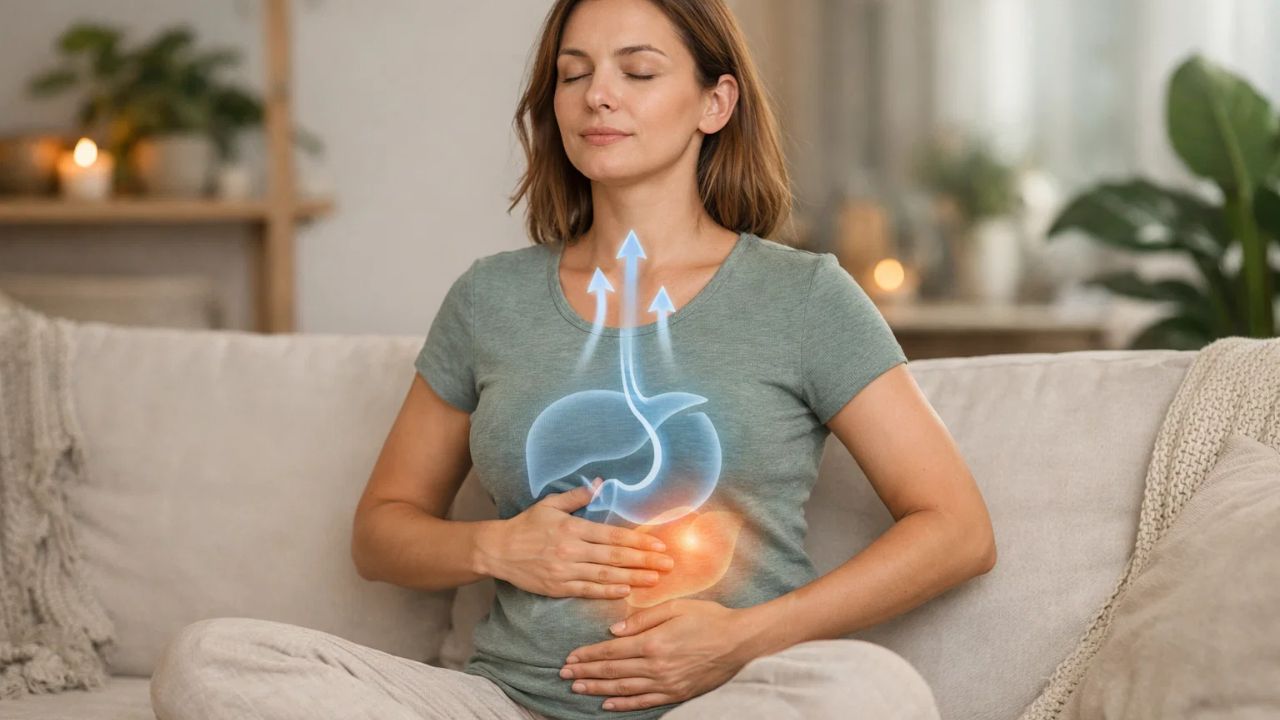
A panic attack can feel like your body has suddenly turned against you.
Your heart races.
Your chest may feel tight.
Your breathing gets fast.
Your hands may shake, tingle, or feel cold.
Your mind may tell you something terrible is happening.
Even when a panic attack is not physically dangerous, it can feel terrifying in the moment.
This guide is for the moment when you need simple, steady steps.
Not a long explanation.
Not “just relax.”
Not a complicated breathing routine.
Start here.
Quick Answer: How to Stop a Panic Attack Fast
If you think you are having a panic attack, try this:
- Sit down or stand with both feet on the floor.
- Say quietly: “This may be panic. It feels awful, but it can pass.”
- Make your exhale longer than your inhale.
- Try inhaling gently for 2 seconds and exhaling slowly for 4 seconds.
- Look around and name five things you can see.
- Relax one place in your body, such as your jaw, hands, shoulders, or belly.
- Do not use a paper bag. Use slow exhale breathing instead, unless a doctor has specifically told you otherwise.
- Seek medical help if symptoms are new, severe, unusual, or feel different from your normal anxiety.
A panic attack often rises, peaks, and then slowly settles. Your job is not to force it away. Your job is to help your body feel safer while the wave passes.
If anxiety is something you experience often, read this guide to simple breathing techniques for anxiety after the immediate wave has passed.
At a Glance: Fast Panic Attack Relief Techniques
| Technique | Best For | How to Use It | Avoid If |
| Slow exhale breathing | Fast panic and rapid breathing | Inhale gently for 2 seconds, exhale for 4 seconds | It makes you dizzy, air hungry, or more anxious |
| Feet on the floor | Feeling unreal, shaky, or overwhelmed | Press both feet into the floor and name where you are | Standing feels unsafe or you may faint |
| 5 4 3 2 1 grounding | Racing thoughts and fear spirals | Name 5 things you see, 4 you feel, 3 you hear, 2 you smell, 1 you taste | It feels too complicated in the moment |
| Gentle box breathing | People who like structure | Use short holds only, such as 3 seconds in, 1 hold, 3 out, 1 hold | Breath holding makes panic worse |
| Guided breathing | Freezing or forgetting what to do | Follow a prepared audio, app, or breathing timer | Audio or headphones make you feel trapped |
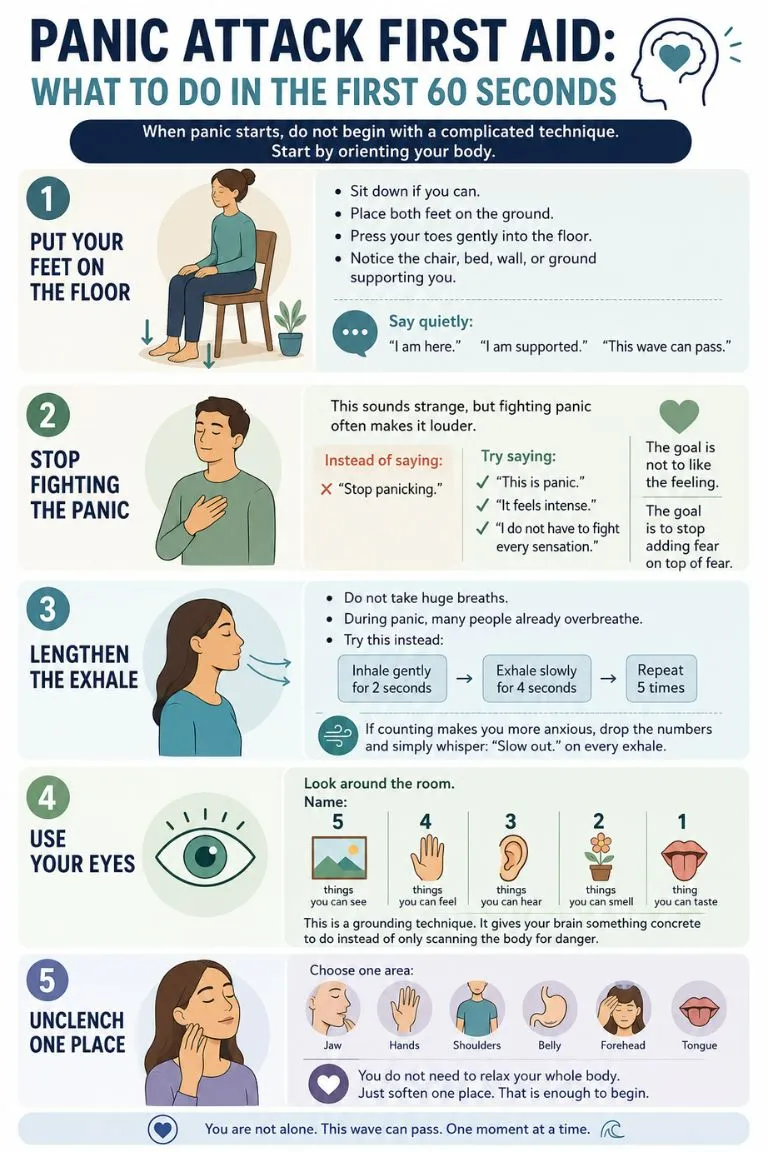
Panic Attack First Aid: What to Do in the First 60 Seconds
When panic starts, do not begin with a complicated technique.
Start by orienting your body.
Step 1: Put your feet on the floor
Sit down if you can.
Place both feet on the ground.
Press your toes gently into the floor.
Notice the chair, bed, wall, or ground supporting you.
Say quietly:
“I am here.”
“I am supported.”
“This wave can pass.”
Step 2: Stop fighting the panic
This sounds strange, but fighting panic often makes it louder.
Instead of saying:
“Stop panicking.”
Try saying:
“This is panic.”
“It feels intense.”
“I do not have to fight every sensation.”
The goal is not to like the feeling.
The goal is to stop adding fear on top of fear.
Step 3: Lengthen the exhale
Do not take huge breaths.
During panic, many people already overbreathe.
Try this instead:
Inhale gently for 2 seconds.
Exhale slowly for 4 seconds.
Repeat 5 times.
If counting makes you more anxious, drop the numbers and simply whisper:
“Slow out.”
On every exhale.
Step 4: Use your eyes
Look around the room.
Name:
- 5 things you can see
- 4 things you can feel
- 3 things you can hear
- 2 things you can smell
- 1 thing you can taste
This is a grounding technique. It gives your brain something concrete to do instead of only scanning the body for danger.
Step 5: Unclench one place
Choose one area:
- Jaw
- Hands
- Shoulders
- Belly
- Forehead
- Tongue
- You do not need to relax your whole body.
- Just soften one place.
- That is enough to begin.
When to Get Medical Help
This section matters.
Panic attacks can cause symptoms that feel similar to other medical problems. Chest tightness, shortness of breath, dizziness, sweating, nausea, tingling, and a racing heart can happen during panic, but they can also happen for other reasons.
Seek urgent medical help if:
You have new or severe chest pain
You have pressure, squeezing, or pain spreading to the arm, jaw, neck, back, or shoulder
You faint or feel like you may faint
You have severe shortness of breath
Your lips or face look blue, grey, or unusually pale
You have an irregular heartbeat that feels unusual for you
You have symptoms after taking a new medication or substance
You have asthma, COPD, a heart condition, lung disease, or another serious medical condition and the symptoms feel different
You are unsure whether it is panic or something medical
If in doubt, get checked.
It is better to be safe than to assume everything is anxiety.
Paper Bag Breathing Alternative: What to Do Instead
Many people have heard the old advice to breathe into a paper bag during a panic attack.
This is not the safest default.
Paper bag breathing assumes the problem is anxiety and overbreathing. But if symptoms are caused by asthma, low oxygen, a heart problem, a lung condition, or something else, rebreathing air from a bag can be risky.
This is especially important for Breathful Living readers because many people here care about lung health, sensitive airways, asthma, COPD, surgery recovery, or breathing safety.
A safer paper bag breathing alternative is:
Slow exhale breathing
Grounding through the senses
Relaxing the jaw and shoulders
Sitting upright
Getting fresh air if it is safe
Calling for help if symptoms feel unusual
Try this instead of a paper bag.
2:4 Slow Exhale Breathing
- Inhale gently through the nose for 2 seconds.
- Exhale slowly through the nose or mouth for 4 seconds.
- Keep the breath small and comfortable.
- Repeat for 1 to 3 minutes.
Do not force deep breathing.
Do not hold your breath.
Do not try to fix the panic in one minute.
Your goal is to give your nervous system a slower rhythm.
Fast Panic Attack Relief Techniques That Are Safer Than Forcing Deep Breaths
During panic, “take a deep breath” is not always the best advice.
Some people already feel like they cannot get enough air. If they start taking big, forced breaths, they may feel more dizzy, tight, or frightened.
A better first step is usually to slow the exhale.
Here are five simple techniques you can try during or after a panic wave.
1. Slow Exhale Breathing
Best for: fast panic, tight chest, rapid breathing
Try this:
Inhale gently for 2 seconds.
Exhale slowly for 4 seconds.
Repeat 5 to 10 times.
Why it may help:
A longer exhale can send a calmer signal to the nervous system. It also gives your mind one simple task.
Weakness:
If counting makes you feel trapped, it can become frustrating.
Who should avoid it:
Stop if it makes you dizzy, more anxious, or air hungry.
2. 4:6 Breathing
Best for: evening anxiety, stress build-up, and panic that has started to settle
Try this:
Inhale through the nose for 4 seconds.
Exhale slowly for 6 seconds.
Repeat for 3 to 5 minutes.
This is usually better after the strongest panic wave has started to pass.
Weakness:
It can feel too slow during the first minute of panic.
Who should avoid it:
Avoid it if you feel air hungry, dizzy, or unable to breathe comfortably through the nose.
If nasal breathing feels difficult, read nasal vs mouth breathing pros and cons so you do not force a breathing method that does not fit your body.
3. Gentle Box Breathing
Best for: people who like structure
Box breathing usually means:
Inhale
Hold
Exhale
Hold
A common version uses 4 seconds for each part.
During a strong panic attack, breath holding can feel uncomfortable for some people. So use a softer version.
Try:
Inhale for 3 seconds.
Hold softly for 1 second.
Exhale for 3 seconds.
Hold softly for 1 second.
If breath holding makes panic worse, skip it.
You can compare the options in this guide to box breathing vs 4 7 8 relaxation technique.
Weakness:
The holds can feel too intense during acute panic.
Who should avoid it:
Avoid box breathing during panic if breath holding makes you feel trapped, dizzy, or short of breath.
4. Guided Breathing
Best for: people who freeze or cannot remember what to do
A guided breathing track, breathing app, or short audio can help because you do not have to lead yourself through the panic.
You can simply follow the voice.
If you are new to guided breathing, start with guided breathing techniques for beginners before you need it.
Weakness:
You need to prepare it before panic happens.
Who should avoid it:
Avoid guided breathing if voices, apps, or headphones make you feel more trapped during panic.
5. Posture Reset With Slow Exhale
Best for: chest tightness, shoulder tension, and shallow breathing
During panic, the body often folds forward, tightens the jaw, lifts the shoulders, and protects the chest.
Try this:
Sit upright.
Let your shoulders drop slightly.
Unclench your jaw.
Place one hand on your lower ribs.
Exhale slowly.
Do not force a deep inhale.
This can help your breathing feel less trapped without making you overbreathe.
Weakness:
It may feel too subtle if panic is already very intense.
Who should avoid it:
Avoid any posture that increases chest discomfort, dizziness, or shortness of breath.
If stress affects your posture and breathing, this guide to posture and breathing may help you understand why your chest, shoulders, and neck can feel so tight during anxiety.
Best Breathing Techniques for Anxiety vs Panic Attacks
The best breathing techniques for anxiety are not always the same as the best breathing techniques during a panic attack.
Anxiety often builds more slowly.
Panic can come fast.
For daily anxiety, you may have more space to practice longer routines, such as coherent breathing, 4:6 breathing, box breathing, or guided breathing.
For a panic attack, keep it simpler.
| Situation | Best Starting Point | Why |
| Sudden panic | 2:4 slow exhale breathing | Simple and less forceful |
| Anxiety building slowly | 4:6 breathing | Helps downshift gradually |
| Racing thoughts | Grounding technique | Brings attention back to the room |
| Frozen or overwhelmed | Guided breathing | Lets you follow instead of lead |
| Chest and shoulder tension | Posture reset plus slow exhale | Reduces physical guarding |
How to Use Grounding Techniques for Anxiety During a Panic Attack
Breathing is not the only tool.
During panic, the mind often races into danger mode. Grounding brings your attention back to the room, the body, and the present moment.
The best grounding techniques for anxiety are simple enough to remember when your brain feels flooded.
1. The 5 4 3 2 1 Method
Name:
5 things you can see
4 things you can feel
3 things you can hear
2 things you can smell
1 thing you can taste
Say them out loud if you can.
This gives your brain a concrete task.
Weakness:
It can feel too hard if panic is very intense.
Make it easier:
Just name five blue things in the room.
Or five straight lines.
Or five sounds.
2. Feet on the Floor
Put both feet on the floor.
Press down gently.
Notice:
Heel
Big toe
Little toe
The weight of your body
The floor holding you
Say:
“My feet are on the floor.”
“I am in this room.”
“This is a panic wave.”
“I can let it move through.”
Weakness:
This may feel too subtle if you want a stronger sensation.
Make it stronger:
Press your feet into the ground for 5 seconds, then release.
Repeat 3 times.
3. Cold Object Grounding
Hold a cold glass, ice pack wrapped in cloth, cool stone, or chilled bottle.
Notice:
Temperature
Shape
Texture
Weight
Edges
This can help move attention away from the fear loop and back into physical reality.
Weakness:
Cold can feel unpleasant for some people.
Who should avoid it:
Avoid extreme cold or ice directly on skin. Use gentle cold only.
4. Name the Room
Say simple facts:
I am in my bedroom.
It is morning.
I am sitting on a chair.
The door is closed.
The floor is under my feet.
This is a panic attack.
It can pass.
This method is not dramatic, but it can be effective because panic often pulls the mind into “what if” thinking.
Naming the room brings you back to “what is.”
5. The One Muscle Release
Pick one muscle group.
Unclench it.
Try:
Jaw
Tongue
Hands
Shoulders
Belly
Feet
Do not try to relax everything.
That can become another pressure.
Just relax one place.
How to Use Grounding Techniques for Anxiety Before Panic Peaks
Grounding works best when you practice it before you need it.
Try this once a day when you are calm:
Look around.
Name five things you see.
Feel your feet.
Exhale slowly.
Unclench your jaw.
That is it.
The more familiar grounding feels during calm moments, the easier it may be to use during anxiety.
If you wait until panic is already at full intensity, the technique can still help, but it may take longer.
What Not to Do During a Panic Attack
Sometimes knowing what not to do helps just as much as knowing what to do.
Do not force huge, deep breaths
Big breaths can sometimes make dizziness or tingling worse.
Choose smaller, slower breaths instead.
Do not use a paper bag
Paper bag breathing can be risky if the symptoms are not truly caused by anxiety.
Choose slow exhale breathing and grounding instead.
Do not keep checking your pulse every few seconds
Checking can become part of the panic loop.
If you have concerning symptoms, seek medical help.
If you know this is your usual panic pattern, try to return attention to the room instead of repeatedly checking your body.
Do not argue with every scary thought
You do not need to win a debate with panic.
Use a short phrase:
“This is a panic wave.”
“I can ride this.”
“I do not need to solve everything right now.”
Do not make big decisions during the wave
Wait until your body settles.
Panic is not the right moment to decide big things about work, relationships, health fears, or your future.
Anti-Anxiety Breathing Tools That May Help
You do not need tools to calm a panic attack.
Your breath, body, and attention are the first tools.
But some people like to prepare a small panic support kit. This can be especially useful if you tend to freeze, forget techniques, or feel safer with something physical in your hand.
This section is optional.
It is not a medical treatment plan.
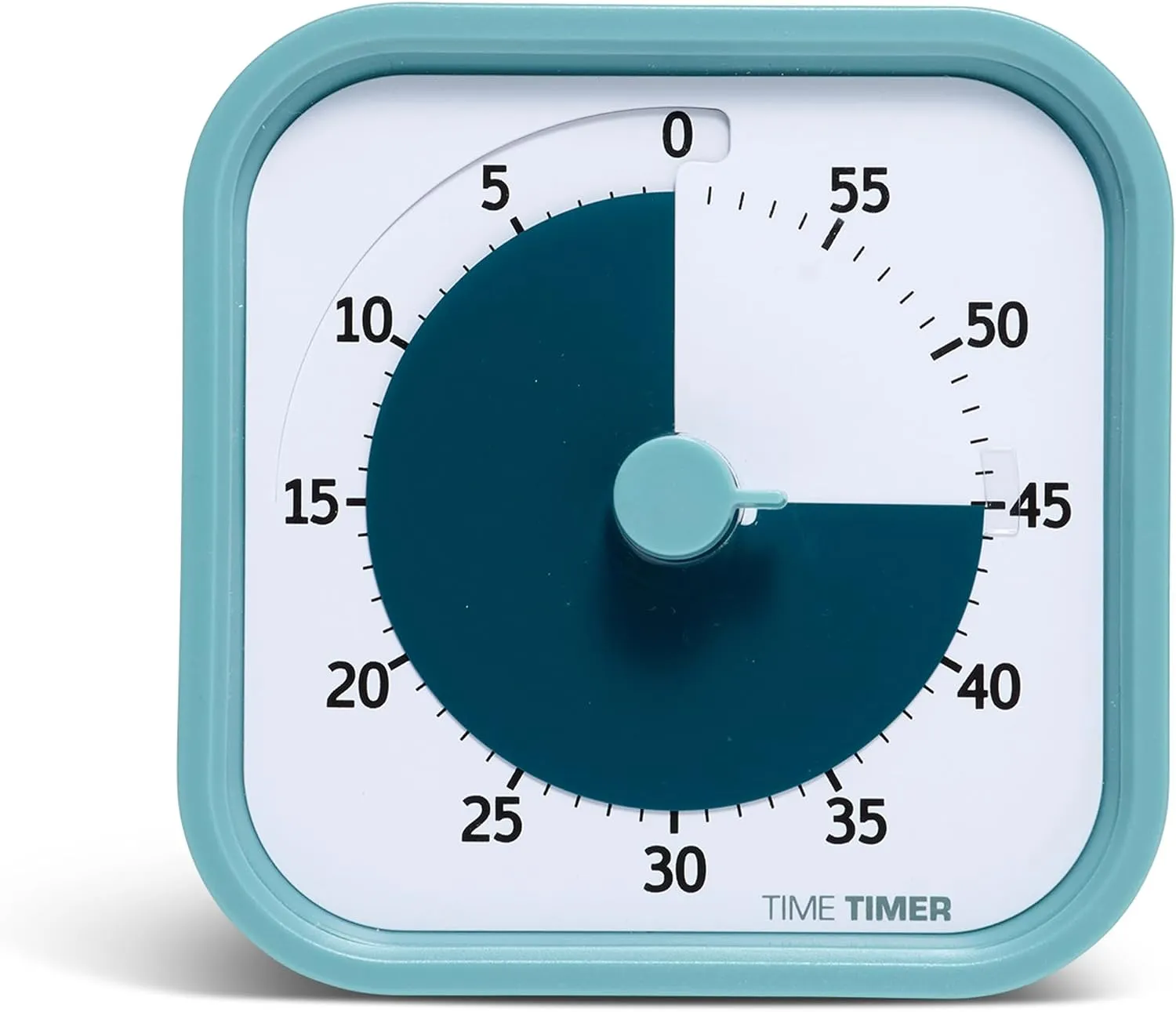
1. Breathing Timer App
A breathing timer app can guide inhale and exhale timing.
Best for:
People who like visual guidance
People who forget counting during anxiety
People practicing daily breathing
Weakness:
A phone can also become a source of stress.
Who should avoid it:
Avoid this if opening your phone leads to scrolling, symptom searching, or more anxiety.
A simple visual timer can make slow breathing exercises easier to follow without adding more screen time.
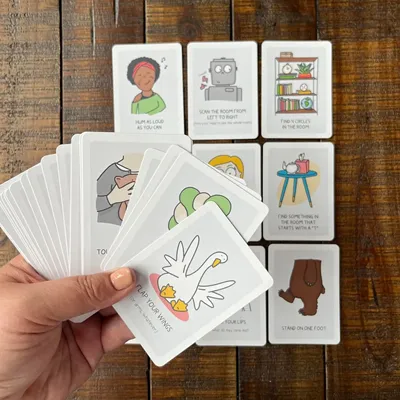
2. Grounding Cards
Grounding cards are simple cards with prompts such as:
Name five things you see.
Press your feet into the floor.
Exhale slowly.
Unclench your jaw.
Best for:
People who freeze during panic
People who want instructions without using a phone
People who like physical reminders
Weakness:
Cards only help if they are nearby when panic starts.
Who should avoid it:
Avoid if written prompts make you overthink during panic.
Keep a small grounding card deck in your bag or bedside table for quick reminders during stressful moments.
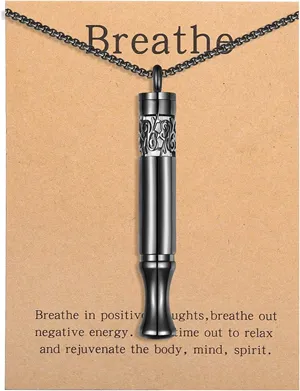
3. Breathing Necklace
A breathing necklace is a small pendant designed to slow the exhale.
Best for:
People who like tactile breathing reminders
People who want a discreet tool
People who benefit from slow exhale practice
Weakness:
It can become a crutch if you feel unable to calm without it.
Who should avoid it:
Avoid if using a breathing necklace makes you focus too much on symptoms or makes your breathing feel restricted.
A breathing necklace can serve as a discreet reminder to slow your exhale whenever you feel overwhelmed.
4. Noise-Reducing Headphones
Noise can make panic feel more intense for some people.
Calm headphones may help reduce stimulation after the peak has passed.
Best for:
People sensitive to sound
People who panic in busy places
People who use guided breathing audio
Weakness:
Headphones can feel isolating during panic.
Who should avoid it:
Avoid if headphones make you feel trapped or disconnected from your surroundings.
If noise makes anxiety worse, noise-canceling headphones may help create a calmer environment while you practice grounding techniques.
5. Weighted Blanket
A weighted blanket may feel calming for some people after a panic attack, especially during recovery or evening anxiety.
Best for:
After the panic wave
Evening anxiety
People who find gentle pressure calming
Weakness:
Not practical during acute panic outside the home. It may also feel too heavy or restrictive for some people.
Who should avoid it:
Avoid weighted blankets if you experience claustrophobia, feel trapped under physical pressure, have breathing difficulties, have respiratory complications, or have been advised not to use weighted pressure because of a medical condition.
Some people find a weighted blanket comforting during rest or recovery after a panic episode. Choose a weight that’s appropriate for your body size and comfort.
What to Do After a Panic Attack
After a panic attack, many people feel tired, shaky, embarrassed, or emotionally drained.
Be gentle with yourself.
Your body has been through a stress surge.
Try this:
Drink water.
Eat something simple if you have not eaten.
Take a slow walk if you feel steady.
Avoid judging yourself.
Write down what happened.
Notice what helped even a little.
Do not spend the rest of the day punishing yourself for having a nervous system.
If panic attacks happen often, consider speaking with a doctor or mental health professional. You deserve support that goes deeper than emergency coping tools.
A Simple Panic Attack Plan to Save on Your Phone
Copy this into your notes app:
- Put both feet on the floor.
- Say: “This may be panic. It can pass.”
- Inhale gently for 2.
- Exhale slowly for 4.
- Name five things I can see.
- Relax my jaw.
- Do not use a paper bag.
- Get medical help if symptoms are new, severe, or unusual.
This is not a perfect plan.
It is a simple one.
And during panic, simple is often what works best.
Panic Attack Coping Strategies for the Long Term
First aid matters, but long-term support matters too.
If panic attacks repeat, it may help to build a calmer baseline between attacks.
Consider:
Daily gentle breathing
Walking
Sleep support
Less caffeine if sensitive
Less alcohol if it worsens anxiety
Journaling triggers
Therapy or counseling
Medical evaluation if symptoms are new
A plan for what to do during panic
Breathing can be part of the solution, but it does not have to carry everything alone.
If you want to understand how breathing and nervous system tracking can connect, this guide to what is optimal HRV and how breathing affects it may be helpful once that article is live.
FAQ: Panic Attack First Aid
How do I stop a panic attack fast?
Start with your body. Put both feet on the floor, lengthen your exhale, name five things you can see, and soften one area such as your jaw or shoulders. Do not try to force the panic away. Help your body feel safer while the wave passes.
What is the best breathing technique for a panic attack?
The simplest starting point is slow exhale breathing. Try inhaling gently for 2 seconds and exhaling slowly for 4 seconds. Keep the breath small and comfortable.
Should I breathe into a paper bag during a panic attack?
Paper bag breathing is not the safest default. It can be risky if symptoms are caused by asthma, low oxygen, a heart issue, or another medical problem. A safer first choice is slow exhale breathing, grounding, sitting upright, and getting medical help if symptoms are unusual.
What are the best paper bag breathing alternatives?
Better alternatives include slow exhale breathing, grounding through the senses, feet on the floor, relaxing the jaw and shoulders, fresh air if safe, and medical help if symptoms are new or severe.
How do I breathe during panic attacks?
Avoid big forced breaths. Try a small inhale and a longer exhale. For example, inhale gently for 2 seconds and exhale slowly for 4 seconds.
Can panic attacks make you feel short of breath?
Yes, panic attacks can make breathing feel tight, fast, or difficult. But shortness of breath can also have medical causes. Seek help if symptoms are new, severe, or different from your usual anxiety.
How do I use grounding techniques for anxiety?
Start with something simple. Put both feet on the floor, look around the room, and name five things you can see. Then notice four things you can feel, three things you hear, two things you smell, and one thing you taste.
What are quick grounding tools for anxiety?
Quick grounding tools can include a cold object, grounding cards, a calming breathing timer, a textured stone, or a simple written plan saved on your phone. The tool matters less than whether it helps bring your attention back to the present moment.
How long does a panic attack last?
Many panic attacks peak within minutes, but the after-feeling can last longer. Some people feel tired, shaky, or emotionally drained afterward.
What should I do after a panic attack?
Drink water, breathe gently, move slowly, avoid judging yourself, and write down what helped. If panic attacks happen often, speak with a doctor or mental health professional.
Are anti-anxiety breathing tools necessary?
No. Tools are optional. A timer, grounding card, breathing necklace, or calming audio may help some people, but they are not required and should not replace professional care.
Final Thoughts
A panic attack can feel huge when you are inside it.
But a panic wave is not the whole ocean.
Start small.
Feet on the floor.
Slow exhale.
Name the room.
Relax one place.
Let the wave pass without turning it into a battle.
For Breathful Living, panic attack first aid is not about perfect breathing.
It is about helping your body feel safe enough to come back to the present moment.