Heart rate variability, usually called HRV, has become one of the most talked about numbers in smart rings, watches, recovery trackers, and stress apps.
You may see it in your Oura Ring, WHOOP, Garmin, Fitbit, Apple Watch, or another wearable and wonder:
What is optimal HRV?
Is my HRV good for my age?
Why did my HRV drop overnight?
Can breathing improve heart rate variability?
Which HRV tracker is best for stress and recovery?
For people focused on breathing, lung health, and nervous system recovery, HRV can be useful because it gives a small window into how the body responds to stress, sleep, recovery, and the rhythm of the breath.
The honest answer is simple:
Optimal HRV is not one perfect number.
It is a healthy pattern for your body.
For most people, the best way to understand HRV is to compare your current HRV with your own baseline, not with someone else’s number online.
If anxiety is already one of your main challenges, start with the basics in this guide to simple breathing techniques for anxiety before you become too focused on tracking numbers.
Jump to
Quick Answer
At a Glance: Best HRV Trackers 2026
Anita’s Take
How to Measure HRV
How Breathing Affects HRV
HRV Breathing Exercises
Best HRV Trackers
FAQ
Quick Answer: What Is Optimal HRV?
Optimal HRV is your own healthy baseline and trend over time.
A good HRV is usually one that is stable or improving compared with your normal pattern. Higher HRV is often linked with better recovery and more nervous system flexibility. Lower HRV can happen with stress, poor sleep, alcohol, illness, pain, dehydration, overtraining, or emotional pressure.
One low HRV reading is not a crisis.
The trend matters more than one day.
| HRV Pattern | What It May Suggest | What to Do |
| Higher than your normal baseline | Better recovery, calmer nervous system, good sleep | Keep doing what supports you |
| Lower than your normal baseline | Stress, poor sleep, illness, alcohol, pain, or overtraining | Use the number as a gentle recovery signal |
| One low day | Usually information, not panic | Look at sleep, stress, alcohol, food, and movement |
| Several low days with symptoms | Your body may need attention | Consider rest and speak with a doctor if symptoms are concerning |
| Stable over time | Often more useful than chasing a high number | Keep tracking patterns calmly |
Think of HRV as a signal.
Not a diagnosis.
Not a grade.
Not a reason to panic.
At a Glance: Best HRV Trackers 2026
| Tracker | Best For | Main Strength | Weakness | Who Should Avoid It |
| Oura Ring 4 | Sleep, HRV, stress awareness | Discreet ring, strong sleep and recovery focus | Subscription and sizing matter | People who dislike rings or become anxious from health scores |
| WHOOP | Recovery, strain, coaching | Deep recovery and stress data | Subscription and more intense data | People who want a simple one time purchase |
| Garmin | Active users | HRV plus walking, running, GPS, and fitness | Can feel metric heavy | People who do not want a full sports watch |
| Fitbit Sense 2 | Beginners and guided breathing | Stress tools and Relax app | Older product direction under Google makes it less future forward | People who want advanced recovery coaching |
| Apple Watch | Apple users | Broad health and fitness tracking | More distracting and needs frequent charging | People who want screen free sleep tracking |
Anita’s Take: Using Oura Ring 4 Without Chasing the Number
I use an Oura Ring 4 myself, and for me the most useful part is not chasing a perfect HRV number.
It is seeing patterns.
If my HRV is lower than usual, I do not take it as a diagnosis or something to panic about. I use it as a gentle signal to look at the basics:
sleep, stress, alcohol, food timing, recovery, breathing, and how much pressure I have been under.
That is why I like HRV for Breathful Living.
It connects breathing, sleep, stress, and nervous system recovery in a practical way. Especially when you have been through something serious with your health, it can be helpful to have a quiet signal that says:
Maybe today is not a push day.
Maybe today is a recovery day.
Maybe five minutes of slow breathing is more useful than forcing yourself forward.
But I also think this is important:
A tracker should support your body awareness.
It should not replace it.
If the number makes you more anxious, step back from the app and breathe without checking anything.
What Is Heart Rate Variability?
Heart rate variability is the small variation in time between your heartbeats.
Your heart does not beat like a perfect metronome. Even if your heart rate is 60 beats per minute, the space between each beat changes slightly.
That variation is normal.
HRV is connected to the autonomic nervous system. This is the part of the nervous system that helps regulate automatic functions such as heart rate, breathing rhythm, digestion, and stress response.
There are two main branches to understand:
Sympathetic nervous system
This is often called the fight or flight system.
It becomes more active during stress, fear, pressure, poor sleep, illness, pain, caffeine, intense exercise, or emotional strain.
Parasympathetic nervous system
This is often called the rest and digest system.
It supports recovery, digestion, sleep, calm breathing, and repair.
Because breathing, digestion, and the vagus nerve are connected, you may also find this guide to breathing techniques for digestion helpful if stress also affects your stomach.
How to Measure Heart Rate Variability
HRV is usually measured in milliseconds.
Different devices may calculate HRV differently. Some use nighttime readings. Some use morning readings. Some use SDNN. Others use RMSSD. This is one reason your HRV number may look different from one tracker to another.
That does not mean a tracker is useless.
It means consistency matters.
For everyday wellness tracking, the most useful approach is:
- Use the same device consistently.
- Measure under similar conditions.
- Focus on trends over time.
- Compare HRV with sleep, resting heart rate, stress, exercise, alcohol, illness, and how you actually feel.
For a deeper comparison of recovery wearables, read our Oura Ring vs WHOOP vs Fitbit tracker comparison.
What Affects Heart Rate Variability?
HRV can change for many reasons.
Some are obvious. Some are easy to miss.
Common things that may lower HRV
Poor sleep
Alcohol
Emotional stress
Illness
Pain
Overtraining
Dehydration
Late meals
Too much caffeine
Travel
Inflammation
Poor recovery
Shallow breathing
Mouth breathing at night
Feeling mentally overloaded
Common things that may support HRV
Better sleep
Regular walking
Gentle exercise
Hydration
Balanced meals
Less alcohol
Morning daylight
Meditation
Nasal breathing
Slow breathing
Longer exhalations
Recovery days
Calm evening routines
Posture can also affect how freely you breathe, especially if stress makes your chest, neck, and shoulders tighten. If that sounds familiar, read this guide to posture and breathing.
The goal is not to control every variable perfectly.
The goal is to notice what your body responds to.
How Breathing Affects Heart Rate Variability
Breathing and HRV are closely connected.
When you breathe in, heart rate often rises slightly. When you breathe out, heart rate often slows slightly. This natural relationship is one reason slow, steady breathing can influence HRV.
In HRV biofeedback, slow breathing is often practiced close to 5.5 to 6 breaths per minute. This is sometimes called resonance breathing because the breath rhythm may help the heart, lungs, and nervous system work in a more synchronized way.
This does not mean breathing is a magic fix.
It means breathing is a practical tool.
You cannot always remove stress from life. But you can often change your breathing rhythm.
And your breathing rhythm can send a calmer signal to your nervous system.
If you are new to breathing practice, you may want to read guided breathing techniques for beginners before you start combining breathwork with HRV tracking.
HRV Breathing Exercises for Beginners
You do not need an advanced breathwork practice to begin.
For HRV, the best starting point is usually slow, comfortable, quiet breathing.
Not huge breaths.
Not breath holding.
Not forcing air.
Not pushing through dizziness.
Just slow, steady breathing that your body can tolerate.
Beginner HRV breathing rule
If it makes you feel calmer, it is probably useful.
If it makes you feel dizzy, panicky, tight, or air hungry, stop and return to normal breathing.
Top Breathing Technique for HRV: Coherent Breathing
Coherent breathing is one of the simplest ways to practice HRV supportive breathing.
It usually means breathing at around 5 to 6 breaths per minute.
Coherent Breathing Practice
Try this for 5 minutes:
- Sit comfortably or lie down.
- Relax your shoulders.
- Breathe in through your nose for 5 seconds.
- Breathe out through your nose for 5 seconds.
- Keep the breath soft, quiet, and low in the body.
- Repeat for 5 minutes.
This gives you around 6 breaths per minute.
If 5 seconds in and 5 seconds out feels too long, start with 4 seconds in and 4 seconds out.
If you feel dizzy, tense, panicky, or air hungry, stop and return to normal breathing.
The point is not to win at breathing.
The point is to help your body feel safer.
If you like structured calming techniques, you may also want to compare box breathing vs 4 7 8 relaxation technique to see which method feels best for your body.
A Gentler HRV Breathing Exercise for Anxiety
If you are anxious, equal breathing may not always feel calming at first.
A longer exhale can sometimes feel softer.
Try this:
4:6 Breathing
- Inhale through your nose for 4 seconds.
- Exhale slowly through your nose for 6 seconds.
- Keep your shoulders relaxed.
- Let your lower ribs and belly move gently.
- Continue for 3 to 5 minutes.
This method is simple, quiet, and usually easier than intense breathwork.
It can be especially helpful:
In the evening
Before bed
After a stressful phone call
Before checking medical results
When your tracker shows lower recovery
When your body feels wired but tired
If nasal breathing feels difficult, this article on nasal vs mouth breathing pros and cons can help you understand when nasal breathing is useful and when you should not force it.
How to Improve Heart Rate Variability Naturally
You do not improve HRV by chasing the number harder.
You improve HRV by supporting the body systems that influence recovery.
1. Sleep better
Sleep is one of the biggest foundations for HRV.
Poor sleep can lower recovery and make the nervous system more reactive. A tracker can help you notice this, but the real work is in your routine.
Try:
- Consistent bedtime
- Dark bedroom
- Cool bedroom
- Less alcohol
- Less late scrolling
- Lighter evening meals
- Calming breathing before bed
2. Use slow breathing daily
Five minutes is enough to start.
Choose one:
- 5 seconds in, 5 seconds out
- 4 seconds in, 6 seconds out
- Simple nasal breathing during a walk
3. Walk gently
Gentle movement can support stress regulation without overwhelming the body.
If you are exhausted, choose an easy walk instead of a hard workout.
4. Reduce alcohol
Many people notice lower HRV and higher resting heart rate after alcohol.
You do not need perfection. Just notice the pattern.
5. Hydrate and eat steadily
Dehydration, blood sugar swings, and late heavy meals can all affect how recovered you feel.
6. Avoid overtraining
More is not always better.
If HRV is low for several days and you feel tired, sore, irritable, or run down, your body may need recovery.
7. Use your tracker as feedback, not judgment
Low HRV is not failure.
It is information.
A 7 Day HRV Breathing Routine
This routine is simple enough to use with or without a tracker.
Day 1: Notice your baseline
Check your HRV in the morning if you use a tracker.
Do not judge it.
Write down:
- Sleep quality
- Stress level
- Alcohol
- Caffeine
- Exercise
- Pain
- Illness symptoms
- Mood
The goal is to understand patterns.
Day 2: Try 5 minutes of coherent breathing
Do 5 minutes of 5:5 breathing.
Notice how your body feels afterward.
Do not obsess over whether the number changes instantly.
Day 3: Try 4:6 breathing in the evening
Breathe in for 4 seconds and out for 6 seconds.
Use this as a downshift before sleep.
Day 4: Add an easy nasal breathing walk
Take a gentle walk and breathe through your nose as much as feels comfortable.
Do not force nasal breathing if you feel breathless.
Day 5: Use breathing after stress
After a stressful moment, do 3 minutes of slow breathing.
Then notice if your body feels different.
Day 6: Compare your HRV with your habits
Look at your HRV trend together with sleep, alcohol, stress, movement, and resting heart rate.
Do not look at HRV alone.
Day 7: Choose your best routine
Pick the breathing style that made you feel calmer.
That matters more than one perfect HRV reading.
Best HRV Trackers 2026
The best HRV tracker is the one you will actually wear consistently.
For most people, HRV is most useful when it is measured over time, especially during sleep or at the same time each day.
A single random daytime measurement is less helpful than a consistent trend.
Below are the heart rate variability devices most relevant for stress, sleep, breathing, and recovery.
Oura Ring 4: Best Smart Ring for HRV, Sleep, and Stress Awareness
Oura Ring 4 is a strong option if you want a discreet smart ring focused on sleep, HRV, readiness, temperature trends, stress, and recovery.
This is the ring I use personally.
That matters because HRV tracking is not just a feature list for me. I know what it feels like to wake up, check the data, and decide whether today should be a normal day, a calmer day, or a recovery day.
Oura is especially useful if you do not want to wear a smartwatch screen at night.
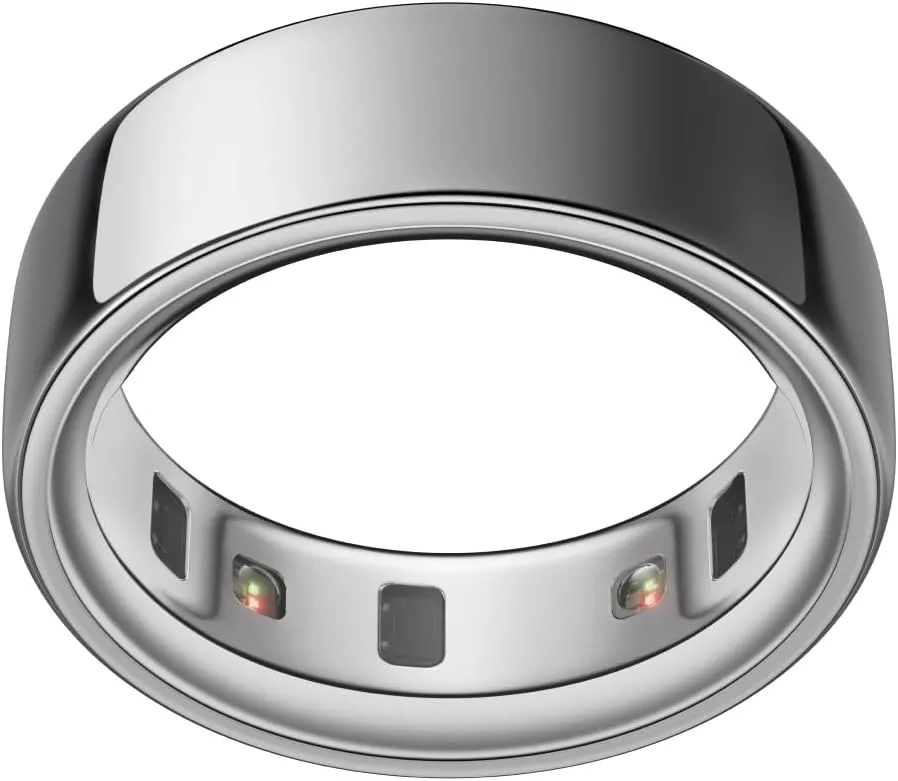
Why it is included
Oura Ring 4 fits the Breathful Living audience because it is discreet, recovery focused, and strongly connected to sleep, stress, HRV, and nervous system awareness.
Best for
Sleep tracking
HRV trends
Stress awareness
Readiness and recovery
People who prefer a ring over a watch
Nervous system awareness
Gentle habit feedback
Weakness
Oura requires a membership for full app insights, ring sizing matters, and it is not a medical diagnostic tool. It is also not the best choice if you want detailed GPS workout tracking.
Who should avoid it
Avoid Oura Ring 4 if you dislike wearing rings, do not want a subscription, need advanced sports tracking, or know that daily health scores make you more anxious.
WHOOP: Best HRV Tracker for Recovery, Strain, and Stress Coaching
WHOOP is a screen free wearable focused on recovery, strain, sleep, HRV, and stress.
It is more performance oriented than Oura, but it can be very useful if you want deeper coaching around how your body responds to training, stress, sleep, and recovery.
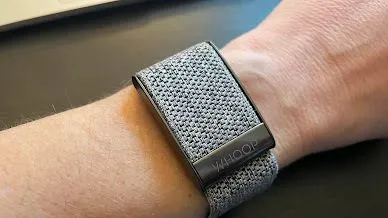
Why it is included
WHOOP makes sense for readers who want HRV connected to recovery, training load, strain, sleep, and stress coaching.
Best for
Active people
Recovery tracking
Strain management
Sleep coaching
Stress trends
People who like detailed data
People who do not want a screen
Weakness
WHOOP is subscription based, and the amount of data can feel intense. It may be more than some Breathful Living readers need if they only want calm stress awareness.
Who should avoid it
Avoid WHOOP if you want a one time purchase, prefer a ring, dislike subscriptions, or feel overwhelmed by performance style tracking.
Garmin: Best HRV Tracker for Walkers, Runners, and Active Users
Garmin is a strong choice if you want HRV together with fitness tracking.
Many Garmin watches include HRV Status, stress tracking, sleep insights, training readiness, activity tracking, and GPS.
Garmin can be especially useful if you walk, run, cycle, hike, or train regularly and want one device for both activity and recovery.
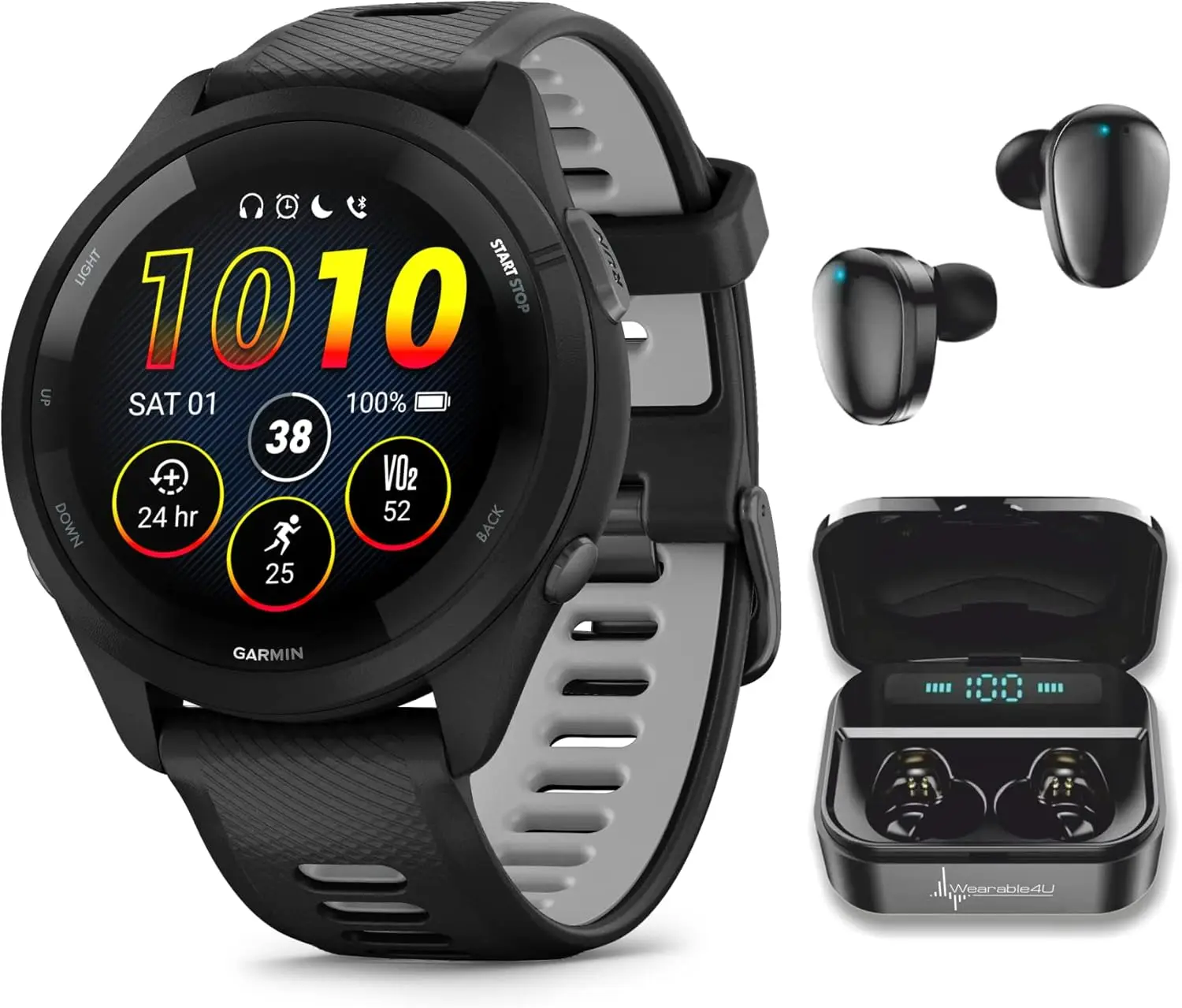
Why it is included
Garmin is the best fit for readers who want HRV plus outdoor activity, walking, running, GPS, and broader fitness data.
Best for
Walkers
Runners
Cyclists
Active users
GPS tracking
HRV plus fitness data
People who want a watch instead of a ring
Weakness
Garmin can feel metric heavy. Some readers may find the app and watch ecosystem more complex than a simple ring based tracker. HRV features also vary by model.
Who should avoid it
Avoid Garmin if you do not want a full sports watch, do not care about fitness tracking, or mainly want calm sleep and stress awareness.
Check current price and availability on Amazon
Fitbit Sense 2: Best Beginner Friendly Stress Tracker, With 2026 Caveat
Fitbit Sense 2 can still be useful for people who want stress awareness, guided breathing, sleep tracking, and general wellness data without going too deep into athletic recovery.
But it should not be positioned as the most future proof tracker in 2026. Fitbit’s direction has changed under Google, and some users may prefer Garmin, Oura, WHOOP, or Apple Watch depending on their needs.
Why it is included
Fitbit Sense 2 is included because it is beginner friendly and has stress tools and guided breathing options that fit the HRV and breathing topic.
Best for
Beginners
Guided breathing
Stress awareness
General wellness tracking
People already using Fitbit
People who want a watch with a gentle wellness feel
Weakness
Fitbit Sense 2 is not as recovery focused as Oura or WHOOP and not as advanced for athletes as Garmin. Some insights may also depend on Fitbit Premium.
Who should avoid it
Avoid Fitbit Sense 2 if you want the strongest HRV recovery platform, advanced training data, or the most future forward wearable ecosystem.
Apple Watch: Best If You Already Use Apple Health
Apple Watch can be useful if you already use Apple Health, workouts, heart rate tracking, and mindfulness features.
It is not always the calmest device because it also brings notifications, apps, messages, and a screen to your wrist.
But if you already own an Apple Watch, it can still be useful for HRV trends.
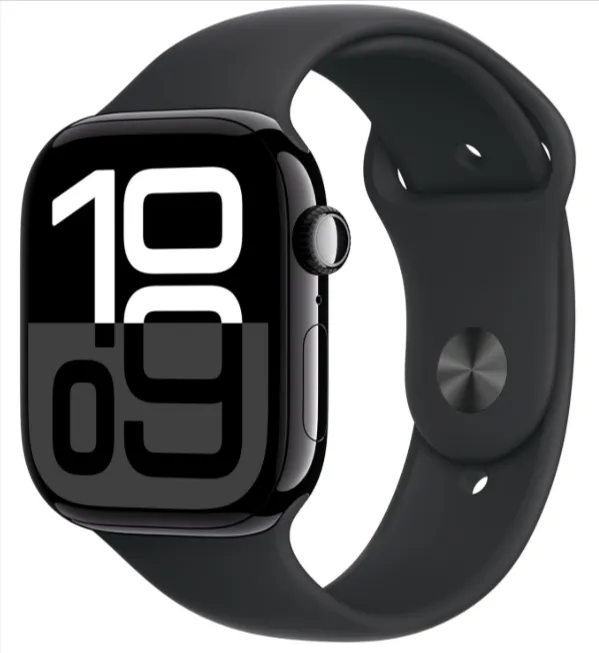
Why it is included
Apple Watch is included because many readers already own one. For those people, the best tracker may be the one they already wear.
Best for
Apple users
General health tracking
Workouts
Heart rate tracking
Apple Health integration
People who want smartwatch features
Weakness
Apple Watch can be distracting, needs frequent charging, and is not as recovery focused as Oura or WHOOP. It may also be less comfortable for sleep than a ring.
Who should avoid it
Avoid Apple Watch for HRV if you want screen free sleep tracking, minimal notifications, or a recovery first device.
Best Apps for Tracking HRV
The best HRV app depends on the device you use.
| App | Best For | Notes |
| Oura App | Sleep, HRV, stress, readiness | Best fit if you use Oura Ring 4 |
| WHOOP App | Recovery, strain, coaching | Best for active users who like deep data |
| Garmin Connect | Fitness, HRV Status, training | Best for walkers, runners, cyclists, and active users |
| Fitbit App | Stress, sleep, guided breathing | Beginner friendly, but less future forward than some alternatives |
| Apple Health | Apple Watch users | Useful if you already live in the Apple ecosystem |
The best app is not always the one with the most graphs.
It is the one that helps you make better decisions without making you more anxious.
Best Heart Rate Variability Devices Compared
| Tracker | Best For | Best Reason to Choose It | Main Weakness | Affiliate Priority |
| Oura Ring 4 | Sleep, HRV, stress awareness | Anita uses it personally and it fits BL’s calm recovery angle | Subscription and ring sizing | Highest |
| WHOOP | Recovery, strain, coaching | Strong recovery and stress coaching | Subscription and intense data | Medium if affiliate access exists |
| Garmin | Active users | HRV plus walking, running, GPS, and fitness | Can feel metric heavy | High if exact model validated |
| Fitbit Sense 2 | Beginners and guided breathing | Simple stress and breathing features | Less future forward in 2026 | Low to medium |
| Apple Watch | Apple users | Broad health and fitness ecosystem | More distracting and less recovery focused | Medium |
How to Use HRV Without Getting More Anxious
This part is important.
HRV tracking can help you become calmer, but it can also become another obsession if you check it too often.
Here is how to use it wisely.
1. Look at trends, not one morning
One low HRV reading does not mean something is wrong.
Ask:
Did I sleep badly?
Did I drink alcohol?
Did I eat late?
Was yesterday emotionally stressful?
Did I train hard?
Am I getting sick?
Am I in pain?
Then adjust gently.
2. Compare HRV with resting heart rate
If HRV is low and resting heart rate is high, your body may be under more strain than usual.
That might be a good day for lighter movement, more hydration, calmer breathing, and an earlier bedtime.
3. Use breathing as a response
When HRV is low, try:
5 minutes of coherent breathing
An easy walk
Hydration
No alcohol that evening
A lighter training day
Less screen time before bed
A calm evening routine
4. Do not chase the highest HRV possible
The goal is not the highest possible number.
The goal is a more stable, resilient pattern over time.
5. Step away if the number creates fear
If you feel anxious every time you open your tracker app, take a break.
Use breathing without tracking.
Your body does not need to be measured every minute to heal, recover, or calm down.
Who Should Avoid HRV Tracking?
HRV tracking may not be helpful if:
You become anxious about health numbers
You check your app constantly
You panic after one bad reading
You have untreated health anxiety
You use the number to punish yourself
You ignore symptoms because your tracker says things look fine
In that case, breathing without tracking may be better.
A simple timer, a quiet room, and 5 minutes of slow breathing can be enough.
Who Benefits Most From HRV Tracking?
HRV tracking may be useful if you want to understand how your body responds to:
- Stress
- Sleep
- Alcohol
- Travel
- Workouts
- Breathing practices
- Illness
- Recovery days
- Meditation
- Caffeine
- Late meals
- Emotional pressure
It is especially useful for people who want to connect daily habits with nervous system recovery.
When to Talk to a Doctor
Wearables are not medical devices for diagnosis.
Talk to a doctor if HRV changes come with symptoms such as:
- Chest pain
- Fainting
- New or severe shortness of breath
- Irregular heartbeat
- Sudden weakness
- Severe dizziness
- Symptoms that feel unusual for you
Do not rely on a tracker to decide whether something is medically safe.
Use HRV as a wellness signal, not a substitute for medical care.
FAQ: Optimal HRV, Breathing, and Trackers
What is optimal HRV?
Optimal HRV is not one fixed number. It is your own healthy baseline and trend over time. A stable or improving HRV compared with your normal pattern is usually more useful than comparing your number with someone else’s.
What is a good HRV for my age?
There is no single perfect HRV for every age. HRV often changes with age, but your own baseline matters more than a universal chart.
How do I measure heart rate variability?
You can measure HRV with a wearable such as Oura Ring, WHOOP, Garmin, Fitbit, or Apple Watch, or with more advanced medical equipment. For home wellness tracking, consistency matters more than one isolated reading.
How does breathing affect heart rate variability?
Breathing affects HRV because heart rhythm naturally changes with the breath. Slow, steady breathing can influence the relationship between breathing, heart rate, and the autonomic nervous system.
Can breathing improve HRV immediately?
Slow breathing can influence HRV during the breathing session for many people. Long term improvement usually depends on consistency, sleep, stress management, fitness, hydration, and recovery.
What are the best HRV breathing exercises for beginners?
Start with coherent breathing: inhale for 5 seconds and exhale for 5 seconds for 5 minutes. If that feels too long, start with 4 seconds in and 4 seconds out.
Which is better for HRV, Oura Ring 4 or WHOOP?
Oura Ring 4 is often better for people who want a calm, discreet smart ring focused on sleep, stress, readiness, and HRV trends. WHOOP is often better for people who want deeper recovery coaching, strain tracking, and performance data.
Is Fitbit Sense 2 still worth considering in 2026?
Fitbit Sense 2 can still be useful for beginners who want stress awareness and guided breathing. But it should not be treated as the strongest or most future proof HRV tracker in 2026.
Can HRV show anxiety?
HRV does not diagnose anxiety. But stress and anxiety can affect the autonomic nervous system, and HRV may reflect changes in physiological stress load.
Should I check HRV during a panic attack?
Probably not. During acute panic, checking numbers may make anxiety worse. Focus on grounding, slow exhalations, and safety. Use HRV later as a pattern tool, not as panic monitoring.