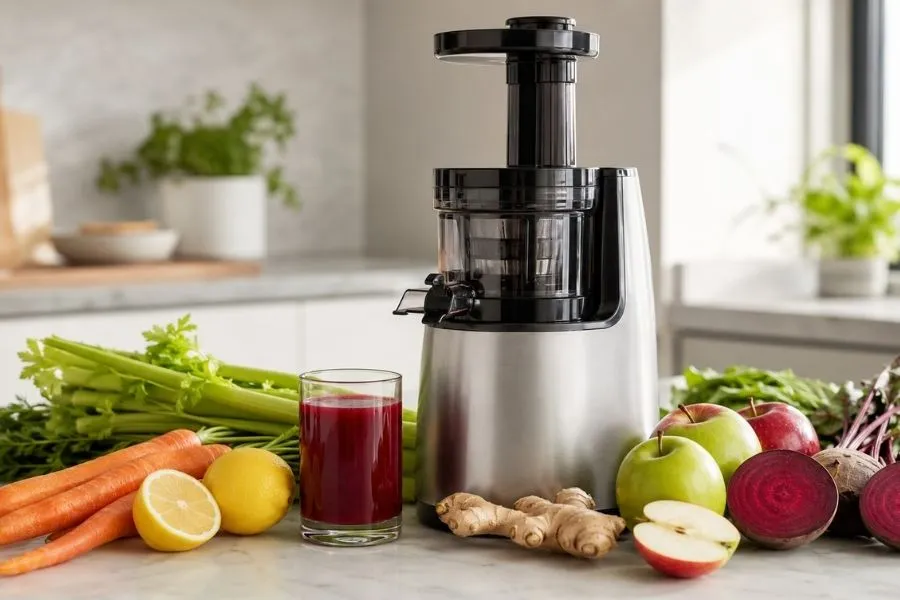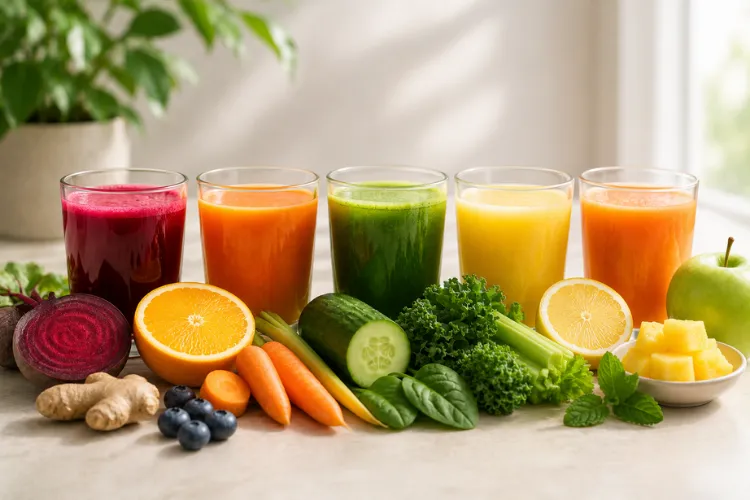
A glass filled with freshly pressed carrots, cucumber, celery, citrus, ginger, beetroot, and leafy greens is one of the simplest ways to bring more color and variety into an ordinary day.
Fresh juice is not just about individual vitamins. It is also about replacing something less nourishing.
When a homemade vegetable juice takes the place of soda, a sugary energy drink, a syrup-filled coffee, or a packaged snack, the benefit is not limited to one nutrient. You are choosing fresh produce, water, natural flavors, and a broad mixture of plant compounds instead of another highly processed product.
That does not mean juice must replace whole vegetables, healthy meals, or smoothies. It can sit alongside them.
For a broader foundation, see Breathful Living’s guide to a wider diet built around colorful whole foods.
Juicing can be part of a wider routine that includes:
- Whole vegetables and fruit
- Sufficient protein
- Healthy fats
- Fiber-rich meals
- Movement
- Rest
- Hydration
- Time outdoors
- Less ultra-processed food
The best juice is not necessarily the recipe with the most expensive powders or the longest list of so-called superfoods. It is the juice you enjoy enough to make regularly.
In this guide, you will find seven fresh, vegetable-forward recipes, including a smaller version of the large carrot, celery, citrus, ginger, and beetroot juice I make at home.
Quick Answer: Is Juicing Good for Immune Support?
Juicing can be a valuable way to include more vegetables, fruit, vitamins, minerals, carotenoids, and other plant compounds in your day.
Carrots, dark leafy greens, citrus fruits, red peppers, tomatoes, ginger, beetroot, cucumber, celery, fennel, and herbs each bring different colors, flavors, and nutrients to a juice.
Vitamin C helps the immune system work normally and supports the body’s antioxidant defenses. Vitamin A is also involved in immune function and the maintenance of normal tissues. Carrots and leafy greens contain carotenoids that the body can convert into vitamin A. NIH Office of Dietary Supplements
But the real strength of a good juicing habit is often broader than a single vitamin.
Fresh juice can help you:
- Use vegetables that might otherwise be wasted
- Add more variety to your diet
- Drink something refreshing without added sugar
- Replace highly processed drinks
- Discover produce you do not usually eat
- Create a healthy morning or afternoon ritual
- Add more color and plant foods to the week
- Make vegetables feel easier and more enjoyable
Juice is not the entire answer to health, but it can be a genuinely positive part of a healthier lifestyle.
Jump to a Section
Why Fresh Juice Deserves a Place in a Healthy Routine
The modern food environment makes it remarkably easy to consume calories without consuming much actual produce.
Sweetened drinks, pastries, snack bars, fast food, chips, desserts, and ready-made meals can fill the day before a single fresh vegetable has reached the plate.
Juicing does not solve every nutritional problem, but it can shift the balance in a much better direction.
It makes a large amount of produce easy to enjoy
Many people would struggle to sit down and eat several carrots, a portion of celery, cucumber, beetroot, ginger, lemon, and greens in one sitting.
Juicing turns those ingredients into a fresh drink that can be enjoyed slowly with breakfast or during the afternoon.
One hundred percent vegetable juice counts as part of the vegetable group in USDA MyPlate guidance.
That does not mean juice should replace every whole vegetable. It simply confirms that vegetable juice can contribute meaningfully to overall vegetable intake.
It brings more plant variety into the week
A varied diet is not only about eating large amounts of one supposedly perfect food. It is also about rotation.
A juicing routine can include:
- Orange carrots
- Red beetroot
- Green cucumber
- Pale fennel
- Dark kale
- Red peppers
- Yellow lemons
- Fresh parsley
- Ginger
- Turmeric
- Mint
Each ingredient contributes a different mixture of nutrients and plant compounds.
A colorful juice is not a magic potion, but it can be an easy and enjoyable way to increase diversity.
It can replace drinks that offer very little
One of the strongest reasons to make juice has nothing to do with detox claims. It is simple substitution.
A homemade vegetable juice can replace:
- Soda
- Sweetened iced tea
- Energy drinks
- Bottled coffee drinks
- Juice drinks containing added sugar
- Artificially flavored wellness beverages
- A sugary afternoon snack
That is a real everyday improvement.
Instead of asking whether juice is nutritionally perfect, it is often more useful to ask: What would I otherwise be drinking or eating?
A fresh carrot, celery, cucumber, lemon, ginger, and beetroot juice is a very different choice from a large soda or an ultra-processed snack.
It can make healthy food feel pleasurable
Healthier routines are easier to maintain when they are not based entirely on restriction.
Juicing can be:
- Colorful
- Fragrant
- Refreshing
- Creative
- Seasonal
- Satisfying to prepare
- Easy to personalize
The sound of carrots moving through the juicer, the smell of fresh ginger and lemon, and the deep color of beetroot can turn food preparation into a ritual rather than another obligation.
Fresh juice contains more than vitamin C
Juice discussions are often reduced to one or two vitamins.
Fresh produce can also provide:
- Potassium
- Folate
- Carotenoids
- Polyphenols
- Natural plant pigments
- Water
- Small amounts of many other micronutrients
The exact nutritional content depends on the ingredients, quantities, freshness, and juicing method.
The point is not to chase one isolated compound. It is to bring more whole plant ingredients into everyday life.
Anita’s Take: Why I Still Make Fresh Juice
I have made homemade cold press juice for years, and I own both an older and a newer Hurom juicer.
I do not make one tiny glass at a time.
When I juice, I normally prepare several bottles using approximately:
- 5 kg of carrots
- 4 lemons
- 1 bunch of celery
- 2 to 3 apples or red grapefruit
- Fresh ginger
- Beetroot
The exact mixture changes, but carrots, citrus, celery, ginger, and beetroot are usually the foundation.
For me, this is not about following a short cleanse or believing that one drink will fix everything.
It is about making a large amount of fresh, colorful juice that I genuinely enjoy drinking.
When there are bottles of homemade juice in the refrigerator, I am far more likely to reach for one of those than for something highly processed.
That matters. A healthy life is built from repeated choices, not one perfect day.
Why carrots form the base
Carrots are naturally sweet, widely available, and easy to combine with stronger ingredients.
They soften the bitterness of celery and greens and balance the earthy flavor of beetroot.
They also create a juice that feels substantial enough to enjoy in a smaller glass rather than drinking an enormous fruit-heavy portion.
Carrots are rich in carotenoids, including beta-carotene, which the body can convert into vitamin A. Vitamin A plays roles in immune function, vision, and normal tissue maintenance. NIH Office of Dietary Supplements
Why I add celery
Celery makes the juice fresher and less sweet.
It also increases the vegetable content and works well with carrots, apples, lemon, ginger, and beetroot.
The long fibers can be demanding for some juicers, so I cut the stalks into manageable sections and alternate them with harder ingredients.
Why I use lemon
Lemon brightens the entire recipe.
Without enough acidity, a large carrot-based juice can taste too sweet or heavy.
Lemon also works especially well with ginger and beetroot.
Why I add ginger and beetroot
Ginger adds warmth and makes the juice feel fresher and more alive.
Beetroot gives it depth, earthiness, and a beautiful dark red color.
I do not use huge amounts of either. Both can dominate the juice quickly.
Apple or grapefruit?
I normally add two to three apples or red grapefruit to a very large batch.
The fruit is there to balance the vegetables, not to become the main ingredient.
Apple creates a softer, sweeter juice. Grapefruit gives it a sharper and more grown-up flavor.
FDA guidance on grapefruit and medicines explains why grapefruit can interact with certain medications, so anyone taking prescription medicine should check whether it is suitable for them before using it regularly.
What owning two juicers taught me
My older Hurom makes very good juice, but its fine screen takes time to clean properly.
My newer Hurom is more convenient in some ways, but its smaller capacity was not the ideal choice for the unusually large quantities I make.
That experience taught me that the best juicer is not automatically the newest or most compact one.
It is the machine that fits:
- The amount you make
- The ingredients you use
- The cleaning you will realistically do
- The space available in your kitchen
Breathful Living’s guide to the best cold press juicers of 2026 compares seven machines according to exactly these practical differences.
How to Build a Delicious Vegetable-Forward Juice
The easiest way to make a balanced juice is to think in layers.
You do not need to follow an exact formula every time.
Start with a generous vegetable base
Good base ingredients include:
- Carrots
- Cucumber
- Celery
- Tomato
- Fennel
- Romaine lettuce
These create most of the juice volume.
Carrots are sweeter and richer. Cucumber is lighter and fresher. Celery is more savory. Tomato creates a thicker, almost meal-like juice. Fennel adds a mild aromatic flavor.
Add a smaller amount of fruit
Fruit makes vegetable juice easier to enjoy, especially when you are new to stronger green or earthy flavors.
Good options include:
- Apple
- Pear
- Orange
- Grapefruit
- Pineapple
- Watermelon
The fruit does not need to dominate. One apple or orange is often enough for several vegetables.
Add something green
Leafy greens and herbs can change both the flavor and color of the juice.
Try:
- Kale
- Spinach
- Parsley
- Mint
- Romaine
- Watercress
Start with a modest amount. A tightly packed bunch of parsley or several kale leaves can overpower a smaller batch.
Add acidity
Lemon or lime can transform a recipe that tastes flat or overly sweet.
Acidity works particularly well with carrots, beetroot, celery, apple, cucumber, ginger, and greens.
You can juice the citrus or squeeze it into the finished drink.
Add a small flavor accent
Fresh ginger, turmeric, mint, parsley, fennel fronds, or basil can make a simple juice feel far more interesting.
The aim is balance.
A small piece of ginger can wake up an entire jug. A large piece can make it almost undrinkable.
Taste before adding more fruit
When a juice tastes too strong, the first instinct is often to add another apple.
Try adding cucumber, lemon, or a little water first.
This can soften the flavor without making the juice much sweeter.
1. Anita’s Carrot, Citrus, Celery, and Ginger Juice
This is a practical household version of the much larger batch I normally make.
Ingredients
- 6 medium carrots
- 2 celery stalks
- 1 apple
- ½ lemon
- 1 small piece of beetroot, approximately 50 g
- 1 to 2 cm fresh ginger
Method
- Wash the ingredients thoroughly under running water.
- Cut the celery into shorter pieces.
- Cut carrots and beetroot to fit your juicer.
- Alternate carrots, celery, apple, lemon, ginger, and beetroot.
- Stir the finished juice thoroughly.
- Taste before adding anything else.
What it tastes like
Carrot and apple provide natural sweetness. Celery gives it freshness. Lemon lifts the flavor. Ginger adds warmth. Beetroot creates depth and a deep red-orange color.
Why I return to this combination
It is easy to vary without losing the basic balance.
You can add more celery when you want it less sweet, more beetroot when you want an earthier flavor, or extra lemon when the carrots are particularly sweet.
Make it greener
Add:
- 1 kale leaf
- A small handful of parsley
- A few spinach leaves
Feed greens between carrots or apple so they move more easily through the juicer.
Make it lighter
Replace two carrots with:
- ½ cucumber
- An extra celery stalk
- A small fennel bulb
Large-batch version
My typical large recipe uses approximately:
- 5 kg carrots
- 4 lemons
- 1 bunch celery
- 2 to 3 apples or red grapefruit
- Fresh ginger
- Beetroot
Large recipes should be processed in manageable loads according to the juicer’s capacity.
2. Cucumber, Celery, Lemon, and Parsley Juice
This is a light, green, refreshing juice for people who do not want every recipe to taste sweet.
Ingredients
- 1 large cucumber
- 3 celery stalks
- ½ green apple
- ½ lemon
- A small handful of parsley
- 1 cm fresh ginger, optional
Method
- Wash all ingredients.
- Cut the celery into shorter sections.
- Feed parsley between cucumber, celery, or apple.
- Alternate the remaining ingredients.
- Stir and taste.
- Add more lemon if the juice feels too flat.
What it tastes like
Cucumber is mild and cooling. Celery gives the juice a savory edge. Parsley adds freshness and a distinctly green flavor. Half an apple is usually enough to round everything out.
Why it works as an afternoon drink
This recipe feels lighter than a carrot-based juice.
It can be refreshing when you want something flavorful but do not want another coffee, sweet drink, or packaged snack.
Make it milder
Use only a few parsley sprigs and add more cucumber.
Make it brighter
Add:
- Extra lemon
- A few mint leaves
- A thin slice of lime
3. Beetroot, Carrot, Apple, and Ginger Juice
This deep red juice combines earthy beetroot with sweet carrots, crisp apple, cucumber, lemon, and ginger.
Ingredients
- 1 small beetroot
- 4 carrots
- 1 small apple
- ½ cucumber
- ½ lemon
- 1 cm fresh ginger
Method
- Wash all ingredients thoroughly.
- Cut the beetroot into pieces that fit the chute or hopper.
- Alternate beetroot with carrots, cucumber, and apple.
- Add ginger between larger pieces.
- Finish with lemon.
- Stir well before drinking.
What it tastes like
Beetroot is earthy and naturally sweet. Carrot and apple make the flavor softer, while cucumber prevents the drink from becoming too heavy. Lemon and ginger provide the contrast that brings the recipe together.
Start with a smaller amount of beetroot
Beetroot has a powerful flavor.
Half a small beetroot may be enough when making the recipe for the first time.
Why the color matters
Eating a wider variety of colors is a simple way to increase the range of plant foods in your diet.
Deep red beetroot, orange carrots, green cucumber, yellow lemon, and pale ginger create a much broader mixture than a juice made from one ingredient alone.
Beetroot may temporarily turn urine or stool pink or red. This can be surprising but is often harmless after eating beetroot.
Make it less earthy
Use:
- Half the beetroot
- More cucumber
- Extra lemon
- A slightly sweeter apple
Make it more vegetable-forward
Replace half the apple with an additional celery stalk or cucumber.
4. Green Kale, Cucumber, Apple, and Lemon Juice
This bright green juice is a good introduction to leafy vegetables because cucumber and apple soften the stronger flavor of kale.
It feels fresh, light, and energizing without needing a long list of ingredients.
Ingredients
- 1 large cucumber
- 2 loosely packed kale leaves
- 2 celery stalks
- ½ to 1 green apple
- ½ lemon
- 1 small piece of fresh ginger, optional
Method
- Wash all ingredients thoroughly.
- Remove damaged areas and particularly tough kale stems.
- Cut the cucumber, celery, and apple to suit your juicer.
- Fold or roll the kale leaves so they fit the feed chute.
- Feed the kale between pieces of cucumber, celery, or apple.
- Add the lemon and ginger gradually.
- Stir the finished juice before serving.
What it tastes like
Cucumber creates a clean, mild base.
Celery adds freshness, while lemon and apple balance the slightly bitter flavor of kale.
The result is unmistakably green without tasting like a bowl of blended grass.
Why leafy greens work well in mixed juices
Some people find it difficult to eat a large salad every day, particularly when they are busy or do not enjoy raw leafy vegetables.
A mixed green juice can provide another way to include kale, spinach, romaine, parsley, or watercress in the weekly rotation.
It should not replace every whole green vegetable, but it can make greens more accessible and enjoyable.
Make it milder
Use:
- 1 kale leaf instead of 2
- More cucumber
- Romaine lettuce instead of kale
- A full apple rather than half
Make it greener
Add:
- A small handful of spinach
- A few parsley sprigs
- Romaine lettuce
- A small amount of watercress
Avoid adding several large handfuls of every green ingredient at once. A pleasant juice you enjoy drinking is more useful than an aggressively bitter recipe you never make again.
Juicer tip
Leafy greens can stick to the chamber or pass through some vertical juicers less efficiently when fed alone.
Sandwich them between harder or water-rich ingredients such as apple, cucumber, celery, or carrot.
A horizontal masticating machine can be particularly useful when leafy greens, wheatgrass, or herbs form most of the recipe.
5. Red Pepper, Tomato, Celery, and Basil Juice
Not every juice needs to be sweet.
This savory red juice feels closer to a fresh vegetable drink than a traditional fruit juice. It can be especially appealing in summer or when you want an alternative to another sweet beverage.
Ingredients
- 1 large red bell pepper
- 2 ripe tomatoes
- 2 celery stalks
- ½ cucumber
- ½ lemon
- A few fresh basil leaves
- Freshly ground black pepper, optional
Method
- Wash the vegetables and basil.
- Remove the pepper stem, seeds, and inner white membranes.
- Cut the tomatoes, cucumber, pepper, and celery into suitable pieces.
- Alternate the softer tomatoes with celery, pepper, and cucumber.
- Feed the basil between firmer ingredients.
- Add lemon during juicing or squeeze it into the finished drink.
- Stir before serving.
What it tastes like
Tomato and red pepper create a slightly sweet, savory base.
Celery adds a clean, lightly salty flavor without adding salt, while lemon and basil make the juice taste brighter.
A little freshly ground pepper can turn it into an almost gazpacho-like drink.
Why this recipe is useful
Many juice recipes rely heavily on apples, oranges, pineapple, or grapes.
This recipe shows that vegetables can create a satisfying drink without a large amount of fruit.
Red peppers and tomatoes also bring different colors and plant compounds into the rotation rather than repeating the same carrot-based recipe every day.
Make it lighter
Add more cucumber.
Make it more substantial
Add:
- An extra tomato
- Half a small fennel bulb
- Another celery stalk
Serving idea
Pour it over ice and garnish it with basil or a thin cucumber slice.
Presentation is not nutritionally important, but making healthy food feel attractive can make the habit far more enjoyable.
6. Fennel, Cucumber, Pear, and Mint Juice
Fennel has a fresh, lightly sweet flavor with a gentle note of anise.
Combined with cucumber, pear, lemon, and mint, it creates an aromatic juice that feels very different from the usual carrot or green recipes.
Ingredients
- ½ medium fennel bulb
- 1 large cucumber
- ½ ripe pear
- ½ lemon
- 6 to 8 mint leaves
- 1 celery stalk, optional
Method
- Wash the ingredients carefully.
- Remove any damaged outer layer from the fennel.
- Cut the fennel, cucumber, pear, and celery into suitable pieces.
- Feed the mint leaves between larger pieces of cucumber or fennel.
- Alternate the ingredients as you juice.
- Finish with lemon.
- Stir and taste before adding anything else.
What it tastes like
Cucumber makes the juice light and refreshing.
Pear provides a soft sweetness, while fennel and mint create a cool, aromatic finish.
It is an excellent recipe for anyone who wants to move beyond carrot, apple, and ginger without making a very bitter green juice.
Make the fennel flavor gentler
Use one-quarter of a fennel bulb and add more cucumber.
Make it less sweet
Replace the pear with:
- Half a green apple
- An extra celery stalk
- Additional cucumber
Use the fennel fronds
If the fennel still has fresh green fronds attached, add a small amount with the mint.
They have a stronger flavor than the bulb, so start with only a few.
7. Carrot, Orange, Turmeric, and Ginger Juice
This golden-orange recipe is bright, warming, and full of flavor.
Carrots and orange make the juice naturally sweet, while fresh ginger and turmeric add a more complex, earthy finish.
Ingredients
- 5 medium carrots
- 1 orange
- ½ cucumber
- 1 cm fresh turmeric root
- 1 cm fresh ginger
- ½ lemon, optional
Method
- Wash the carrots, cucumber, turmeric, ginger, and lemon.
- Peel the orange and remove any seeds.
- Cut the ingredients to suit your juicer.
- Alternate carrots and cucumber with orange pieces.
- Add turmeric and ginger between larger ingredients.
- Finish with lemon if you want more acidity.
- Stir thoroughly before serving.
What it tastes like
Carrot and orange create a round, naturally sweet base.
Ginger adds heat, while turmeric brings an earthy flavor and a deep golden color.
Cucumber keeps the finished juice from becoming too heavy.
Start with small amounts of ginger and turmeric
Fresh roots are powerful.
Adding more does not necessarily make the recipe better. Too much ginger can make the drink unpleasantly hot, while a large amount of turmeric can dominate everything else.
The best recipe is the one in which every ingredient still has room to be tasted.
Add a healthy fat elsewhere in the meal
Some plant compounds, including carotenoids, are fat-soluble.
The juice itself does not need oil added to it, but it can be enjoyed alongside a meal containing foods such as:
- Avocado
- Nuts
- Seeds
- Eggs
- Olive oil
- Full-fat yogurt or a suitable alternative
This also makes the overall meal more satisfying than drinking juice by itself.
Protect your kitchen
Fresh turmeric can stain cutting boards, towels, light countertops, and some plastic juicer parts.
Rinse the equipment promptly and use a board you do not mind turning golden.
Juice vs. Smoothie: Do You Have to Choose?
Juice and smoothies are often presented as competitors.
They do different things, and a healthy routine can include both.
What juice does especially well
A juicer separates much of the pulp from the liquid.
This creates a smooth drink that allows you to combine a surprisingly large amount of produce in a relatively small serving.
Juice works particularly well when you want:
- A fresh vegetable drink
- A lighter alternative to soda or energy drinks
- Celery or wheatgrass juice
- A thinner texture
- A way to use surplus vegetables
- A colorful addition to breakfast or lunch
- Something refreshing that is not another coffee
The removal of much of the insoluble fiber is not automatically a reason to reject juice.
It simply means juice should exist alongside fiber-rich foods rather than replacing them all.
What smoothies do especially well
A blender keeps the edible parts of the ingredients together.
Smoothies retain more fiber and can easily become a more complete snack or breakfast.
They can include:
- Berries
- Whole fruit
- Leafy greens
- Silken tofu
- Yogurt
- Protein powder
- Oats
- Chia seeds
- Flaxseed
- Nut butter
- Avocado
A smoothie is usually more filling than juice because it contains more fiber and may also include protein and fat.
A practical weekly rhythm
You do not need to select one appliance and reject the other.
A realistic routine might look like:
- Fresh vegetable juice two or three times a week
- A protein-rich smoothie on busy mornings
- Whole fruit as a snack
- Cooked vegetables with dinner
- A large salad on other days
That creates variety rather than turning one drink into the entire health strategy.
Look at the complete recipe
A smoothie made from fruit juice, several bananas, dates, sweetened yogurt, and honey can be extremely sweet.
A vegetable-forward juice made from cucumber, celery, kale, lemon, and half an apple may contain far less fruit.
Likewise, a smoothie with berries, silken tofu, seeds, greens, and unsweetened soy milk can be highly balanced and filling.
The appliance does not decide whether the drink is healthy.
The ingredients and the role the drink plays in the overall diet matter more.
Use juice pulp where it makes sense
Some juicer pulp can be reused rather than discarded.
Depending on the ingredients, try adding fresh pulp to:
- Vegetable soups
- Pasta sauce
- Muffins
- Homemade crackers
- Veggie patties
- Carrot cake
- Broth
- Compost
Carrot and apple pulp works well in baking.
Celery, carrot, beetroot, and herb pulp may work in soups or vegetable patties.
Pulp containing a mixture of citrus peel, very fibrous roots, or strongly flavored ingredients may be less useful.
How Fresh Juice Can Replace Less Healthy Everyday Choices
One reason juice can be valuable is that people do not make food choices in a vacuum.
At three o’clock in the afternoon, the realistic choice may not be between vegetable juice and a perfectly balanced home-cooked meal.
It may be between vegetable juice and:
- A chocolate bar
- A pastry
- A sweet coffee
- Soda
- An energy drink
- A bag of chips
- Another highly processed snack
Seen in that context, a chilled bottle of homemade juice in the refrigerator can make a meaningful difference.
It creates a ready-made healthy option
Healthy choices become easier when they are already prepared.
If the vegetables still need washing, the juicer needs assembling, and every bottle needs cleaning, convenience food often wins.
Batch preparation changes this.
Several bottles of fresh juice in the refrigerator create an immediate alternative when you are hungry, tired, or busy.
It can satisfy the desire for flavor
People do not always choose soda or sweet coffee because they are thirsty.
Sometimes they want:
- Sweetness
- Acidity
- Coldness
- Color
- A strong flavor
- A small afternoon ritual
A carrot, lemon, ginger, and beetroot juice can provide many of those same sensory rewards in a completely different form.
It can help shift the palate
When people are accustomed to very sweet drinks, vegetable juice may initially taste unusual.
Over time, the palate can begin to appreciate:
- The freshness of cucumber
- The savory taste of celery
- The bitterness of greens
- The acidity of lemon
- The warmth of ginger
- The earthiness of beetroot
You may find that you need less apple or orange once the vegetable flavors become familiar.
It turns produce into something you look forward to
A refrigerator drawer full of carrots and celery can feel like work.
The same ingredients transformed into a bright, fresh juice can feel like a treat.
That change in perception is important.
Healthy eating becomes easier when nutritious foods are associated with pleasure rather than punishment.
How to Keep Juice Vegetable-Forward Without Making It Miserable
A good vegetable juice does not need to taste harsh.
Balance matters more than purity.
Begin with approachable vegetables
Carrots and cucumber are ideal starting ingredients.
Carrots are naturally sweet and pair well with almost everything.
Cucumber produces a lot of light, fresh juice and softens stronger flavors.
Add fruit strategically
One apple, pear, orange, or small amount of pineapple can balance several vegetables.
Fruit is not the enemy.
The aim is simply to avoid using so much fruit that the vegetables become a minor ingredient.
Use lemon before adding more fruit
When a juice tastes dull or too earthy, acidity may be what is missing.
A squeeze of lemon can improve the flavor without adding much sweetness.
Dilute a very intense juice
A strong beetroot, celery, or green juice can be served:
- Over ice
- With a little cold water
- With sparkling water
- With additional cucumber juice
- In a smaller glass
There is no prize for forcing down an unpleasant concentrated drink.
Adjust recipes seasonally
In summer, use more:
- Cucumber
- Mint
- Tomato
- Watermelon
- Fennel
- Lemon
- In colder months, use more:
- Carrot
- Beetroot
- Apple
- Ginger
- Turmeric
- Citrus
Seasonal variation makes the routine more interesting and can reduce ingredient costs.
Hydration: Where Juice Fits
Fresh juice contains a large amount of water and can contribute to overall fluid intake.
Cucumber, celery, citrus, tomato, and watermelon are particularly water-rich ingredients.
Juice should not replace all plain water, but it can make hydration more varied and enjoyable.
Juice is useful when water feels boring
Some people struggle to drink enough because plain water does not appeal to them throughout the day.
A smaller vegetable juice can provide variety without relying on soda, sweetened iced tea, or artificially flavored drinks.
Other simple options include:
- Water with lemon or lime
- Sparkling water with mint
- Unsweetened herbal tea
- Cucumber-infused water
- Diluted vegetable juice
More is not always better
A gigantic bottle is not automatically healthier than a smaller glass.
Juice can be nutrient-dense and filling, especially when made from carrots, beetroot, and fruit.
A smaller serving enjoyed slowly may fit the day better than drinking an entire large batch at once.
Let thirst, meals, and activity guide you
Fluid needs vary according to:
- Weather
- Exercise
- Body size
- Diet
- Medication
- Illness
- Individual preferences
Juice can be one part of hydration, but water remains the simplest everyday foundation.
How to Make Juicing a Realistic Habit
Buying a juicer is easy.
Using it consistently is the real challenge.
Keep the machine accessible
A heavy juicer hidden at the back of a cabinet is less likely to be used.
When possible, keep it assembled on the counter or store all parts together in one easy-to-reach place.
Choose a recipe before shopping
Buying random produce often leads to ingredients being left unused.
Select one or two recipes and shop specifically for them.
Carrot batch
- Carrots
- Celery
- Lemon
- Apple
- Ginger
- Beetroot
Green batch
- Cucumber
- Celery
- Kale
- Lemon
- Apple
- Parsley
Wash produce together
Washing everything before you begin creates a smoother workflow.
Set out:
- Clean produce
- A cutting board
- A knife
- Juice bottles
- A bowl for scraps
- A container for useful pulp
- A cleaning brush
Alternate ingredient textures
Feed softer ingredients between harder ones.
For example:
- Tomato between celery
- Orange between carrots
- Kale between cucumber and apple
- Ginger between larger pieces
- Beetroot between carrots
This can help ingredients move more evenly through the machine.
Clean before pulp dries
Juicing feels much easier when the machine is rinsed immediately.
Dried pulp turns a quick task into a much longer one, especially around fine screens and narrow outlets.
Begin smaller than Anita’s batch
My own recipe is unusually large.
A beginner does not need five kilograms of carrots.
Start with enough produce for one or two bottles. Increase the quantity only when you understand:
- How long preparation takes
- How quickly you drink the juice
- How much pulp the machine produces
- How easy the juicer is to clean
- Which recipes you actually enjoy
Use suitable bottles
Clean glass bottles with secure lids make batch preparation easier.
Smaller bottles can also help with portioning because you do not need to repeatedly open one large container.
Labeling bottles with the preparation date can be helpful when making several batches.
Let the habit evolve
Your first recipes do not have to become permanent.
You may begin with sweeter carrot and apple juice and gradually add more celery, cucumber, greens, lemon, fennel, and herbs.
The goal is not to follow rigid rules. It is to create a routine that moves your everyday choices in a healthier direction.
Choosing a Juicer for These Recipes
Most cold press juicers can make all seven recipes, but different designs suit different routines.
For one or two small servings
A compact machine may be enough when you:
- Juice occasionally
- Have limited counter space
- Prefer fresh juice immediately
- Do not want to prepare several bottles
For mixed family-sized recipes
A vertical self-feeding model is often convenient for carrots, apples, cucumber, citrus, celery, ginger, beetroot, and mixed leafy greens.
A larger hopper reduces the need to feed every ingredient manually.
For leafy greens and celery
A horizontal masticating juicer can offer more control with wheatgrass, kale, parsley, spinach, herbs, and long celery fibers.
For large batches
Prioritize:
- Hopper capacity
- Pulp-container size
- Continuous operating time
- Ease of clearing the pulp outlet
- Cleaning time
- Availability of replacement parts
These practical details matter far more when processing several kilograms of produce.
Breathful Living’s guide to the best cold press juicers of 2026 compares seven current machines for juice quality, easy cleaning, leafy greens, large batches, beginners, and everyday use.
How to Store and Enjoy Fresh Juice
Fresh juice is at its best when it still tastes bright, clean, and freshly pressed.
If possible, drink it shortly after making it. When you prepare several bottles at once, a few simple habits help preserve the flavor and make the routine easier.
Use clean bottles with tight lids
Glass bottles are practical for batch juicing because they:
- Are easy to wash
- Do not absorb strong colors or flavors as easily as some plastics
- Make it easy to see what is inside
- Can be labeled with the preparation date
- Turn a large batch into ready-to-drink portions
Fill the bottle relatively close to the top when practical, close it securely, and place it in the refrigerator promptly.
Keep the juice cold
Fresh homemade juice should be refrigerated rather than left on the kitchen counter.
A small insulated bag with a cold pack can be useful when taking a bottle to work, the beach, the gym, or on a longer drive.
Use your senses
Fresh juice naturally separates.
This is not necessarily a sign that anything is wrong. Shake or stir the bottle before drinking.
Discard juice if it:
- Smells unpleasant or fermented
- Has developed unexpected fizz or pressure
- Tastes clearly different
- Has been stored under uncertain conditions
- Looks spoiled rather than simply separated
Wash produce and equipment well
Good kitchen hygiene does not need to dominate the pleasure of juicing.
Wash the produce under running water, use clean bottles, and rinse the juicer before pulp dries inside the screen, auger, or outlets. For simple official handling guidance, see the FDA’s juice safety advice.
Cleaning immediately also makes it far more likely that you will use the machine again.
Freeze surplus juice when appropriate
Some people freeze juice in small freezer-safe containers or ice-cube trays when they have made more than they can use.
The texture and freshness may change slightly after thawing, but frozen juice cubes can be added to:
- Smoothies
- Chilled water
- Homemade ice pops
- Soup or broth, depending on the ingredients
Leave room for expansion in any container placed in the freezer.
Creating a Juicing Routine That Supports the Rest of Your Life
Juicing works best when it adds something positive rather than becoming another strict health rule. If you tend to rush drinks, slowing down and using simple breathing techniques that may support comfortable digestion can make the ritual feel calmer.
You do not need to juice every morning, follow a cleanse, or prepare the same ingredients indefinitely.
Choose a frequency that feels realistic
A useful routine might be:
- One fresh juice on the weekend
- Two or three bottles prepared for the week
- A large batch every few days
- A smaller juice whenever vegetables need using
- Juice on days when you want an alternative to coffee or soda
Consistency does not require perfection.
Let juice support meals instead of replacing everything
A glass of fresh juice can work well alongside:
- Eggs and vegetables
- Oatmeal with nuts and seeds
- Tofu or tempeh
- A protein-rich smoothie
- Whole-grain toast
- A large salad
- Soup
- A balanced lunch
Juice contributes produce, flavor, and fluid. Other foods provide the protein, healthy fats, and fiber that make the day more complete.
Use it to reduce food waste
Juicing is particularly useful when the refrigerator contains:
- Carrots becoming slightly soft
- Half a cucumber
- Extra celery
- Apples nobody is eating
- A small piece of beetroot
- Lemons that need using
- Leftover herbs
- Kale or spinach approaching the end of its freshness
The produce still needs to be sound and suitable to eat, but it does not need to look perfect.
Make the healthier option the easy option
A bottle of fresh juice that is already washed, pressed, chilled, and ready to drink has an enormous practical advantage over vegetables that still need preparation.
This is one of the reasons batch juicing can be powerful.
It changes the immediate choice.
Instead of reaching automatically for soda, a sugary coffee, a pastry, or an energy drink, you already have something colorful and refreshing waiting in the refrigerator.
Keep experimentation enjoyable
Try changing one ingredient at a time.
For example:
- Replace apple with pear
- Replace kale with romaine
- Add fennel to cucumber juice
- Add mint to a green juice
- Use lime instead of lemon
- Add tomato and basil for a savory version
- Add a little beetroot to a carrot juice
- Use grapefruit instead of apple when it suits your medication and preferences
Small adjustments make it easier to understand which flavors you genuinely enjoy.
Frequently Asked Questions
Is fresh juice actually good for you?
Fresh vegetable-forward juice can be a nutritious addition to the diet.
It can provide water, vitamins, minerals, carotenoids, and a variety of plant compounds from ingredients such as carrots, cucumber, celery, beetroot, citrus, tomatoes, peppers, leafy greens, ginger, and herbs.
Its value also depends on what it replaces.
A fresh vegetable juice is generally a far more nourishing everyday choice than soda, an energy drink, or a highly sweetened coffee beverage.
Juice should still be part of a broader diet that includes whole vegetables, fruit, protein, healthy fats, and fiber-rich foods.
Can juice support the immune system?
Juice can supply nutrients used in normal immune function, including vitamin C and carotenoids that the body can convert into vitamin A.
The wider benefit comes from adding more plant foods and nutritional variety to the diet.
No single juice recipe controls the entire immune system, but a consistent pattern of eating more colorful produce can be a valuable part of a healthier lifestyle.
Is it okay to drink vegetable juice every day?
Many people can include a moderate vegetable-forward juice regularly.
The ideal amount depends on the recipe, serving size, the rest of the diet, and individual needs.
Daily juice should not mean that all whole vegetables disappear from the diet. It should add variety rather than becoming the only source of produce.
Is carrot juice too high in sugar?
Carrots contain natural sugar, but they also provide carotenoids and other nutrients.
A carrot-based juice can be balanced with less sweet ingredients such as celery, cucumber, lemon, ginger, kale, fennel, and a modest amount of beetroot.
The recipe matters.
Six carrots combined with celery, cucumber, lemon, and ginger create a different drink from a large juice made almost entirely from apples, oranges, grapes, and pineapple.
Is fruit bad in homemade juice?
No.
Fruit can make vegetable juice delicious and easier to enjoy.
The aim is not to fear apples, oranges, pears, or grapefruit. It is simply to use them with purpose rather than allowing them to become the entire recipe.
One apple can balance several vegetables beautifully.
What is the best juice for beginners?
A carrot, apple, lemon, celery, and ginger juice is an excellent starting recipe.
It is naturally sweet enough to be approachable but still includes several vegetables.
Cucumber, apple, lemon, and mint is another mild option.
Beginners may want to avoid starting with a very concentrated kale, parsley, wheatgrass, or beetroot juice.
Which vegetables produce the most juice?
High-water ingredients generally create the greatest volume.
These include:
- Cucumber
- Celery
- Tomato
- Romaine lettuce
- Fennel
- Watermelon, although botanically a fruit
Carrots, beetroot, ginger, herbs, and leafy greens produce less liquid but add more flavor, color, and body.
Can I add ginger and turmeric to every juice?
You can add small culinary amounts when you enjoy the flavor.
However, both ingredients are strong.
Rotating recipes is often more pleasurable than making every bottle taste intensely of ginger or turmeric.
A small piece is usually enough.
Is juice better than coffee for energy?
Juice and coffee work differently.
Coffee contains caffeine and can create a rapid stimulating effect.
Fresh juice does not work like caffeine, but it can feel refreshing and may be a useful alternative when you want flavor, fluid, and fresh produce instead of another sweetened coffee or energy drink.
You do not necessarily have to choose one forever. A healthy routine can include both coffee and vegetable juice in sensible amounts.
Should juice replace breakfast?
Juice alone is not usually a complete breakfast because it contains little protein and fat.
It works better alongside food such as:
- Eggs
- Tofu
- Yogurt or fortified soy yogurt
- Oats
- Nuts and seeds
- Whole-grain toast
- A protein-rich smoothie
- Leftovers from a balanced meal
Is a smoothie healthier than juice?
Neither is automatically healthier.
Smoothies retain more fiber and can include protein and healthy fats.
Juice offers a lighter texture and allows a larger volume of vegetables to be used in a smaller drink.
A strong routine can include both.
What can I do with leftover pulp?
Depending on the ingredients, pulp can be used in:
- Soup
- Broth
- Veggie patties
- Muffins
- Crackers
- Pasta sauce
- Carrot cake
- Compost
Carrot and apple pulp is particularly useful in baking.
Celery, beetroot, carrot, and herb pulp can work in soups or savory patties.
Why does homemade juice separate?
Separation is normal.
Juice contains water and small suspended particles that naturally settle at different rates.
Shake or stir the bottle before drinking.
How long does homemade juice last?
Freshly pressed juice is best enjoyed as soon as practical because the flavor is brightest immediately after juicing.
When preparing a batch, refrigerate it promptly in clean, tightly sealed bottles and use it while it still smells and tastes fresh.
The exact storage time depends on ingredients, preparation, hygiene, temperature, and the juicer used, so it is better not to rely on a rigid universal number.
Can I dilute vegetable juice?
Yes.
A strong juice can be diluted with cold water, sparkling water, additional cucumber juice, ice, or a squeeze of lemon or lime.
Diluting is especially useful when introducing stronger green or beetroot-based recipes.
What is the easiest juice to prepare in a large batch?
Carrot-based recipes are practical for large batches because carrots are easy to buy in quantity, store well, and combine with many ingredients.
Anita’s usual base of carrots, lemon, celery, ginger, beetroot, and a small amount of apple or grapefruit is designed for batch preparation.
The most important considerations are juicer capacity, pulp handling, continuous operating time, and cleaning.
Which juicer is best for homemade vegetable juice?
For mixed recipes containing carrots, cucumber, citrus, celery, ginger, beetroot, and greens, a vertical self-feeding cold press juicer is often the most convenient.
Horizontal machines can be especially effective for celery, wheatgrass, herbs, and leafy greens.
For a full comparison, read Breathful Living’s guide to the best cold press juicers of 2026.
Final Thoughts
Fresh juice does not need to be presented as a miracle to be valuable.
Its greatest strength may be much simpler.
It brings fresh vegetables, fruit, colors, flavors, and variety into a food environment filled with sweetened drinks and ultra-processed convenience products.
A bottle made from carrots, cucumber, celery, lemon, ginger, beetroot, herbs, or greens is not nutritionally identical to eating every ingredient whole.
It does not need to be.
It can sit alongside whole vegetables, salads, soups, smoothies, protein-rich meals, nuts, seeds, and the rest of a varied diet.
Juicing can help make a healthier life:
- More colorful
- More convenient
- More enjoyable
- More creative
- Less dependent on processed drinks
- Easier to maintain during busy weeks
The seven recipes in this guide are starting points.
Adjust them. Use what is in season. Reduce the fruit when your palate adapts. Add more cucumber when a recipe feels heavy. Use lemon when it tastes flat. Try fennel, herbs, tomato, or red pepper when you want something new.
Most importantly, choose a routine you genuinely enjoy.
A healthy habit that feels pleasurable and fits real life is far more powerful than a perfect plan that lasts only a few days.
For help selecting a machine that matches your ingredients, kitchen, cleaning preferences, and batch size, continue to Breathful Living’s guide to the best cold press juicers of 2026.