Last updated: July 2026
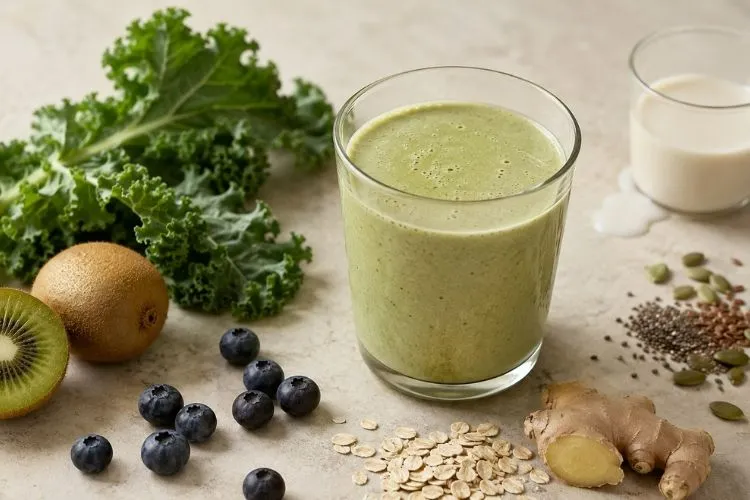
Picture your morning smoothie the way it should be: silky, cold, no stray flecks of kale caught between your teeth, no scraping frozen fruit off the sides of the jar, no watered-down mess because you added too much liquid just to keep the blades turning. Just a glass of something bright green and genuinely delicious, ready in under a minute.
That is what the right blender gives you. It disappears into the background of your routine and simply works, every single morning, with fibrous greens, frozen berries, seeds, protein powder, nut butter, and whatever else your day calls for.
But not everyone needs the same machine to get there. A household making large batches of smoothies and hot soup wants something different from someone who wants one portable protein shake before heading out the door. A blender built for thick frozen smoothie bowls may not be the most convenient choice for a quick everyday drink.
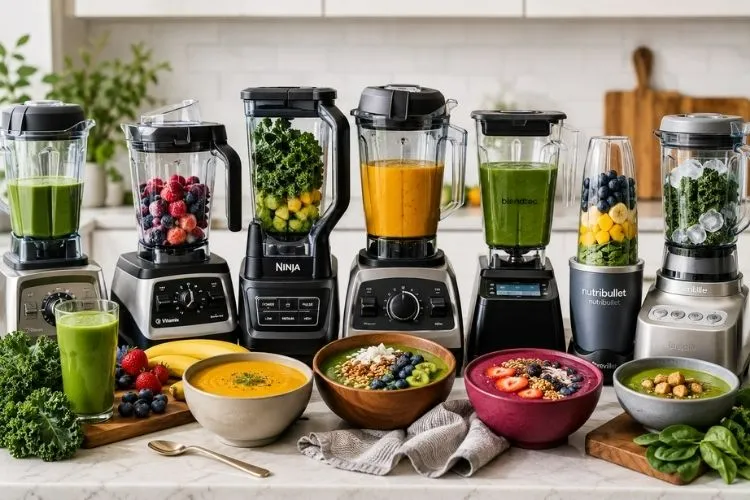
So instead of crowning one “best” blender and calling it a day, we picked seven, each with a clearly different strength:
- The best overall balance of power, control, and capacity
- The best choice for exceptionally smooth green blends
- A strong full-size blender at a lower price
- A premium blender for smoothies and hot soups
- A system built for frozen fruit and thick smoothie bowls
- A compact personal blender
- A simple, versatile option for larger batches
The goal isn’t to tell you the most expensive machine is automatically the best one. It’s to help you find the one that actually fits the smoothie you want to make tomorrow morning.
Quick Answer: What Is the Best Blender for Green Smoothies?
If you want one blender that handles almost everything beautifully, including smoothies, soups, frozen desserts, and dips, the Vitamix Propel 750 is our top pick. It gives you a generous 64-ounce container, real variable-speed control, a tamper for thick blends, and four automatic programs, all wrapped in a machine built to last for years.
Want maximum smoothness above everything else? The Blendtec Total Classic Original pushes green smoothies, whole-food drinks, soup, and frozen ingredients to an exceptionally fine, silky finish.
On a tighter budget but still want real full-size power? The Ninja Professional Plus Blender with Auto-iQ gives you a large pitcher and serious ice-crushing strength for a fraction of the premium price.
Our seven picks:
| Category | Blender |
|---|---|
| Best overall | Vitamix Propel 750 |
| Best for ultra-smooth green smoothies | Blendtec Total Classic Original |
| Best value full-size blender | Ninja Professional Plus BN701 |
| Best for smoothies and hot soups | Vitamix Ascent X5 |
| Best for frozen fruit and smoothie bowls | Ninja Foodi Power Blender & Processor System SS351 |
| Best compact personal blender | Ninja BlendBOSS |
| Best for large batches and everyday versatility | Blendtec Classic 575 |
Our Top Picks at a Glance
| Blender | Best for | Container | You’ll love it for | Worth knowing |
|---|---|---|---|---|
| Vitamix Propel 750 – Editor’s Pick | Best overall | 64 oz | Silky results on almost anything, with a tamper for the thick stuff | Premium price, but built to last for years |
| Blendtec Total Classic Original | Ultra-smooth green smoothies | WildSide+ jar | The smoothest, most restaurant-quality texture in this guide | Louder, and a shorter warranty than Vitamix |
| Ninja Professional Plus BN701 | Best value | 72 oz pitcher | Big batches and serious ice-crushing for a modest price | Less fine-tuned texture control |
| Vitamix Ascent X5 | Smoothies and hot soups | 48 oz | Ten guided programs, including a soup mode that makes it steaming hot from blending alone | Smaller container, higher price |
| Ninja Foodi SS351 | Frozen fruit and smoothie bowls | Pitcher + bowl + cup | Thick, spoonable bowls with minimal liquid, thanks to a built-in tamper | More parts to store and clean |
| Ninja BlendBOSS | Compact personal blending | 26 oz tumbler | Blend and drink from the same cup, with no extra dishes | Not built for family batches or soup |
| Blendtec Classic 575 | Large batches and versatility | WildSide+ jar | One simple, roomy machine for smoothies, soup, sauces, and dough | Fewer presets than the Total Classic Original |
Specifications and included components can vary between markets and retailer bundles. Check the exact model number and package contents before buying.
How We Selected These Blenders
We didn’t personally lab-test every model in this guide, and we want to be upfront about that. What we did instead:
- Compared current manufacturer specifications side by side
- Looked closely at container size, jar geometry, and how ingredients actually circulate toward the blades
- Weighed motor power against real-world tasks, including fibrous greens, frozen fruit, thick blends, and hot soup
- Checked current US and UK availability so nothing here is a dead end
- Made sure every product had a genuinely distinct use case
We deliberately avoided stacking the list with five nearly identical Vitamix machines. The Propel 750 and Ascent X5, for instance, are both premium Vitamix blenders, but the Propel 750 gives you a bigger 64-ounce container and simple manual control, while the Ascent X5 trades some capacity for ten guided programs and a ten-year warranty. You can compare the details yourself on the Vitamix Propel 750 product page and Vitamix Ascent X5 product page.
The same logic applies to the two Blendtec models: the Total Classic Original leans into six specific programs and ten speeds for maximum smoothness, while the Classic 575 keeps things simpler with timed cycles and a roomier jar for bigger batches.
Anita’s Take: What I Need From a Smoothie
For me, a smoothie isn’t a banana and a splash of milk. It’s usually something like kiwi, frozen kale, apple, ginger, wild blueberry powder, unsweetened soy milk, protein powder, silken tofu, oats, seeds, and a little olive oil, a real meal in a glass, built around the whole-food, anti-inflammatory approach I write about across this site.
That kind of mix asks a lot more of a blender than a basic fruit shake does. Frozen kale needs to break down completely, not cling to the sides. Kiwi seeds shouldn’t survive the blend. Protein powder needs to disappear into the drink instead of forming dry little pockets, and silken tofu should vanish into a silky texture rather than leaving anything uneven behind.
I also don’t want to drown a good smoothie in extra liquid just to keep the blades moving.
So when I look at a blender, wattage alone tells me almost nothing. What actually matters to me:
- A container shaped to keep ingredients circulating, not stuck to the sides
- Real control, with the ability to start slow and build up speed
- A tamper, or some other way to push thick mixtures toward the blades
- The power to handle frozen greens and fruit without a fight
- Easy cleanup after seeds, protein powder, and greens
- A size that actually matches what I’m making, not more, not less
If you want the bigger picture on how a smoothie or juice fits into a broader way of eating, our guide to powerful diets and superfoods for optimal lung health is a good next read.
1. Vitamix Propel 750 – Best Overall
Why you’ll love it: This is the blender that quietly does everything well. Smoothies come out silky, soup comes out steaming without a stove, and thick nut butter or hummus never leaves you wrestling with a stuck blade. The included tamper handles that for you.
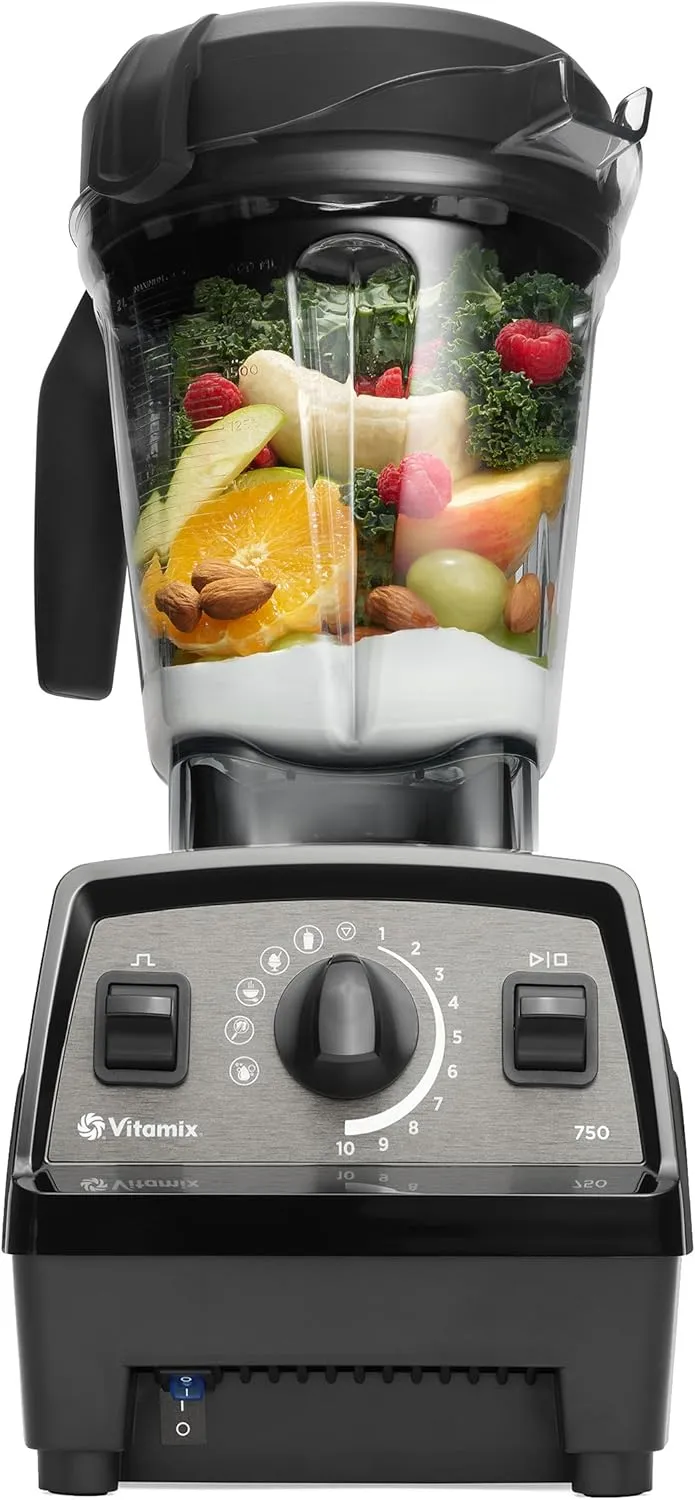
The Propel 750 gives you a 64-ounce low-profile container, a 2.2-horsepower motor, ten variable speeds, pulse control, and four dedicated programs: Smoothie, Hot Soup, Frozen Dessert, and Dip & Spread. The low-profile shape is designed to slide under standard kitchen cabinets more easily than older, taller Vitamix containers.
Why it’s so good for green smoothies: Fibrous greens, frozen fruit, seeds, and protein powder don’t always fall naturally toward the blades. They tend to bridge or pocket above them. The Propel 750 solves this two ways at once: gradual variable speed to build momentum, and a tamper to physically guide anything stubborn down into the blend. You’re never stuck stopping every thirty seconds to scrape down the sides.
Best for: One blender that covers smoothies, soup, dips, sauces, and frozen desserts. A large container for family-sized batches. A simple dial instead of a screen full of settings you’ll never touch.
Worth knowing: It’s a genuine investment, and the 64-ounce container is built with medium-to-large batches in mind. If you only ever make one small smoothie, a more compact machine may suit you better.
Bottom line: The Propel 750 earns the top spot because it combines capacity, real control, a tamper, and everyday versatility without making you think too hard about which button to press.
2. Blendtec Total Classic Original – Best for Ultra-Smooth Green Smoothies
Why you’ll love it: If silky-smooth is your obsession, this is the machine that gets you there. No stray flecks of kale, no gritty seeds, just a genuinely restaurant-quality texture, every time.
The Total Classic Original pairs a 1,560-watt motor with six preprogrammed cycles: Smoothie, Batters, Hot Soup, Whole Juice, Ice Cream, and Ice Crushing, plus ten manual speeds and pulse control, all built around Blendtec’s wide WildSide+ jar.
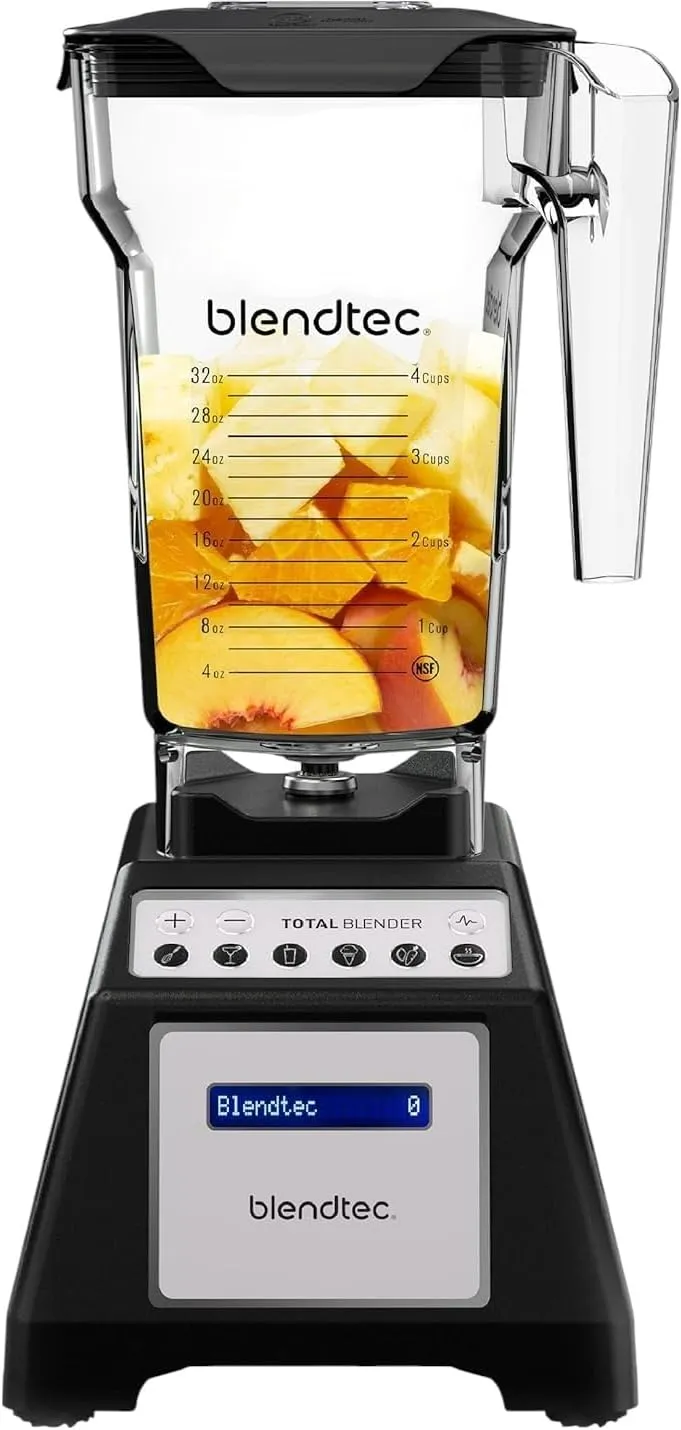
The WildSide+ jar: Instead of a simple round container, the jar’s angled side is designed to keep ingredients circulating past the blades more efficiently. Blendtec lists it with a 90-ounce total capacity, though the recommended marked blending level sits considerably lower. This is worth knowing so you don’t overfill it.
A different philosophy from Vitamix: Blendtec relies on jar geometry, automatic cycles, and a blunt, high-speed blade rather than a traditional tamper. If you like pressing one button and letting the machine do the rest, this feels effortless. If you like hands-on control over texture, the Propel 750’s tamper may suit you better.
Best for: Kale, spinach, cucumber, frozen berries, ginger, protein powder, or anything you want blended into something genuinely, completely smooth. Six useful programs, hot-soup capability, and a wide, forgiving jar.
Worth knowing: It runs loud, as most high-speed blenders do, and its two-year warranty is noticeably shorter than the Vitamix models here, though still enough to cover normal wear for most households.
Bottom line: For buyers who care most about pure texture and don’t mind an automatic-first approach, the Total Classic Original delivers some of the smoothest green blends you’ll get from any machine in this guide.
3. Ninja Professional Plus Blender with Auto-iQ – Best Value Full-Size Blender
Why you’ll love it: A genuinely large blender, strong enough to crush a full pitcher of ice and frozen fruit, at a price that doesn’t require a second thought.
The BN701 gives you a 72-ounce Total Crushing pitcher (64-ounce maximum liquid), a 1,400-peak-watt motor, and three Auto-iQ programs for smoothies, frozen drinks, and its “nutrient extraction” setting. This is Ninja’s name for a blending cycle, not a separate juicing process. The fiber stays right in your drink, the same as with any other full-size blender.
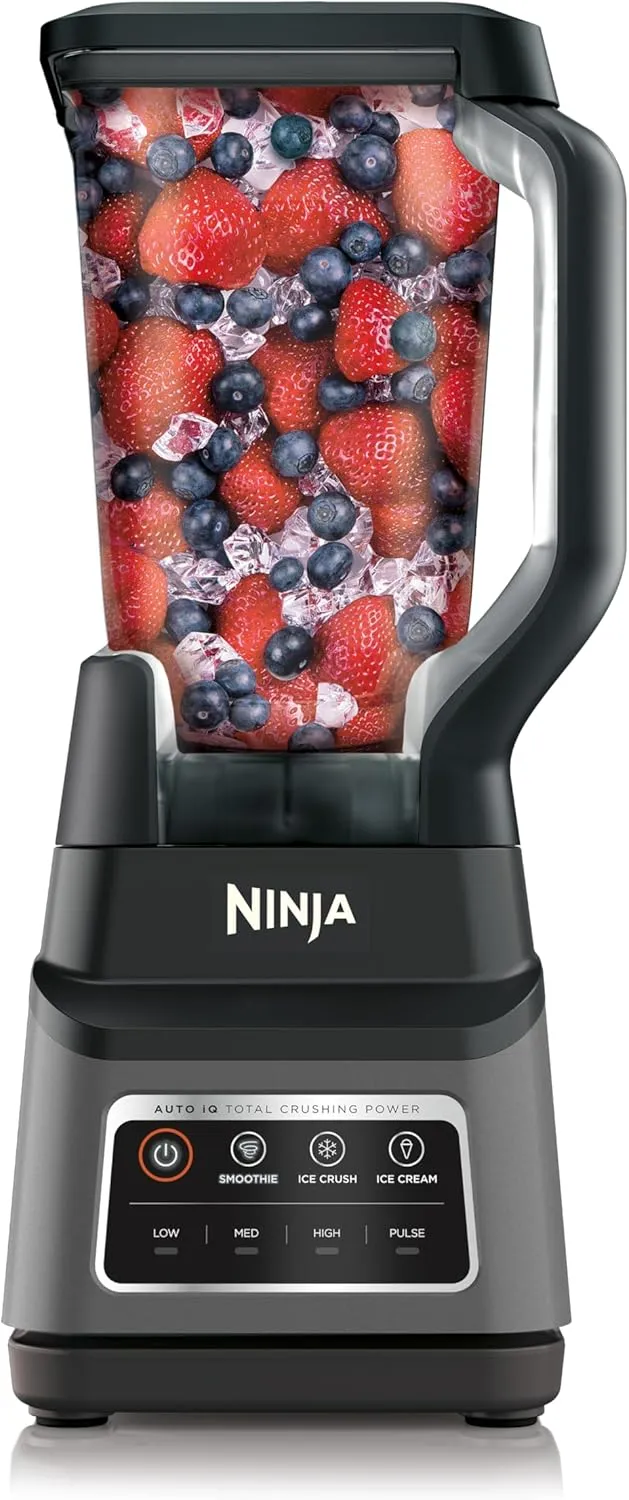
What makes it different: Instead of a fixed bottom blade, Ninja uses a tall stacked blade assembly running through the center of the pitcher. It is brilliant for crushing ice, powering through frozen fruit, and moving ingredients through a wide batch. Add liquid and softer ingredients first, then greens and frozen fruit on top, for the best result.
Best for: A full-size blender at a moderate price. Big batches for the whole family. Strong ice-crushing and frozen-drink performance. Dishwasher-safe removable parts for easy cleanup.
Worth knowing: With three manual speeds rather than ten, it offers a little less gradual texture control than the premium picks. Very fibrous greens may occasionally want a slightly longer blend or a touch more liquid, which is a small tradeoff for the price.
Bottom line: For households that want serious full-size performance without a premium price tag, the BN701 delivers real, everyday value.
4. Vitamix Ascent X5 – Best for Smoothies and Hot Soups
Why you’ll love it: Press a button and, minutes later, pour yourself a bowl of genuinely steaming soup made entirely by blade friction, with no stove required. Then use the same machine for tomorrow’s smoothie bowl.
The Ascent X5 is the most program-rich blender in this guide: a 48-ounce container, ten automatic programs (Smoothies, Frozen Desserts, Soups, Frozen Cocktails, Dips & Spreads, Smoothie Bowls, Frappés, Nut Butters, Non-Dairy Milks, and Spice Grinding), a self-cleaning cycle, a digital timer, and an on-screen tamper indicator, all backed by a ten-year warranty.
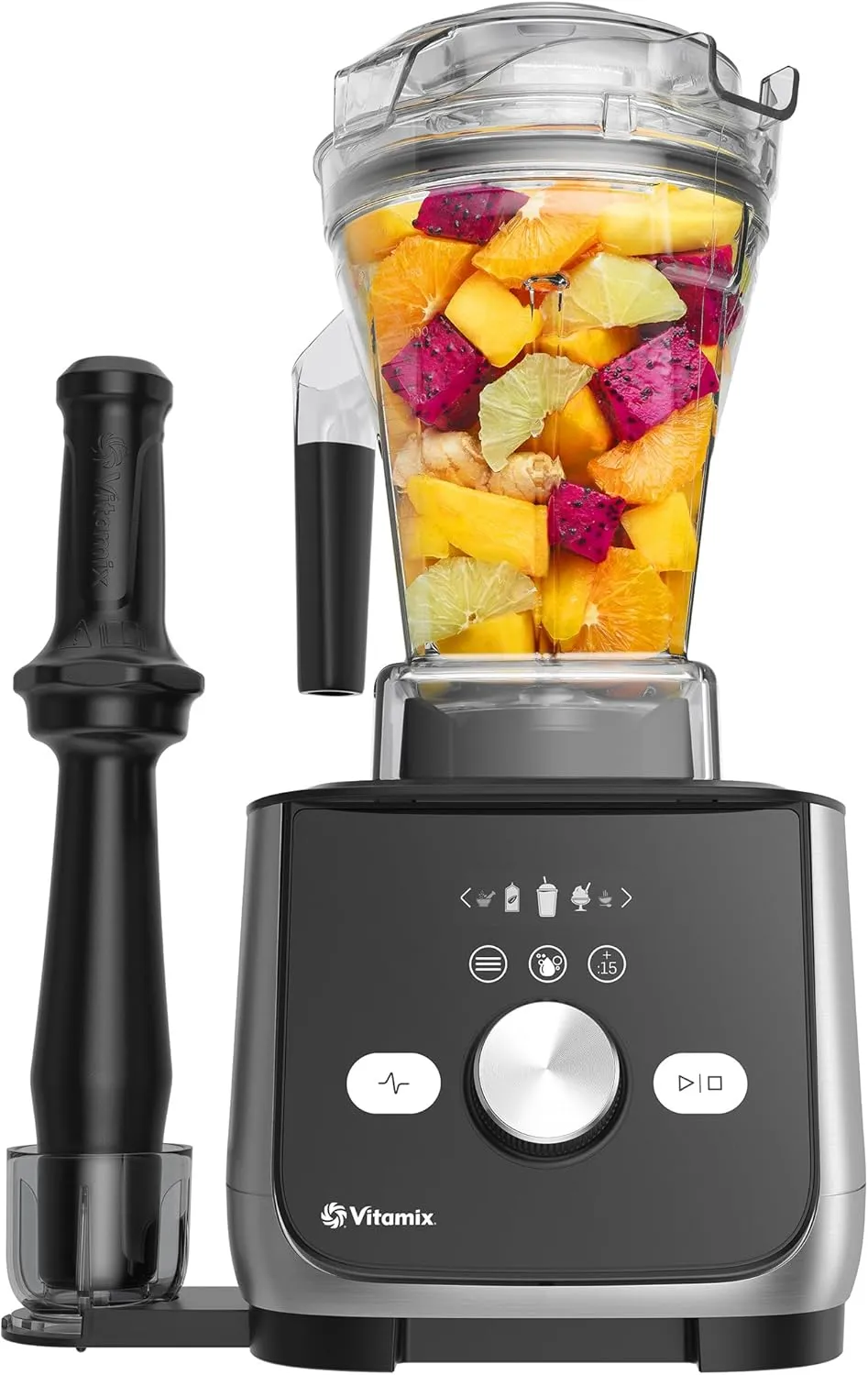
Why it’s so good for soup: The dedicated soup program runs long enough for blade friction alone to bring cooked ingredients to a steaming finish. Think tomato and red pepper soup, carrot and ginger, butternut squash, pea soup, or a creamy lentil puree, all without touching a pot. Raw ingredients that need cooking for safety should still be cooked first. The blender heats a puree; it doesn’t replace the stove for raw meat or dry beans.
The 48-ounce container: Smaller than the Propel 750’s 64-ounce jar, but genuinely well-suited to one to four servings, including smoothies, soup, sauces, or plant milk for a smaller household.
Best for: Buyers who make both smoothies and hot blended soup regularly. Ten guided programs. A dedicated smoothie-bowl setting. A self-cleaning cycle that makes daily use effortless.
Worth knowing: It’s the most expensive machine in this guide, and the smaller container may feel tight if you regularly blend for a crowd.
Bottom line: For anyone who wants one premium machine that handles both smoothies and genuinely hot soup, with a decade of warranty behind it, the Ascent X5 is worth the investment.
Check current price and availability on Amazon
5. Ninja Foodi Power Blender & Processor System SS351 – Best for Frozen Fruit and Smoothie Bowls
Why you’ll love it: Finally, a thick açai-style smoothie bowl that actually holds together on a spoon, with no soupy mess and no fighting a stuck blade, thanks to a bowl built with its own tamper.
View support information for the Ninja Foodi SS351
The system centers on a dedicated 14-ounce smoothie-bowl vessel with a built-in tamper you can rotate while the machine runs, moving frozen fruit toward the blades without ever lifting the lid. Ninja designed it specifically to process frozen ingredients with minimal added liquid, exactly what a proper smoothie bowl needs.
More than one bowl: The system also includes a 72-ounce Power Blender and Processor pitcher and a 24-ounce single-serve cup, so the same base covers everything from a family-sized smoothie to a solo protein shake. Exact bundle contents vary by retailer, so it’s worth confirming what’s included before ordering.
Best for: Frozen açai and berry bowls, “nice cream,” thick protein bowls, nut butter, and hummus. A full-size pitcher for bigger batches. A personal cup for smaller ones.
Worth knowing: It’s a multi-piece system, so there are more parts to store and wash than a simple pitcher blender. That is a fair tradeoff if thick, spoonable blends are a regular part of your routine.
Bottom line: If smoothie bowls are the whole point for you, the SS351’s built-in tamper makes it the clear choice in this guide.
Check current price and availability on Amazon
6. Ninja BlendBOSS – Best Compact Personal Blender
Why you’ll love it: Blend your smoothie, twist on the lid, and walk out the door, with no pitcher to wash, no glass to dirty, and just one cup from counter to commute.
The US model comes with a 26-ounce travel tumbler featuring an integrated drinking lid, detachable straw, carry handle, and leak-resistant flip cap. The UK version uses a 710 ml tumbler with a 650 ml fill line, so check the UK BlendBOSS listing for exact specs before publishing. A 1,200-peak-watt motor and three Auto-iQ programs, Smoothie, Blend, and Crush, handle frozen berries, banana, spinach, protein powder, and ice with real structure behind each cycle.
Best for: One generous smoothie at a time. A cup-holder-friendly design for the commute. Less washing than a full pitcher-and-bottle routine.
Worth knowing: It’s built around a single serving, not a family batch. Soup, dough, and large-format smoothies still call for a full-size machine.
Bottom line: For anyone whose smoothie routine is really a one-person, one-cup affair, the BlendBOSS turns that into the easiest part of the morning.
7. Blendtec Classic 575 – Best for Large Batches and Everyday Versatility
Why you’ll love it: One roomy, no-fuss machine that goes from a big batch of green smoothies to hot soup to pancake batter, all with the same simple timed cycles.
The Classic 575 runs on the same 1,560-watt motor as the Total Classic Original, paired with a Smoothie program, a Clean cycle, 60- and 90-second timed cycles, five incremental speeds, and pulse, all built around the WildSide+ jar.
A useful clarification: Blendtec lists the WildSide+ jar’s total physical capacity at 90 ounces, but the marked, recommended blending level is roughly 36 ounces. The extra headroom gives ingredients room to circulate. It isn’t an invitation to fill the jar to the brim.
Best for: Green smoothies, frozen-fruit blends, sauces, salsa, hot blended soup, and simple bread dough, all through one uncomplicated interface with generous jar headroom.
Worth knowing: It has fewer presets and manual speeds than the Total Classic Original, and shares the same two-year warranty. This is a fair tradeoff for buyers who’d rather have simple timed cycles than a longer menu of programs.
Bottom line: For anyone who wants one dependable, roomy Blendtec without the extra programs of the Total Classic Original, the Classic 575 is a smart, versatile everyday choice.
Vitamix vs. Ninja for Smoothies
Choose Vitamix if you love gradual, hands-on control, a traditional tamper, and a machine you’ll lean on for years of daily use, including smoothies, soups, sauces, and more. The Propel 750 gives you ten variable speeds and a seven-year warranty; the Ascent X5 adds ten guided programs and a ten-year warranty.
Choose Ninja if price, frozen-fruit power, and specialized cups matter more to you than fine-grained manual control. The BN701 is the simple full-size value pick, the SS351 shines for thick smoothie bowls, and the BlendBOSS is built entirely around one portable tumbler.
The practical answer: For frequent, fibrous green smoothies where texture control matters most, Vitamix tends to be the stronger long-term fit. For frozen fruit, family batches, smoothie bowls, or a personal drink at a lower price, Ninja often delivers more for the money.
Blendtec vs. Vitamix
Both brands take a genuinely different path to the same silky result. Blendtec leans on a wide, angled jar, automatic cycles, and a blunt, high-speed blade, with no tamper required for most recipes. Vitamix leans on a traditional tamper and gradual, hands-on speed control.
Choose Blendtec for automatic cycles, a wide jar, and simple push-button operation. Choose Vitamix for more direct control, a physical tamper, and a longer warranty: seven years on the Propel 750 and ten on the Ascent X5, versus two years on both Blendtec models here.
Neither approach removes the need for sensible ingredient order and the right batch size, but both, done well, get you to the same smooth, restaurant-quality glass.
Blender vs. Juicer: Which Fits Your Routine?
A blender and a juicer both make it easier to eat and drink more fruit and vegetables, but they hand you very different results. A blender keeps the whole ingredient together, including fiber, protein powder, oats, seeds, silken tofu, nut butter, and more, for a filling, complete drink. A cold press juicer strips most of the pulp away, leaving a lighter, thinner drink from a bigger volume of fresh produce.
Reach for a blender when you want something filling, such as a real breakfast or snack, frozen fruit, a smoothie bowl, or a thick soup. Reach for a cold press juicer when you want something lighter, such as a big batch of carrot, celery, beet, or ginger juice, or an easy stand-in for soda or a sugary coffee drink.
You don’t have to choose only one. Many people lean on a smoothie when they want something substantial, and fresh juice when they want something lighter. For seven vegetable-forward recipes, see Juicing for Immune Support. To compare juicing machines, see The 7 Best Cold Press Juicers of 2026.
How to Choose the Best Blender for Green Smoothies
Look past peak wattage. A high number on the box doesn’t guarantee a smooth drink. Jar shape, blade design, ingredient circulation, and whether a tamper is available all matter just as much.
Match the container to how you actually blend. Choose a personal blender if you make one drink at a time, a 48-ounce container for small-to-medium batches, or a full 64-ounce pitcher if you’re regularly blending for the whole household. Always check the manufacturer’s marked liquid line, not the jar’s total physical volume.
A tamper earns its keep for thick recipes. This includes smoothie bowls, frozen desserts, nut butter, hummus, or any smoothie made with very little liquid. The Vitamix models include a traditional tamper; the SS351 uses its own built-in version inside the bowl.
Decide if you actually need soup capability. It’s a genuinely useful feature if you make pureed vegetable soup often, but less essential if you don’t.
Think about your realistic cleaning routine. Removable, dishwasher-safe parts help. The Ninja systems give you more vessels and more versatility, but also more pieces to wash; Vitamix and Blendtec keep things to a single container.
Check the warranty. It varies more than you’d expect across this list: ten years on the Ascent X5, seven on the Propel 750, and two years on both Blendtec models. Always confirm current terms for your exact regional model before buying.
Frequently Asked Questions
What is the best blender for green smoothies?
The Vitamix Propel 750 is our best overall pick, with a large container, real variable-speed control, guided programs, and a tamper for the thick stuff. If ultra-smooth texture is your priority, the Blendtec Total Classic Original and its wide WildSide+ jar are worth a close look too.
Which blender is best for frozen fruit?
The Ninja Foodi SS351 takes the top spot for frozen fruit and smoothie bowls, thanks to its built-in tamper that moves dense frozen ingredients with minimal added liquid. For everyday frozen-fruit smoothies without the bowl-specific features, the more affordable Ninja BN701 is a strong full-size alternative.
Can a high-speed blender make hot soup?
Yes. The Propel 750, Ascent X5, and both Blendtec models here can bring blended soup to a steaming finish through blade friction alone. They don’t have a built-in heating element, so ingredients that need to be cooked for safety should still be cooked first.
Do I need a tamper for green smoothies?
Not always. A smoothie with enough liquid can blend just fine without one. It becomes genuinely useful with large amounts of frozen greens, frozen fruit, nut butter, dates, or very little liquid. Blendtec’s models lean on jar geometry and automatic cycles instead.
Is a personal blender powerful enough for kale?
A strong personal blender like the BlendBOSS handles kale well with the right serving size, ingredient order, and liquid level. For frequent smoothies loaded with fibrous greens or seeds, a full-size Vitamix or Blendtec gives you more room and control.
Can I put protein powder in a green smoothie?
Yes. Add your liquid first, rather than pouring powder directly onto dry blades. It also pairs well with silken tofu, yogurt, soy milk, seeds, or oats for an even more filling drink.
Why is my smoothie foamy?
Usually from too much air getting whipped in. Try a lower finishing speed, a shorter blend time, less leafy produce added all at once, or a quick pulse instead of extended high-speed blending at the end.
Why does my smoothie cause bloating?
Large smoothies packed with fruit, fiber, seeds, and protein powder can add up quickly. Try a smaller serving, a simpler recipe, and drinking it a little more slowly. Breathful Living’s guide to breathing techniques for digestion pairs well with a calmer mealtime routine, too.
Is blending healthier than juicing?
They simply serve different purposes. Blending keeps the fiber and makes room for protein, oats, seeds, tofu, and nut butter. Juicing removes the pulp for a lighter drink from more fresh produce. Neither one has to replace the other. Read Juicing for Immune Support for recipes, or use our cold press juicer guide to find the right machine.
How can I make a green smoothie more filling?
Add one or more of the following: silken tofu, unsweetened soy milk, plain yogurt, oats, chia seeds, ground flaxseed, nut or seed butter, or protein powder. The blender should make your recipe possible, not limit what you can put in it. For more ideas, see Breathful Living’s guide to oxygen-supporting foods.
Final Verdict
The Vitamix Propel 750 is our best overall pick for anyone who wants one dependable machine for green smoothies, soup, frozen desserts, sauces, and everyday food prep. Choose the Blendtec Total Classic Original when ultra-smooth texture and automatic cycles are your top priority. The Ninja Professional Plus BN701 gives you full-size power at a friendlier price. The Vitamix Ascent X5 is the premium choice for anyone who wants guided programs and genuinely hot blended soup on demand. The Ninja Foodi SS351 is unmatched for thick, frozen smoothie bowls, while the Ninja BlendBOSS is the easiest way to a single portable smoothie. The Blendtec Classic 575 rounds things out as a simple, roomy everyday workhorse.
The best blender, in the end, is the one that matches how you actually eat: your normal serving size, how thick you like things, whether you need a tamper, how much counter and storage space you have, and how much cleaning you’re honestly willing to do every morning.