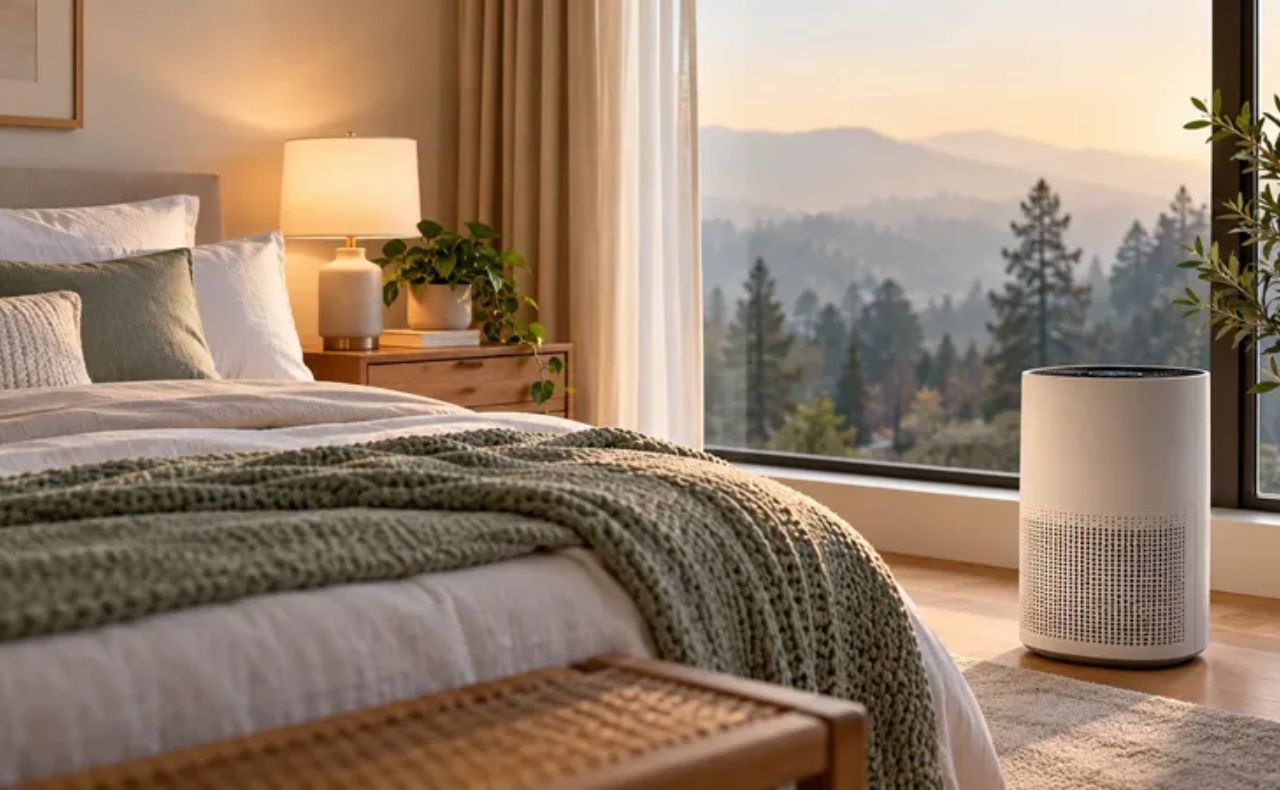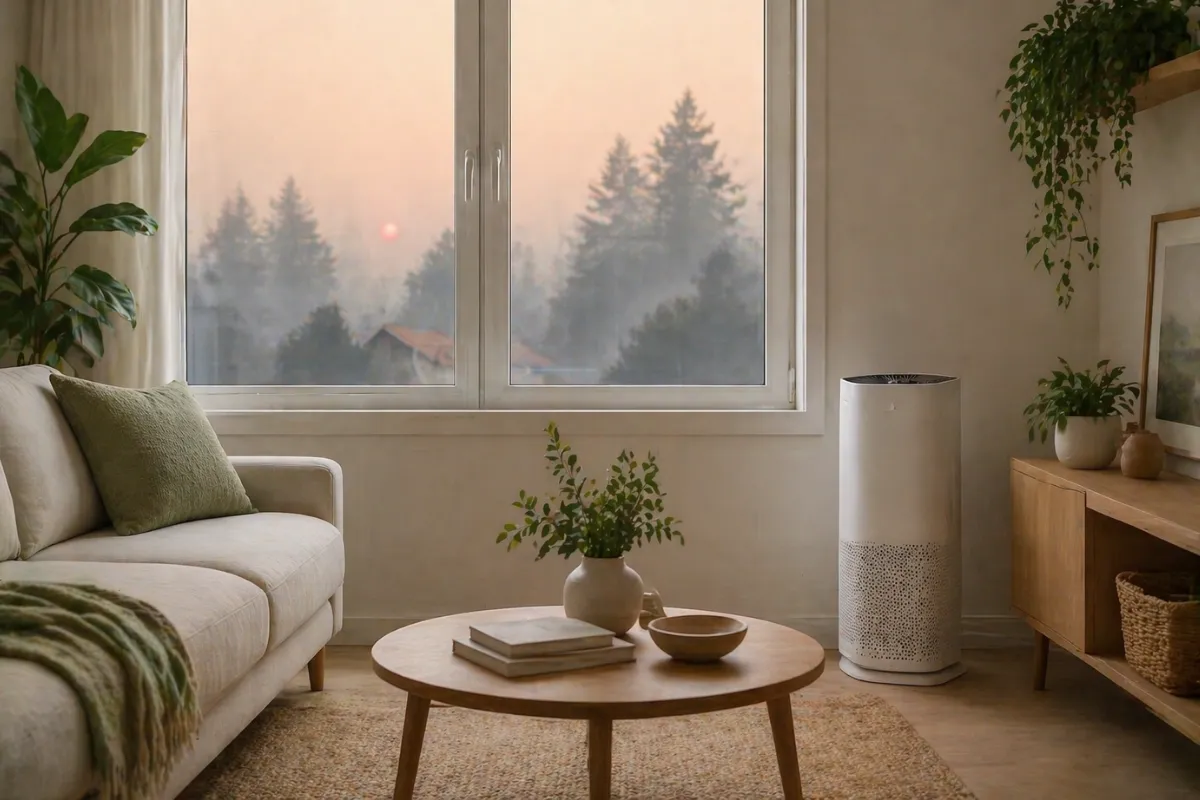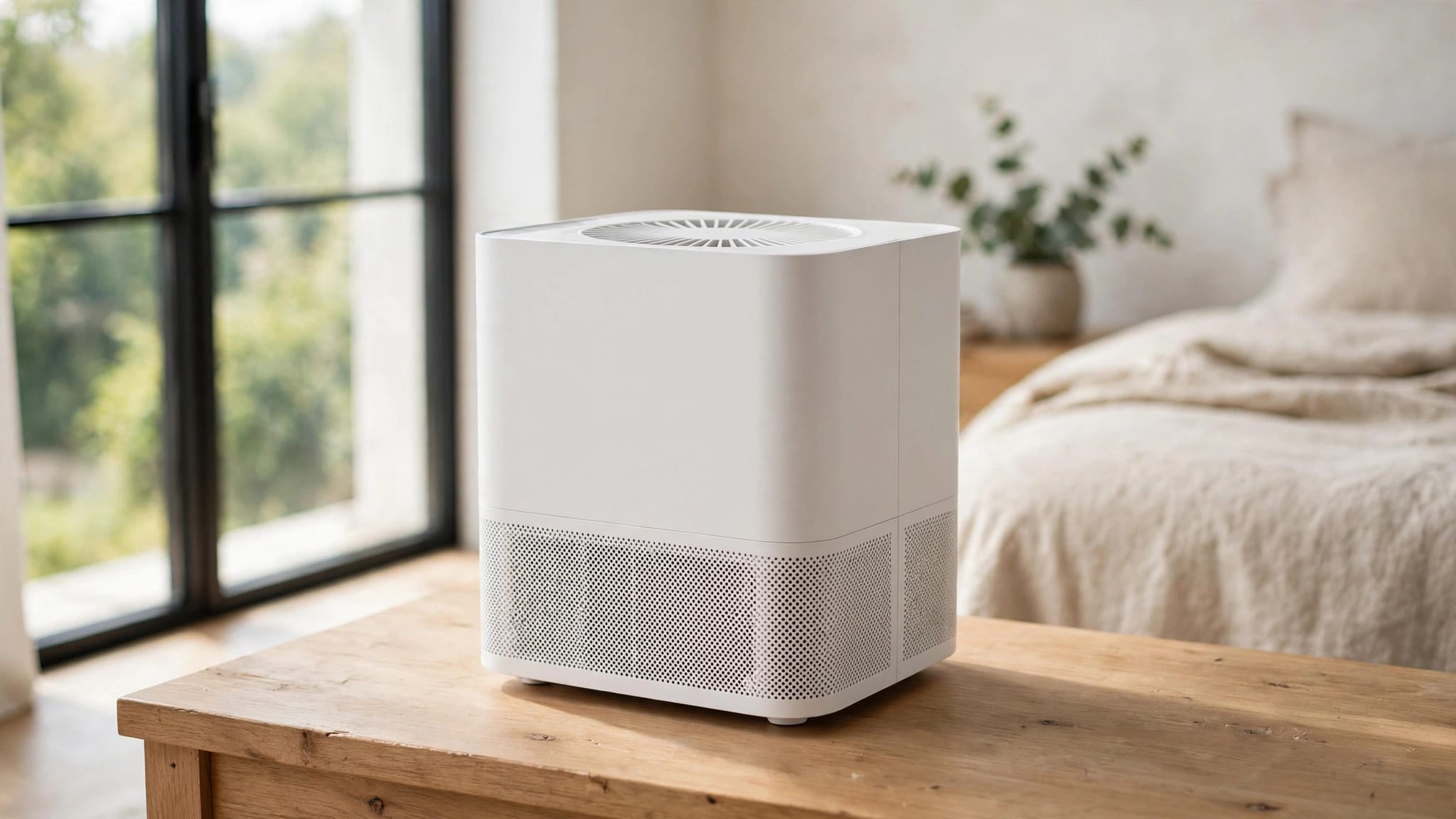
Put your air purifier in the room you use most, on a stable surface with clear space around its intake and outlet. Good air purifier placement gives the fan access to room air without curtains, furniture, or walls blocking its path.
You don’t need to rearrange your whole home or find a perfect central spot. Clear airflow, suitable room capacity, and a fan setting you can comfortably keep running matter more.
Start with the airflow around your unit, then adjust its position for your room and daily routine.
Key Takeaways
- Follow your purifier’s manual for clearance, orientation, and suitable surfaces rather than using a universal distance rule.
- Match the clean air delivery rate (CADR) to the room; capacity matters more than placement alone.
- Prioritize bedrooms and other occupied areas, and keep the intake and outlet unobstructed. A HEPA air purifier still needs suitable capacity and clear airflow to capture airborne particles.
- Combine filtration with fewer pollution sources and ventilation when outdoor conditions allow.
Start With Clear Airflow Around the Unit
The EPA’s guide to home air cleaners emphasizes appropriate sizing and unobstructed airflow. Your purifier needs to draw room air through its air intake and filter. It then returns cleaned air to the space.
Check both the intake and outlet
Find where air enters and leaves your particular model. Some units draw air through several sides; others have a rear intake or upward-facing outlet.
Keep each opening clear of curtains, bedding, furniture, and stored items for optimal performance. A gap at the front doesn’t help if the working intake is pressed against a sofa. Even a true HEPA filter can’t compensate for blocked vents.
Follow the manufacturer’s recommended clearance distances to ensure proper airflow around your purifier.
Choose function over concealment
An open position along a wall can work if it meets the unit’s clearance requirements. The exact middle of the room isn’t compulsory.
Corners become a problem when nearby surfaces restrict airflow. The same applies to narrow furniture gaps and enclosed shelving.
Check cords and walking routes, too. A slightly less central location that stays unobstructed is more practical than one that creates a trip hazard.
Match CADR to the Room Before Moving Furniture
CADR, or clean air delivery rate, describes the volume of particle-cleaned air a purifier delivers. It combines airflow and particle removal, so a label showing filter efficiency alone doesn’t tell you how much cleaned air the unit delivers.
AHAM’s air filtration standards give a useful starting rule for applying CADR to your room size: smoke CADR should be at least two-thirds of the room’s floor area, using square feet and cubic feet per minute.
For a room with an 8-foot ceiling, the calculation looks like this:
| Room dimensions | Floor area | Starting smoke CADR |
|---|---|---|
| 10 by 12 feet | 120 square feet | 80 cfm |
| 12 by 15 feet | 180 square feet | 120 cfm |
| 15 by 20 feet | 300 square feet | 200 cfm |
Higher ceilings need more capacity. These numbers also don’t guarantee adequate cleaning at every fan speed.
Published CADR generally reflects the highest setting. Sleep mode can deliver substantially less airflow, so check lower-speed performance where it’s documented.
If your main room needs more capacity, Breathful Living’s large-room air purifier guide explains the airflow trade-offs. Moving a small unit won’t compensate for insufficient capacity.
Where to Place an Air Purifier in a Bedroom
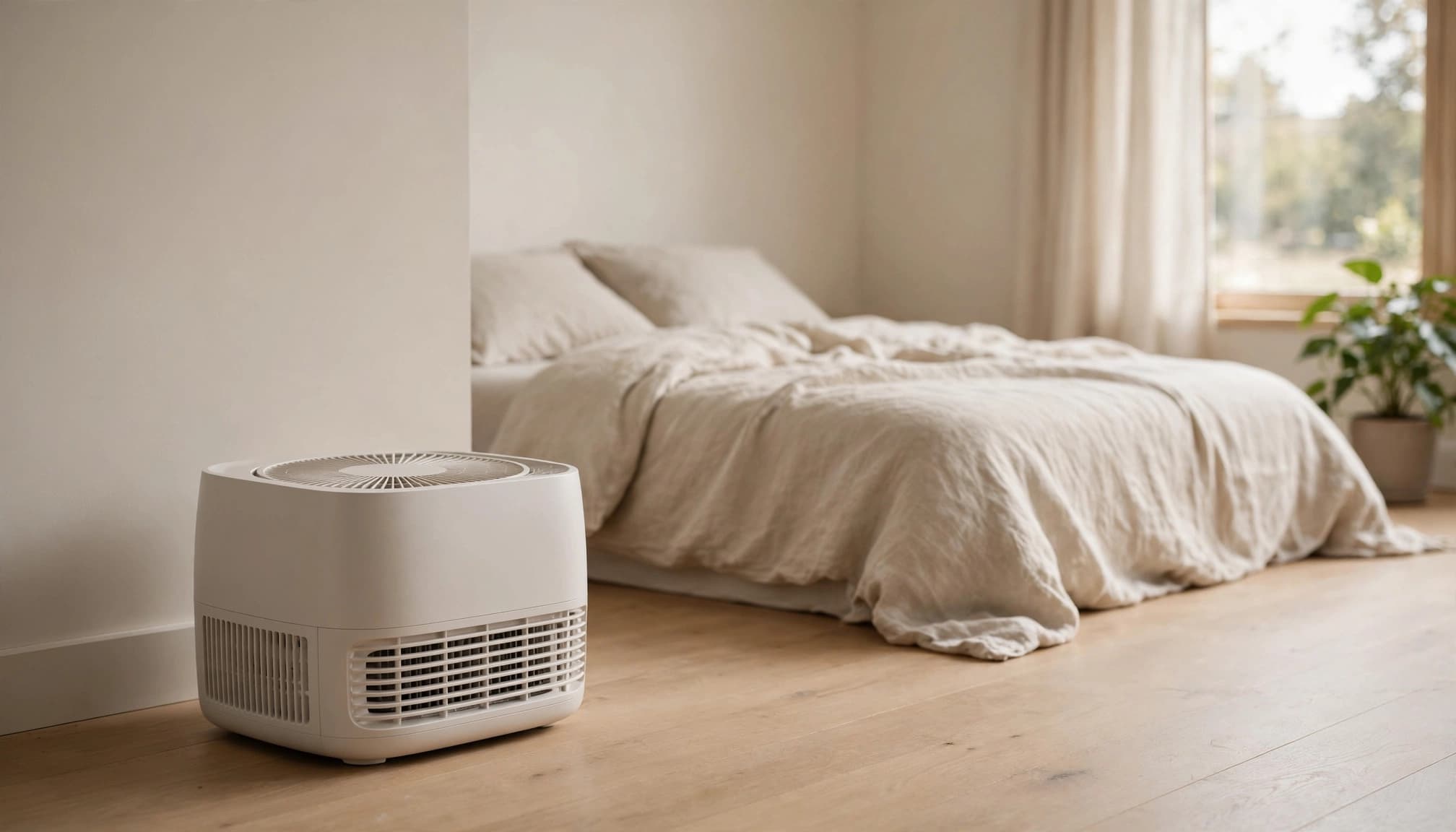
For bedroom placement, choose a spot with clear vents and a setting you can tolerate overnight. Bedding, curtains, and noise often matter more than a precise distance from your pillow.
Consider the bed without crowding it
Keep the unit in the bedroom rather than assuming a hallway purifier will clean the sleeping space effectively.
There isn’t a verified universal rule requiring a purifier to sit 3 to 6 feet from your head. Follow model-specific instructions and consider comfort.
Let cleaned air reach your breathing zone without creating an uncomfortable draft. Check that a duvet or curtain can’t cover the intake while you’re asleep. If you use a nightstand, make sure it’s stable and leaves the vents clear.
Filtration can reduce airborne dust mite allergen, but it won’t remove material settled on bedding. Wash bedding regularly, too.
Choose a sustainable overnight setting
A purifier helps only while air moves through its filter. Choose a setting with useful airflow and a noise level you can tolerate throughout the night.
Moving the unit slightly farther from the bed may help with noise, provided airflow stays clear. Turning it down to its weakest setting isn’t always the better compromise.
During smoke events, Breathful Living’s bedroom wildfire-smoke purifier guide covers capacity, continuous operation, and overnight trade-offs.
Adapt Placement to Pets, Cooking, and Damp Rooms
When pollution sources are identifiable, placing the intake nearby may help capture particles before they spread. Choose a position that follows the model’s clearance and safety instructions.
Living rooms and pet resting areas
Start with the part of the living room where people spend time. Avoid hiding the unit behind a sofa, where furniture and fabric can obstruct airflow.
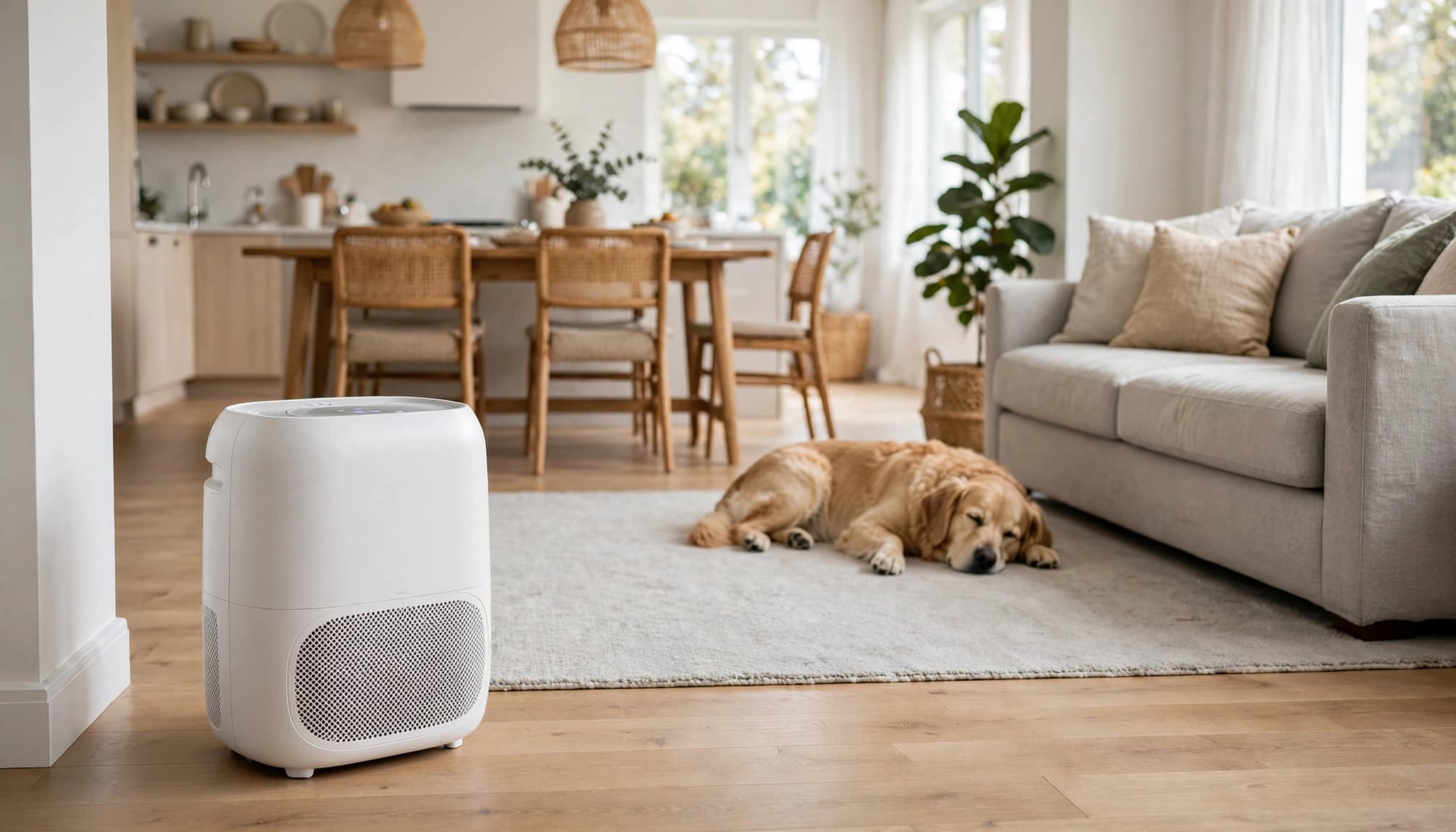
If pet dander is the main concern, consider placing the unit near your pet’s regular resting area. Leave the intake open and keep the cord away from chewing or play.
Filtration addresses airborne particles, but it won’t remove settled material, including dust mite allergen, from surfaces. Vacuuming and washing pet bedding remain useful.
Kitchens and cooking odors
Use an externally vented range hood when available. It captures cooking emissions close to their source.
For kitchen placement, consider a nearby safe position without exposing the purifier to burner heat, grease splatter, or water. Don’t put it on the stove or beside a sink.
Particle filtration and odor reduction are different jobs. An activated carbon filter may adsorb certain gases and odors, but it won’t remove every odor or gas. Performance depends on the amount and type of media in the activated carbon filter.
Basements, attics, and moisture
Place the unit in an occupied area where it can operate within its specified temperature and humidity limits.
A purifier doesn’t repair a leak or remove established mold. Address moisture and affected materials rather than relying on filtration beside a damp wall.
Avoid treating bathrooms or unconditioned attics as suitable locations without checking the manual.
Plan for Open Spaces and HVAC Airflow
Open-plan homes need more thought because air doesn’t move evenly through every connected area. Furniture, narrow openings, and ceiling height affect air circulation and how readily room air reaches the purifier.
Size the connected space honestly
If your living room opens directly into a dining area, account for the connected space rather than only the seating area.
For an L-shaped layout, try an unobstructed position that serves the occupied section. One unit at the far end may not clean the other section equally well.
Compare coverage claims using the same air-change assumptions. AHAM’s air-changes-per-hour guidance bases suggested room size on 4.8 air changes per hour. Claims based on one air change describe much slower cleaning.
Keep HVAC vents available
Don’t place the purifier where it blocks a supply register or return grille. Keep both systems’ airflow paths open.
There isn’t a universal best position beside an HVAC return. Prioritize clear purifier airflow and the area people occupy.
For separate rooms or floors, don’t assume one portable unit offers whole-home coverage. The EPA’s portable air-cleaner guidance describes these devices as intended for individual rooms or specific areas. Compatible HVAC filtration can supplement them.
Keep Doors and Windows Closed When It Helps
A closed door gives a correctly sized purifier a more manageable bedroom space to clean. An open door connects it to additional air that its room rating may not cover.
During wildfire smoke or heavy outdoor particle pollution, keep windows and exterior doors closed when practical. Follow local guidance and keep the room comfortably cool.
At other times, ventilation can help indoor air quality when outdoor air is cleaner. Filtration doesn’t replace fresh-air ventilation or control of pollution sources, and ordinary particle filters don’t remove every gaseous pollutant.
Don’t keep a room dangerously hot to maintain a closed space. Cooling and suitable ventilation still matter.
Check Results Without Chasing Every Reading
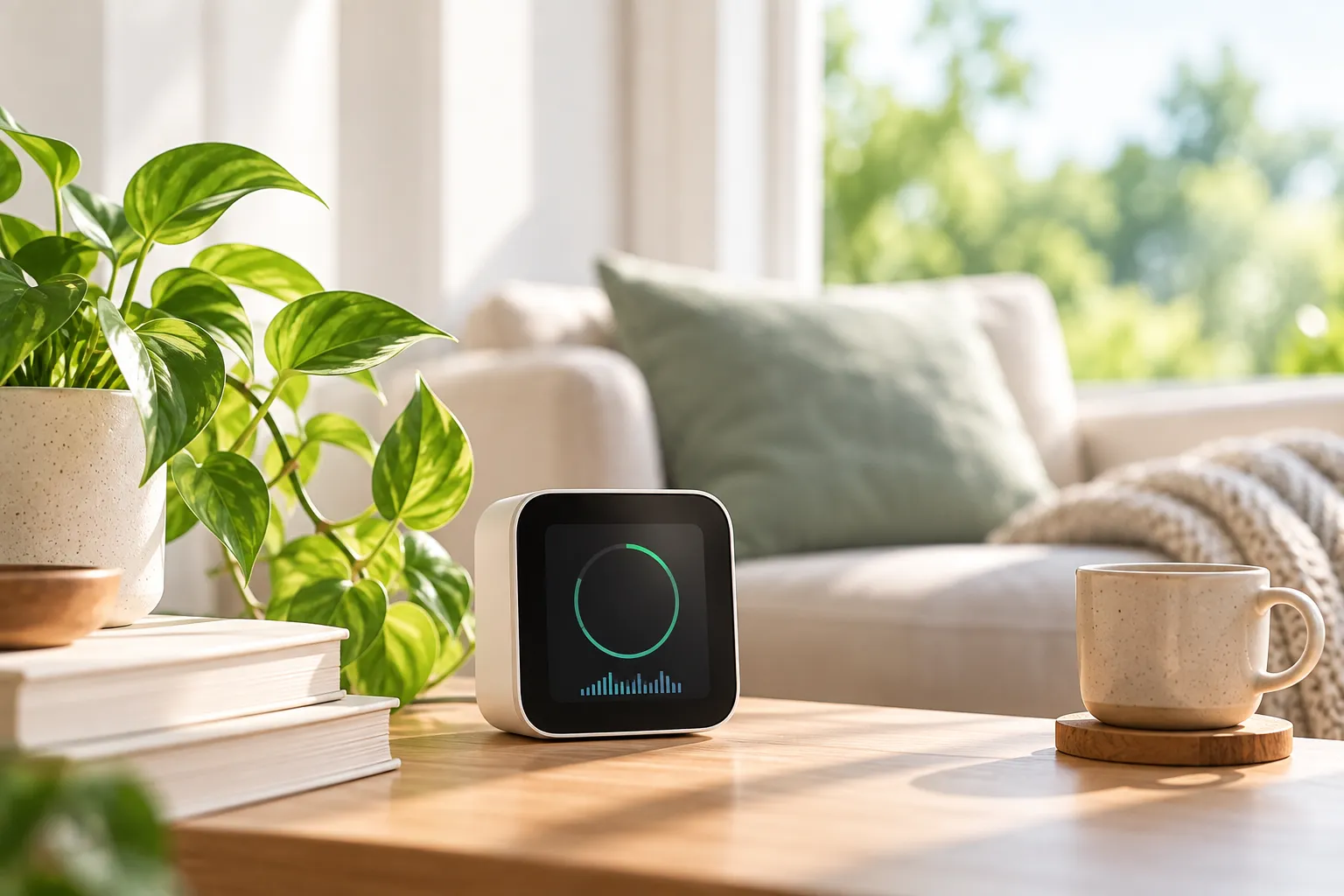
A separate particle monitor can help compare locations, but you don’t need one to establish sensible placement. Start with the manual, clear airflow, and appropriate capacity.
Measure where you spend time
A built-in sensor measures conditions near the purifier. Automatic mode depends on that reading and the manufacturer’s programming.
Place a separate monitor in a representative occupied area near your breathing zone, away from purifier exhaust, direct drafts, cooking plumes, and humidifier mist. Keep its position consistent when comparing changes.
Breathful Living’s guide to interpreting indoor PM2.5 readings explains the display and its limits. Look for sustained trends rather than tiny fluctuations.
A low particle reading beside the purifier doesn’t prove that the rest of the room has equally low readings.
Maintain airflow before blaming placement
Check the prefilter and main filter if performance seems to drop. Follow the model’s cleaning and replacement instructions, including those for an activated carbon filter if applicable. Don’t wash a filter unless the manufacturer permits it.
When comparing positions, keep fan speed, doors, and other conditions as consistent as practical. Change one thing at a time.
Monitor readings describe environmental conditions. They don’t diagnose symptoms or measure lung function, and cleaner indoor air doesn’t replace prescribed medical care.
Common Air Purifier Placement Questions
Should it sit on the floor or on furniture?
Neither position is automatically better. Follow the manufacturer’s instructions. A raised surface needs to be stable, large enough for the unit, and clear of obstructions. Don’t balance a large floor-standing purifier on a small nightstand.
Can I put an air purifier under a desk?
Only if the location meets the required clearance and leaves the intake and outlet open. A desktop can restrict an upward outlet, while drawers and nearby legs can obstruct side intakes. An open position is usually easier to assess.
Does moving it change its CADR?
Moving a purifier doesn’t change its published laboratory rating. It can change how effectively the unit cleans your room, especially if airflow becomes blocked or it gains access to a previously poorly served occupied area. There isn’t a universal percentage penalty for poor placement.
Choose a Spot You Can Keep Using
A practical spot starts with clear airflow and suitable capacity. Choose an unobstructed location in the room you use, then check that noise, cords, and daily activity won’t interrupt operation.
Use the manual for distances and surfaces rather than a one-size-fits-all rule. A practical position that supports steady operation is more useful than a theoretically perfect spot you can’t comfortably live with.