Last updated: July 2026
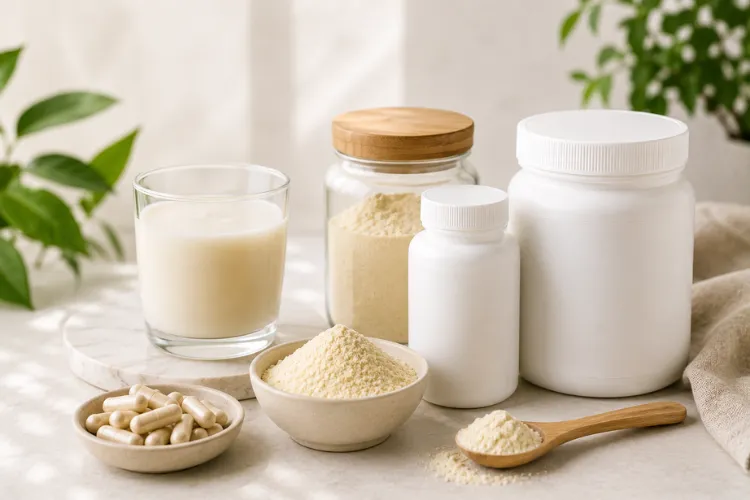
Picture having one simple ingredient in the kitchen that can turn a smoothie, bowl of oatmeal, yogurt, or even a creamy soup into something more nourishing in seconds.
No elaborate cooking. No forcing down a large plate when your appetite is low. No brightly colored powder filled with artificial sweetness that makes everything taste like candy.
Just clean, organic protein that quietly helps you build a more substantial breakfast, support your muscles, or make eating enough feel easier during a demanding period.
That convenience can matter after surgery, during illness, while rebuilding strength, or simply as we get older and become more conscious of preserving muscle.
Protein powder is not a treatment, and it cannot replace a balanced diet or the nutrition plan given by a surgeon, doctor, or dietitian. But when ordinary food is not providing enough protein – or preparing and eating it feels difficult – a carefully chosen powder can be a practical bridge.
Current surgical-nutrition guidance emphasizes that underfeeding and poor nutritional status increase the risk of postoperative problems, and that patients at nutritional risk may need active nutrition support rather than being expected to recover on very little food.
The important words here are carefully chosen.
Many protein powders are sold with words such as natural, clean, grass-fed, and superfood. Those descriptions may sound reassuring, but they do not all have regulated definitions.
For this guide, we looked for more than a beautiful label.
Every main product selected is certified organic, and we also considered:
- Ingredient simplicity
- Protein per serving
- Complete amino-acid content
- Artificial sweeteners and flavors
- Gums and fillers
- Published or stated contaminant testing
- Independent certifications
- Dairy and plant-based options
- Suitability for smoothies, oats, soups, and everyday food
- US and UK availability, plus international shipping options
- Whether the product is a protein supplement, meal replacement, or collagen add-on
The result is a list of nine products with clearly different strengths – not nine nearly identical tubs of flavored powder.
Quick Answer: What Is the Best Protein Powder for Surgery Recovery?
If dairy suits you and you want the simplest possible formula, Natural Force Organic Grass-Fed Whey is our best overall choice. The unflavored version is built around organic whey from grass-fed cows without soy or unnecessary ingredients, making it easy to add to both sweet and savory food.
For a plant-based option, Ora So Lean & So Clean Organic Protein stands out. It provides 23 grams of plant protein, is USDA Organic, and is independently tested by batch for heavy metals, microbes, potency, and purity. It is also available without stevia, erythritol, gums, or artificial sweeteners.
For someone who needs more than protein alone, Garden of Life RAW Organic Meal is the most complete option in this guide. It provides 20 grams of organic plant protein along with fiber, vitamins, minerals, greens, probiotics, and enzymes.
Our nine selected products are:
| Category | Product | Why it stands out |
|---|---|---|
| Editor’s Pick – Best overall | Natural Force Organic Grass-Fed Whey | Simple organic whey without soy or unnecessary additions |
| Best organic plant-based | Ora So Lean & So Clean | 23 g protein, extensive batch testing, no gums or artificial sweeteners |
| Best organic whey in the UK | The Organic Protein Co Pure Unflavoured Whey | One ingredient, independently tested, no emulsifiers or sweeteners |
| Best minimal-ingredient flavored option | Truvani Plant-Based Protein | USDA Organic, short ingredient lists, no stevia or artificial sweeteners |
| Beshttps://amzn.to/4fPDfLlt widely available organic plant protein | Orgain Organic Protein Powder | USDA Organic, 21 g protein, sold in thousands of stores worldwide |
| Best erythritol-free organic plant blend | KOS Organic Plant Protein | Five-source amino-complete blend, USDA and CCOF certified |
| Best high-protein plant powder | Garden of Life SPORT Organic Protein | 30 g protein and NSF Certified for Sport |
| Best organic meal replacement | Garden of Life RAW Organic Meal | Protein, fiber, vitamins, minerals, greens, probiotics, and enzymes |
| Best collagen add-on | Natural Force Organic Collagen Peptides | One ingredient, organic, grass-fed, and tested for heavy metals |
Our Top Picks at a Glance
| Product | Protein | Organic standard | You’ll love it for | Worth knowing |
|---|---|---|---|---|
| Natural Force Organic Grass-Fed Whey | Varies by serving/flavor | USDA Organic | Clean, creamy whey that disappears into smoothies or food | Contains milk |
| Ora So Lean & So Clean | 23 g | USDA Organic | Plant protein with unusually transparent batch testing | Longer ingredient list than a pure single-source powder |
| The Organic Protein Co Pure Unflavoured Whey | 19.6 g | Organic Food Federation | One-ingredient UK whey, no sweetener or emulsifier | Whey concentrate contains lactose |
| Truvani Plant-Based Protein | 20 g | USDA Organic | Simple flavored protein without stevia or artificial sweeteners | Sweetened with organic monk fruit |
| Orgain Organic Protein Powder | 21 g | USDA Organic | Familiar, widely stocked organic plant protein | Contains guar gum and, in some flavors, stevia or erythritol |
| KOS Organic Plant Protein | 20 g | USDA / CCOF Organic | Five-source blend for a complete amino profile; erythritol-free option available | Longer ingredient list than a single-source powder |
| Garden of Life SPORT Organic Protein | 30 g | USDA Organic | A substantial plant-protein serving after exercise | More complex formula than minimalist powders |
| Garden of Life RAW Organic Meal | 20 g | USDA Organic | A more complete option when a full meal feels difficult | Not as simple as ordinary protein powder |
| Natural Force Organic Collagen Peptides | 10 g collagen | USDA Organic | Adding collagen to coffee, smoothies, or food without flavor | Not a complete protein; should not be the sole recovery protein |
Protein amounts and formulas can change. Confirm the current label for the exact flavor and regional version before purchase.
What “Clean Protein Powder” Actually Means?
The word clean is not a regulated food-certification standard.
Organic, however, is regulated. In the United States, the USDA Organic label means a product has been produced according to defined national organic standards.
But organic certification answers only part of the question.
It tells you something meaningful about agricultural production and ingredient sourcing. It does not automatically guarantee:
- The shortest ingredient list
- The lowest contaminant levels
- The absence of gums
- No sweeteners
- Easy digestion
- A complete amino-acid profile
- Enough protein for the intended purpose
This is especially relevant with plant-based powders because plants naturally absorb minerals from soil.
A 2025 testing report from the Clean Label Project found substantial variation in contaminant levels across protein powders and reported higher average lead and cadmium levels in the organic and plant-based categories it tested. That does not mean organic plant protein is automatically unsafe. It means that organic certification should ideally be paired with transparent contaminant testing.
That is why products such as Ora scored highly here. Ora states that every production batch is independently tested at ISO-accredited laboratories for lead, cadmium, mercury, arsenic, microbes, and potency, with batch-specific certificates made available.
The Organic Protein Co also publishes current heavy-metal results for its organic whey, rather than asking buyers to rely only on reassuring marketing language. Its 2026 results show the measured values alongside applicable EU limits.
For this guide, “clean” therefore means a combination of:
- Verified organic certification
- A transparent ingredient list
- No unnecessary artificial colors or flavors
- No hidden proprietary protein blends
- Meaningful third-party testing or certification where available
- A protein type that matches the buyer’s needs
Why Protein Matters During Recovery
Healing requires more than protein alone.
The body also needs adequate energy, fluids, vitamins, minerals, sleep, movement when medically appropriate, and treatment of the condition that made surgery necessary.
But protein has a particularly important role because amino acids are used to maintain and rebuild:
- Muscle
- Skin
- Connective tissue
- Enzymes
- Immune proteins
- Blood proteins
- New tissue during wound repair
Surgery creates physical stress and can increase protein breakdown. Recovery guidance therefore focuses not only on calories but also on preventing underfeeding and loss of body protein. ESPEN’s current surgical-nutrition guideline emphasizes early nutrition and active support for patients who are malnourished or at nutritional risk.
A recent randomized study in abdominoplasty patients found that early postoperative protein supplementation improved measured wound-healing outcomes and reduced complications, although results from one specific surgical population should not be generalized to every operation.
The practical point is not that everyone recovering from surgery must buy protein powder.
It is that recovery becomes more difficult when the body is repeatedly asked to repair tissue while receiving too little energy and protein.
A powder can be especially useful when:
- Appetite is reduced
- Meat or large meals feel unappealing
- Cooking feels exhausting
- Chewing or swallowing is temporarily difficult
- Breakfast normally contains very little protein
- A smoothie is easier to tolerate than a full meal
- Maintaining muscle is a priority during reduced activity
The correct amount depends on the operation, body size, health, kidney function, current food intake, and whether there are complications. A surgeon or dietitian should guide individual targets.
For more food-based nutrition ideas, see our guide to powerful diets and superfoods for optimal lung health.
Whey vs. Plant Protein vs. Collagen
These products are often grouped together, but they do not serve exactly the same purpose.
Whey protein
Whey is a complete protein from milk.
It contains all nine essential amino acids and naturally provides a relatively high proportion of leucine, an amino acid involved in stimulating muscle-protein synthesis.
Whey is generally a strong option for:
- Preserving or rebuilding muscle
- Increasing protein without a large volume of food
- Post-exercise recovery
- Mixing into smoothies, yogurt, oats, or soup
- People who tolerate dairy well
It is not appropriate for someone with a milk allergy, and whey concentrate may be difficult for some people with lactose intolerance.
Plant-based protein
A thoughtfully blended plant protein can also provide all essential amino acids.
Pea is commonly combined with rice, pumpkin seed, chia, hemp, beans, or lentils to create a more balanced amino-acid profile.
Plant protein may be the better choice for:
- Vegans
- People avoiding dairy
- Those who dislike whey
- Smoothies containing mostly plant foods
- Buyers who prefer organic pea, seed, grain, or legume sources
A slightly larger serving may sometimes be useful because plant proteins can differ from whey in digestibility and essential-amino-acid concentration. Well-designed blends address this by combining sources or providing a larger protein dose.
Collagen peptides
Collagen is protein – but it is not a complete protein.
It lacks the essential amino acid tryptophan and contains relatively little leucine compared with whey and many complete plant blends.
That does not make collagen useless.
Collagen provides high amounts of glycine, proline, and hydroxyproline and may be included as an additional protein source when someone is interested in connective tissue, skin, or joints.
But collagen should not replace whey, eggs, dairy, soy, or a complete plant blend as the main protein source during recovery.
The most responsible use is:
Complete protein first. Collagen as an optional addition – not the foundation.
Protein Powder vs. Meal Replacement Shake
A normal protein powder is primarily designed to add protein.
It may contain only one ingredient.
That makes it flexible, but it does not automatically make it a complete meal.
A meal replacement usually contains more of the following:
- Carbohydrate
- Fiber
- Fat
- Vitamins
- Minerals
- Greens or fruit powders
- Additional calories
Garden of Life RAW Organic Meal, for example, provides 20 grams of organic plant protein, 7 grams of fiber, 18 vitamins and minerals, greens, sprouted ingredients, probiotics, and enzymes.
That longer ingredient list is not necessarily a weakness because a meal replacement is meant to do more than a pure protein powder.
However, most people do not need to replace ordinary meals routinely.
A more appealing option is often to use plain protein powder inside real food:
- A smoothie with berries, kale, oats, and soy milk
- Yogurt with fruit and seeds
- Oatmeal with nut butter
- A vegetable soup enriched with unflavored whey
- Mashed vegetables with an appropriate savory protein
- A small shake served alongside toast, fruit, or soup
Anita’s Take: The Powder Should Make Real Food Easier
I do not want a protein powder that takes over the entire meal.
I want one that helps me make the food I already value more complete.
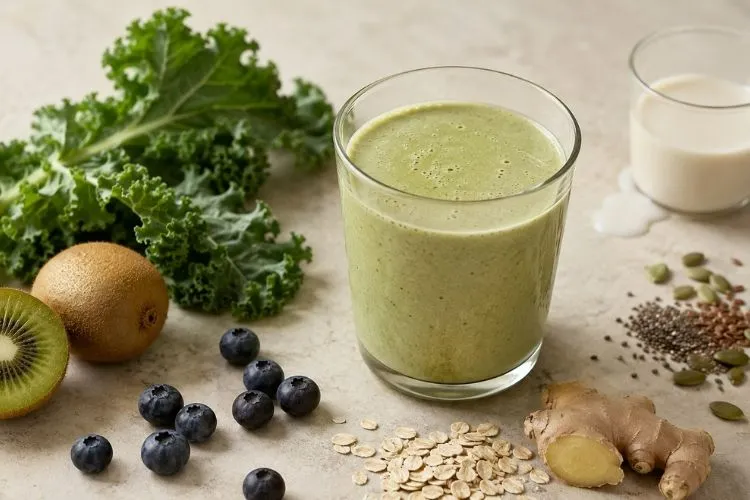
In a smoothie, that could mean combining organic protein with kiwi, frozen kale, wild blueberries, apple, ginger, soy milk, oats, seeds, and perhaps silken tofu.
The powder should disappear into that mixture.
It should not leave a chalky layer, overpower the fruit with artificial sweetness, or turn a nourishing smoothie into something that tastes like a synthetic dessert.
I would look for:
- Certified organic ingredients
- Transparent testing
- No artificial colors
- No unnecessary fillers
- A flavor mild enough for everyday use
- An unflavored version when possible
- Enough protein to make a meaningful difference
- A product that works in food – not only water
I would also distinguish clearly between supplementing a meal and replacing one.
If I can blend protein with fruit, kale, oats, seeds, and soy milk, I am not simply drinking powder. I am using the powder to make real food easier to eat.
For ideas on building that kind of drink, see our guide to anti-inflammatory smoothies with protein, fiber, and whole-food ingredients.
1. Natural Force Organic Grass-Fed Whey – Best Overall
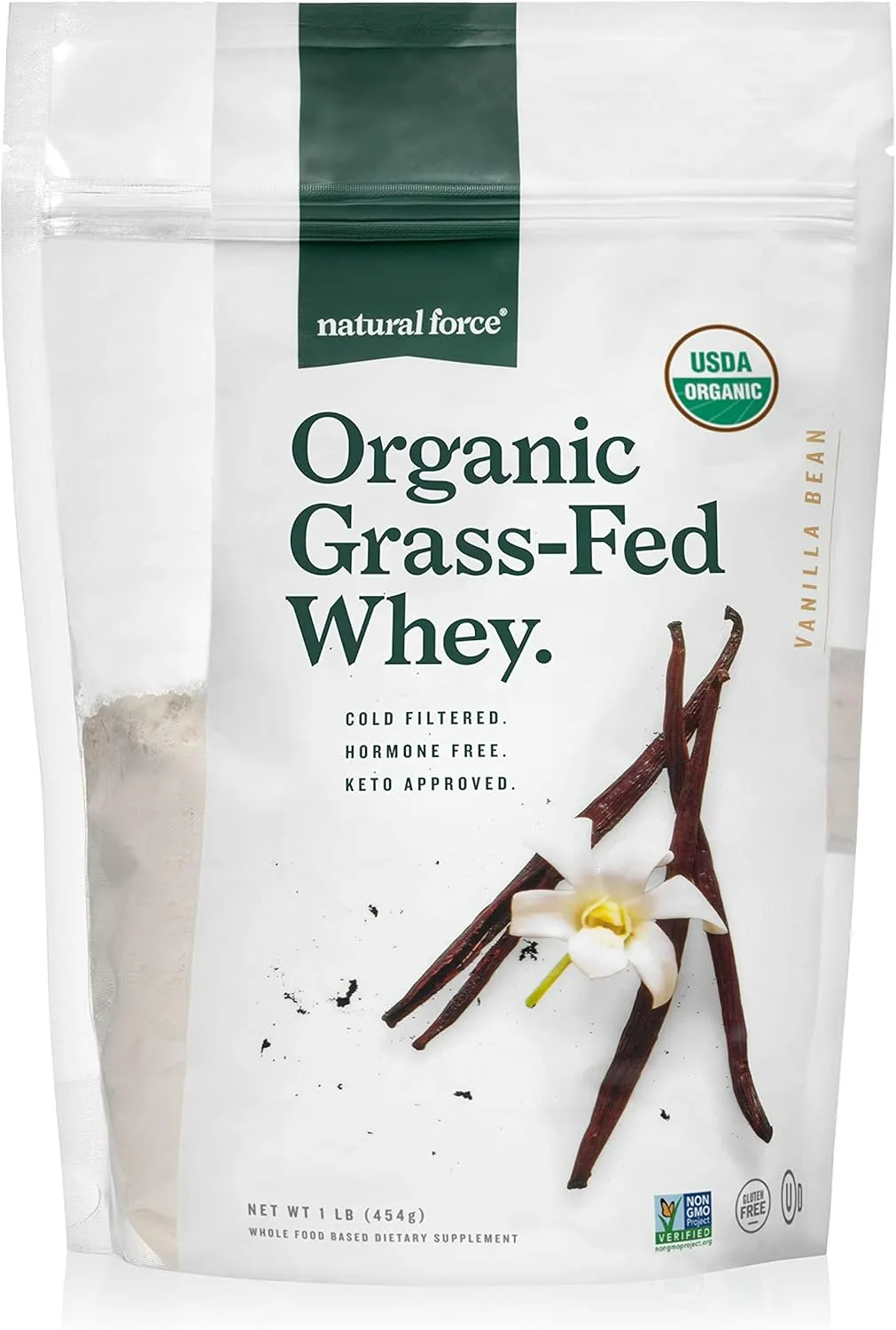
Why you’ll love it: This is the kind of protein powder that quietly disappears into breakfast. The unflavored whey can make a smoothie creamier, strengthen a bowl of oats, or add protein to food without covering everything in vanilla sweetness.
Natural Force sources its organic whey concentrate from grass-fed cows raised on California family farms. The company lists it as USDA Organic, non-GMO, free from added soy, and made without unnecessary ingredients.
Why it earns our top position
Recovery nutrition often becomes complicated enough without needing to decode a long supplement label.
Natural Force keeps the unflavored version deliberately simple.
That makes it useful in:
- Green smoothies
- Berry smoothies
- Oatmeal
- Yogurt
- Soft breakfast bowls
- Mashed foods
- Lukewarm soup
- Simple shakes
Because it is whey, it provides a complete amino-acid profile and is naturally suited to supporting muscle maintenance and recovery.
Why organic whey is different
USDA Organic dairy standards relate to how the cows are raised and fed and how the agricultural ingredients are produced.
Natural Force also describes the cows as grass-fed and pasture-raised.
That does not mean organic whey automatically contains more protein than ordinary whey. The main advantage is sourcing, traceability, farming standards, and avoiding unnecessary extras rather than a magical change in the protein molecule itself.
Best for
- People who tolerate dairy
- Anyone wanting a clean US organic whey
- Smoothies and everyday food
- Recovery after exercise
- Increasing protein without a large meal
- Buyers who dislike strong sweeteners
Worth knowing
It is a whey concentrate rather than a lactose-free product, so someone with a milk allergy or significant lactose intolerance should choose a plant-based option or discuss an appropriate alternative with a clinician.
Bottom line
Natural Force Organic Grass-Fed Whey is our best overall choice because it combines organic sourcing, complete protein, broad food versatility, and a refreshingly simple approach.
2. Ora So Lean & So Clean – Best Organic Plant-Based Protein
Why you’ll love it: This is a plant protein for people who want the reassurance of seeing what has actually been tested – not simply being told that the powder is pure.
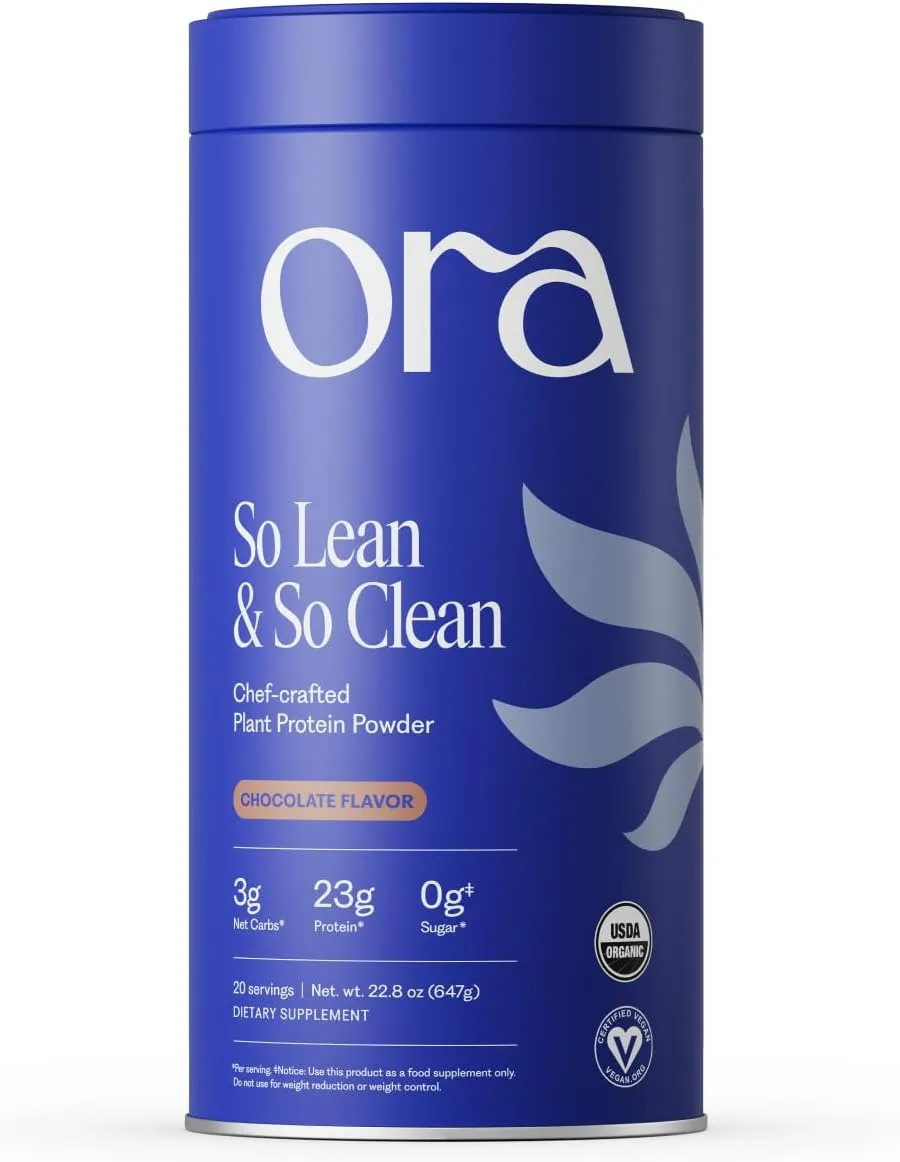
Ora provides 23 grams of organic plant protein per serving, along with organic greens and digestive enzymes. The formula is available in several flavors, including unsweetened and unflavored versions, and the brand states that it contains no gums, erythritol, stevia, added sugar, artificial sweeteners, or fillers.
The testing is what sets it apart
Plant protein can be excellent, but it is important not to assume that an organic seal answers every quality question.
Ora states that each production batch is independently tested at ISO 17025-accredited laboratories for:
- Lead
- Cadmium
- Mercury
- Arsenic
- Microbial contaminants
- Ingredient potency
The company also publishes batch-specific Certificates of Analysis.
It carries USDA Organic, Informed Protein, and Informed Sport certifications.
What is in the protein blend?
Ora uses organic plant proteins alongside greens and digestive enzymes.
At 23 grams per serving, it provides a meaningful amount for:
- Breakfast smoothies
- Recovery shakes
- Oatmeal
- Plant-based eating
- Dairy-free nutrition
- Increasing protein during periods of reduced appetite
The unsweetened version is especially useful when the powder needs to blend into food rather than dominate it.
Best for
- Vegans
- People avoiding dairy
- Buyers concerned about contaminant testing
- Those who dislike stevia
- Smoothies containing kale, berries, oats, or tofu
- Anyone wanting a certified sport-tested organic option
Worth knowing
The formula contains more ingredients than a pure one-ingredient whey or pea powder, so people with multiple food sensitivities should still read the exact flavor label carefully.
Bottom line
Ora So Lean & So Clean is the strongest organic plant-based choice in this guide because it combines a meaningful protein dose with unusually transparent testing and a formula designed without the sweeteners and gums many buyers try to avoid.
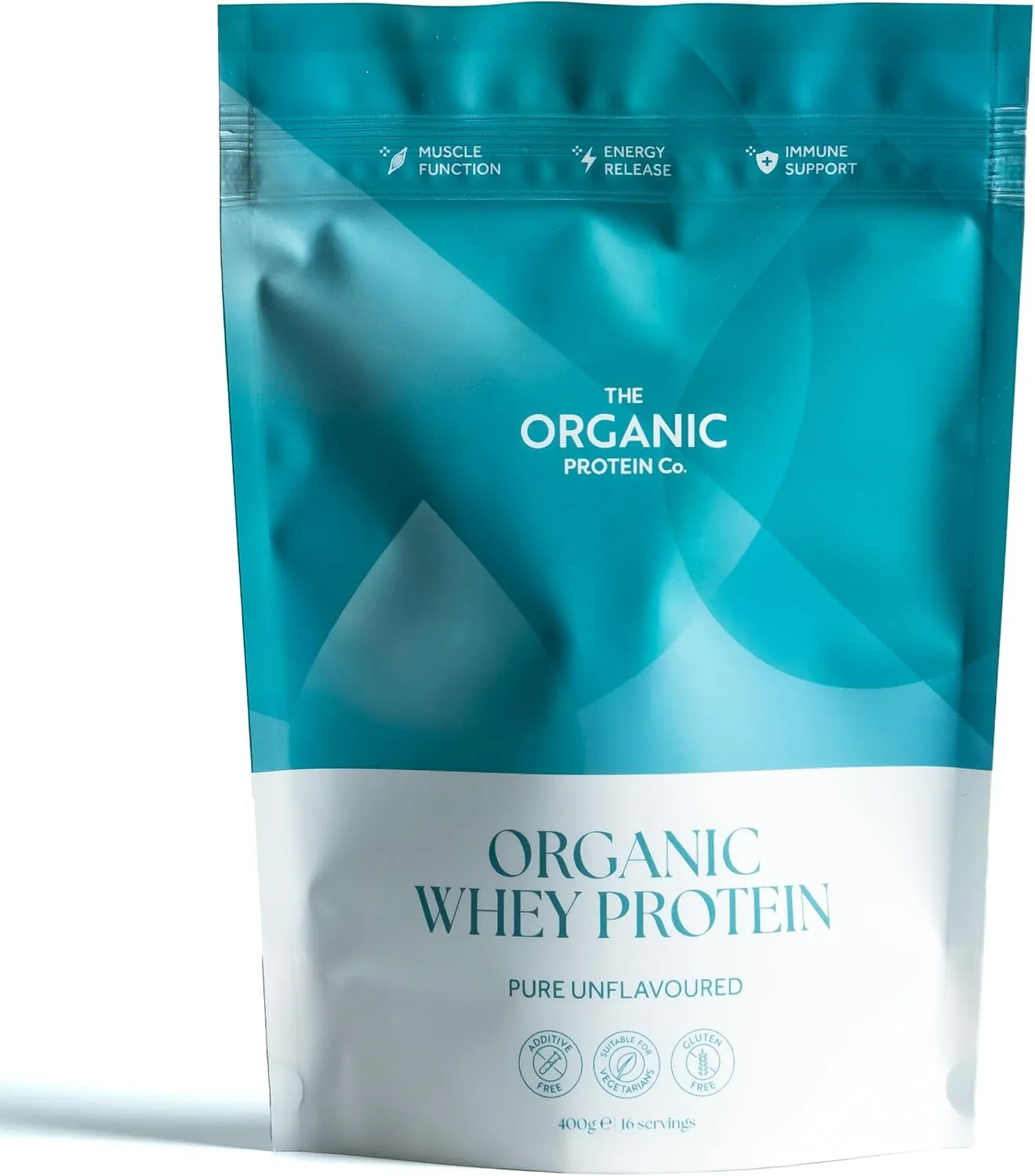
3. The Organic Protein Co Pure Unflavoured Whey – Best Organic Whey in the UK
Why you’ll love it: One ingredient, no sweetness, no vanilla cloud hanging over everything you eat. This is the kind of powder you can stir into porridge, blend with berries, or add to a mild soup without turning the meal into a protein shake.
The Pure Unflavoured formula contains just one ingredient:
Organic whey protein concentrate from organic milk.
There are no added flavors, sweeteners, emulsifiers, gums, or fillers. A 25-gram serving provides 19.6 grams of protein and approximately 2.1 grams of naturally occurring leucine. The product is certified organic through the Organic Food Federation.
Why it stands out for UK buyers
A genuinely plain protein powder is surprisingly difficult to find.
Many products described as “unflavored” still contain:
- Lecithin
- Thickeners
- Anti-caking agents
- Sweeteners
- Flavor-masking ingredients
The Organic Protein Co takes a more stripped-back approach.
Because the powder is not sweetened, it can move between sweet and savory food more easily than a flavored protein.
It may work in:
- Berry or green smoothies
- Oatmeal
- Yogurt
- Pancake batter
- Mashed vegetables
- Lukewarm soup
- Soft foods during periods of reduced appetite
For someone recovering from surgery, that flexibility can be valuable. Appetite may change from one day to the next, and a strongly flavored shake can quickly become unappealing.
A neutral powder gives you more options.
Transparent contaminant testing
The company publishes third-party testing for heavy metals rather than relying solely on its organic certification.
Its product page lists results for lead, arsenic, cadmium, and mercury and states that testing is performed through a UKAS-accredited laboratory. It also reports no BPA detected at the laboratory’s stated testing limit.
That transparency is one of the main reasons this product belongs in the guide.
No food product can honestly be promised to contain absolutely zero naturally occurring trace contaminants. What buyers can reasonably ask for is evidence that the company is measuring them, comparing the results with applicable limits, and making those results visible.
A complete protein for recovery and muscle maintenance
As a dairy protein, whey naturally contains all nine essential amino acids.
That makes it more suitable as a primary recovery protein than collagen, which is incomplete.
One 25-gram serving of this product provides 19.6 grams of protein. Someone aiming for a larger meal-sized protein serving could use a slightly larger amount or combine it with other foods such as:
- Soy milk
- Yogurt
- Skyr
- Eggs
- Tofu
- Oats
- Nuts or seeds
The powder does not have to carry the entire meal alone.
How to use it without creating lumps
For a smoothie, add the liquid first and the whey before the frozen fruit.
For oatmeal or soup, mix the powder separately with a small amount of cool or lukewarm liquid until smooth, then stir it into the finished food.
Avoid tipping dry whey directly into boiling liquid. High heat does not make the protein disappear, but it can cause clumping and make the texture far less appealing.
Best for
- UK and European buyers
- People who tolerate dairy
- Anyone wanting a single-ingredient organic powder
- Sweet and savory recipes
- Buyers avoiding sweeteners and emulsifiers
- Protein support during reduced appetite
- Everyday muscle maintenance
Worth knowing
This is whey concentrate and therefore contains milk and some lactose; anyone with a milk allergy or significant lactose intolerance should choose an appropriate dairy-free alternative.
Bottom line
The Organic Protein Co Pure Unflavoured Whey is our strongest UK choice because it combines organic certification, one-ingredient simplicity, complete protein, and unusually visible laboratory testing.
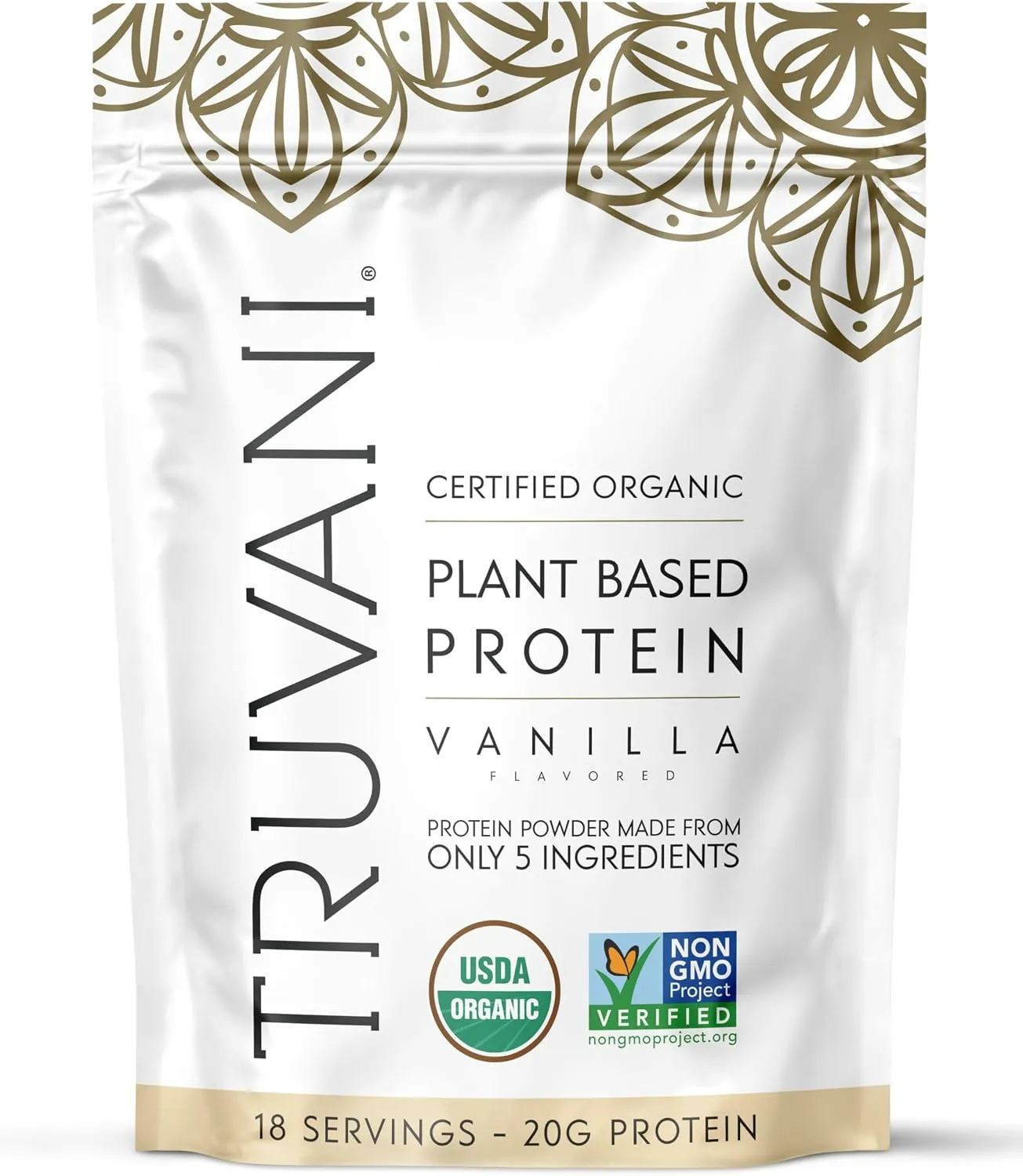
4. Truvani Plant-Based Protein – Best Minimal-Ingredient Flavored Option
Why you’ll love it: This is for the person who wants a smoothie to taste inviting without accepting a label full of gums, preservatives, artificial flavors, and intensely sweet stevia.
Truvani’s plant-based protein provides 20 grams of protein per serving and is made with a relatively short list of certified organic ingredients.
The exact formula varies by flavor, but the brand uses organic plant proteins and organic monk fruit rather than stevia or artificial sweeteners. Truvani states that its plant protein contains no fillers, preservatives, artificial sweeteners, or stevia.
Why it earns the flavored category
There is nothing wrong with choosing unflavored protein.
But during recovery or periods of poor appetite, flavor matters.
A powder can have an excellent nutritional profile and still be useless if the person dislikes it enough to leave it untouched in the cupboard.
Truvani offers flavors including:
- Vanilla
- Chocolate
- Banana Cinnamon
- Peanut Butter
- Chocolate Peanut Butter
- Strawberry
- Matcha
- Vanilla Chai
- Unflavored
The company says its current plant-based range uses between approximately five and twelve ingredients depending on the flavor. Each flavor should therefore be assessed separately rather than assuming every tub has an identical formula.
What is in the protein base?
Truvani describes its blend as using three organic plant-protein sources that together provide a complete amino-acid profile. The product is dairy-free and contains no whey, lactose, casein, or milk fat.
That makes it relevant for:
- Vegans
- People avoiding dairy
- Smoothies
- Oatmeal
- Chia pudding
- Yogurt alternatives
- Simple protein shakes
- Baking
The flavored versions are likely to work best in sweet recipes rather than soup or mashed foods.
Monk fruit instead of stevia
Many plant protein powders use stevia.
Some people enjoy it, while others experience a strong lingering sweetness or aftertaste.
Truvani uses organic monk fruit instead. That does not make monk fruit inherently superior for everyone, but it gives buyers a different option when stevia is the ingredient making other powders difficult to enjoy.
The unflavored version remains the most flexible choice when you want the fruit, cocoa, cinnamon, or other real-food ingredients to control the taste.
A useful option for smoothies
A flavored plant powder can turn a quick recovery smoothie into something that feels comforting rather than clinical. For example:
- Chocolate recovery smoothie: unsweetened soy milk, frozen cherries or berries, Truvani Chocolate, silken tofu, oats, a small amount of nut butter
- Vanilla green smoothie: unsweetened soy milk, frozen kale, kiwi, apple, Truvani Vanilla, ginger, ground flaxseed
- Banana-cinnamon breakfast: soy milk, banana, Truvani Banana Cinnamon, oats, chia seeds, optional silken tofu
The protein powder supports the meal, while fruit, vegetables, oats, and seeds provide the broader food structure.
What about testing?
Truvani’s organic certification and short ingredient lists are meaningful strengths.
However, the company does not present batch-specific contaminant certificates as prominently as Ora does on its testing platform.
For buyers whose highest priority is easily accessible, batch-level heavy-metal reporting, Ora remains the stronger choice in this guide.
That does not automatically make Truvani an inferior product. It simply explains why Ora won the primary plant-based category while Truvani wins for approachable flavor and shorter formulas.
Best for
- People who want a pleasant flavored protein
- Buyers avoiding stevia
- Vegans and dairy-free households
- Smoothies and breakfast bowls
- Anyone who dislikes long ingredient lists
- People who need protein to taste inviting enough for regular use
- Those who want several flavor choices
Worth knowing
Truvani uses monk fruit in its flavored powders, so buyers who dislike all concentrated sweeteners should choose the unflavored version and add sweetness with fruit instead.
Bottom line
Truvani Plant-Based Protein earns its place by making organic plant protein feel enjoyable and approachable while avoiding the gums, artificial sweeteners, preservatives, and stevia found in many competing flavored formulas.
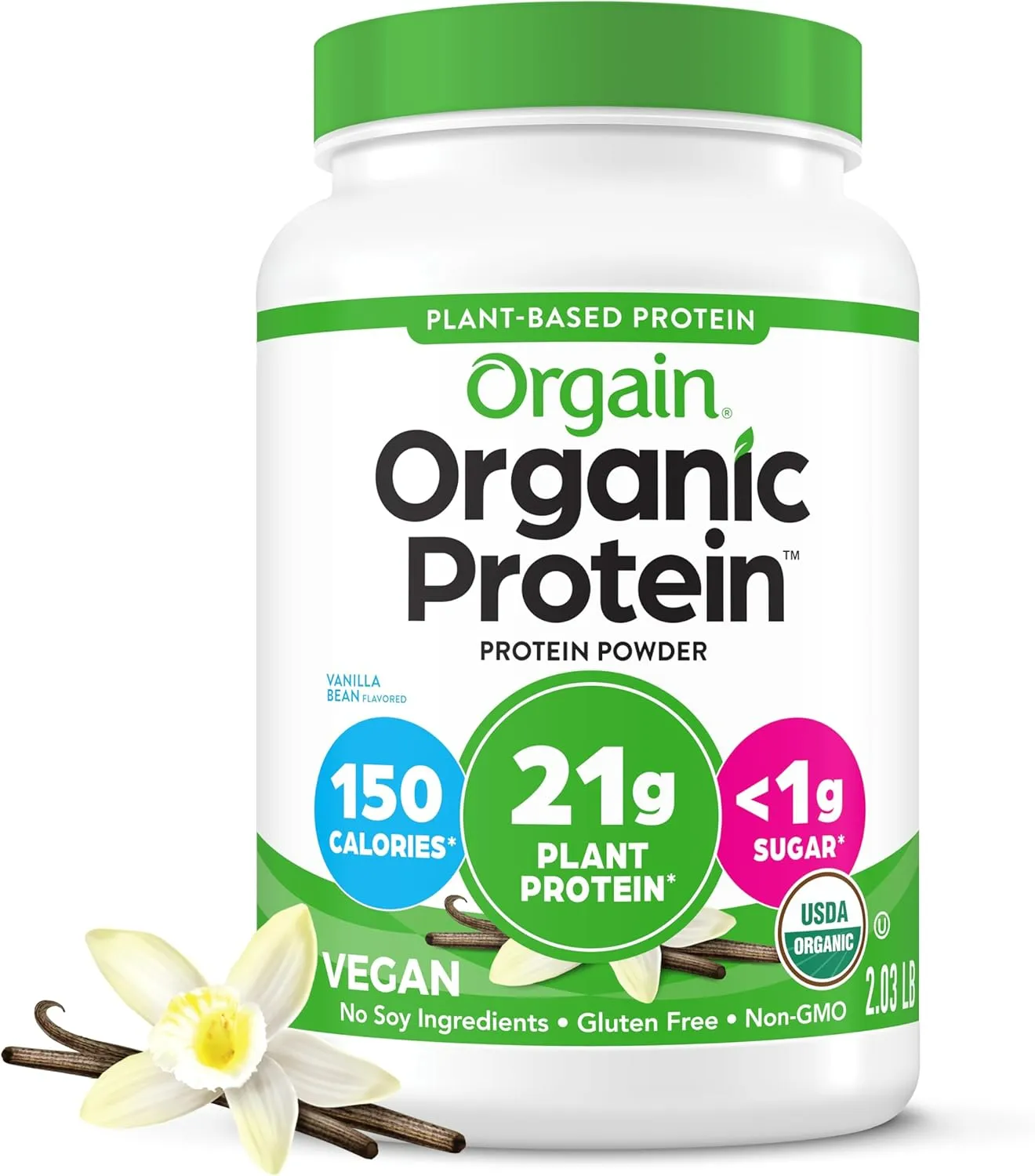
5. Orgain Organic Protein Powder – Best Widely Available Organic Plant Protein
Why you’ll love it: This is the organic protein powder you can actually find everywhere – on Amazon, in Whole Foods, in ordinary supermarkets – which matters when you want a dependable restock rather than a niche order that might sell out.
Orgain provides 21 grams of organic plant protein per serving from a blend of organic pea, brown rice, and chia seed protein, along with 4 to 7 grams of prebiotic fiber depending on the flavor. The company states its products are USDA Organic and independently verified as certified plant-based, and the brand is a Certified B Corporation.
Why it earns a place in this guide
Every other product in this list is chosen partly for how carefully it is formulated. Orgain earns its spot for a different, equally practical reason: availability.
It is one of the most widely stocked organic protein powders in ordinary retail – sold through Amazon, Whole Foods, Walmart, Publix, Safeway, Target, and many pharmacies and grocery chains, in addition to international shipping through Amazon.
During recovery, that matters. A specialty powder that runs out with no easy replacement can interrupt a routine that was finally working. A powder you can restock from almost any grocery run removes one more thing to plan around.
What is in the formula?
Orgain’s base protein blend uses organic pea protein, organic brown rice protein, and organic chia seed, combined with an organic creamer base of acacia, sunflower oil, rice dextrin, sunflower lecithin, and rosemary extract.
Flavored versions typically add organic cocoa, organic natural flavors, and a sweetener – either organic stevia extract or organic erythritol, depending on the variety. An unsweetened option is also available for anyone who prefers to control sweetness with real food instead.
Best for
- Buyers who want an organic option they can restock almost anywhere
- Travel, appointments, and situations where a specific niche brand may not be sold locally
- People newer to organic protein who want a familiar, well-reviewed starting point
- Smoothies, oatmeal, pancake batter, and baking
- Households that prefer buying protein powder alongside their regular grocery shop
Worth knowing
Orgain’s formula is less minimalist than Ora’s or The Organic Protein Co’s single-ingredient approach – most flavors include organic gums (such as guar gum) and, in sweetened versions, organic stevia or erythritol. Buyers who specifically want to avoid gums or concentrated sweeteners may prefer Ora’s unsweetened version or a plain single-ingredient whey instead.
Bottom line
Orgain Organic Protein Powder earns its place as the most broadly available organic option in this guide – a dependable, easy-to-restock choice for buyers who value convenience alongside a genuine USDA Organic standard.
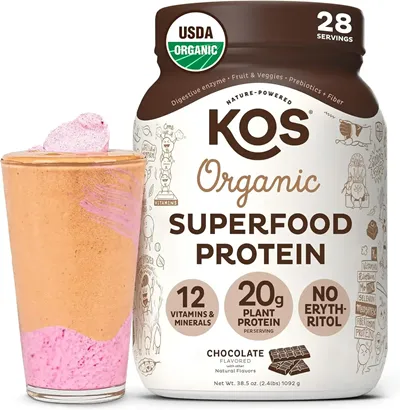
6. KOS Organic Plant Protein – Best Erythritol-Free Organic Plant Blend
Why you’ll love it: A five-source plant blend built specifically to cover the full amino-acid profile without leaning on a single protein source – and with an erythritol-free version for anyone who finds that particular sweetener unpleasant to digest.
View KOS Organic Plant Protein
KOS combines organic pea, flaxseed, quinoa, pumpkin seed, and chia seed protein to provide approximately 20 grams of complete plant protein per serving. The company states its ingredients are certified organic through the USDA and California Certified Organic Farmers (CCOF), and formulas are made without hormones, antibiotics, pesticides, artificial sweeteners, colors, or GMOs.
Why a five-source blend matters
A single plant protein source, such as pea alone, can still be a reasonably complete protein, but combining several sources is a common strategy for rounding out the amino-acid profile more thoroughly and improving texture.
KOS’s blend of pea, flax, quinoa, pumpkin seed, and chia is designed with that in mind, alongside naturally occurring fiber and healthy fats from the seed-based ingredients.
An erythritol-free option
Some plant protein powders rely on erythritol or stevia for sweetness. Both are common and well tolerated by most people, but some buyers find erythritol causes digestive discomfort in larger amounts – worth knowing during a period when digestion may already be sensitive.
KOS offers an erythritol-free version alongside its standard sweetened lines, giving buyers who are sensitive to sugar alcohols another organic option beyond Truvani’s monk-fruit-based formula.
Best for
- Buyers who want a multi-source plant blend rather than a single protein
- People sensitive to erythritol specifically
- Vegans and dairy-free households
- Smoothies, oatmeal, and simple shakes
- Anyone comparing several organic plant options before choosing one to commit to
Worth knowing
Like Orgain, KOS’s formula includes more ingredients than a single-source powder – some flavors include organic stevia, organic gums, and a vitamin and mineral blend. Read the specific flavor label if you are managing multiple food sensitivities.
Bottom line
KOS Organic Plant Protein is a strong choice for buyers who want a genuinely multi-source amino-complete plant blend with a certified-organic standard and the flexibility of an erythritol-free version.
7. Garden of Life SPORT Organic Plant-Based Protein – Best High-Protein Plant Powder
Why you’ll love it: One serving gives you a genuinely substantial 30 grams of plant protein – enough to turn a simple smoothie into a serious recovery meal without needing several scoops from different products.
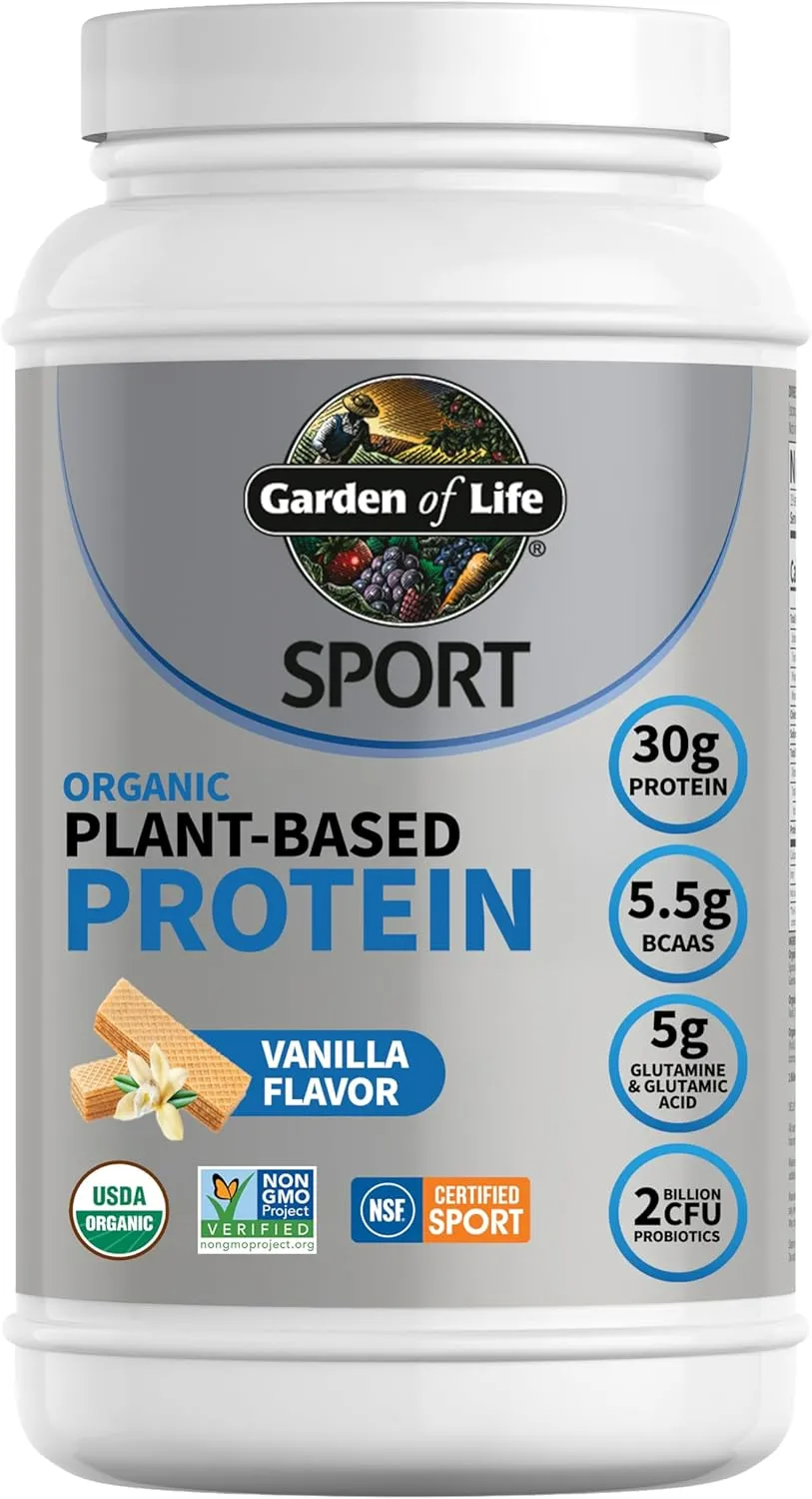
Garden of Life SPORT provides 30 grams of organic plant protein per serving, including 5.5 grams of naturally occurring branched-chain amino acids and 5 grams of glutamine and glutamic acid.
It is USDA Organic, Non-GMO Project Verified, Certified Vegan, NSF Certified Gluten-Free, and NSF Certified for Sport. The sport certification screens the product according to NSF’s program for substances prohibited in competitive sport.
Why the 30-gram serving matters
Most organic plant powders in this guide provide approximately 20–23 grams of protein per serving.
That can be entirely adequate.
But a 30-gram serving may be especially convenient for:
- A post-training smoothie
- Older adults focused on preserving muscle
- People with increased protein needs
- Someone eating less during recovery
- Vegans who want a substantial protein serving in one drink
- Anyone whose breakfast otherwise contains little protein
It removes the need to calculate several partial scoops or add a second powder simply to reach a more substantial amount.
The appropriate total intake still depends on the individual. More protein is not automatically better, and anyone with kidney disease or medically restricted protein intake should follow clinical guidance.
A blend of several organic proteins
The protein blend includes organic sources such as:
- Pea
- Garbanzo bean
- Navy bean
- Lentil
- Cranberry seed
Using several sources helps create a complete essential-amino-acid profile rather than relying on one plant alone.
The formula also includes an organic “muscle recovery” blend containing ingredients such as tart cherry, apple, turmeric, goji berry, and blueberry, as well as 2 billion CFU of Bacillus subtilis DE111 at the time stated on the product information.
These additions should not be mistaken for proof that the powder will accelerate surgical wound healing or outperform an adequate whole-food diet.
The clearest, best-supported reason to choose it remains the substantial serving of complete plant protein and the sport-focused certification.
Why NSF Certified for Sport is useful
A product can be organic without being screened specifically for substances prohibited in competitive sport.
NSF Certified for Sport adds another layer for:
- Competitive athletes
- Coaches
- Sports teams
- Tested professionals
- Buyers who value additional manufacturing oversight
It does not mean the powder is medically superior to every non-sport-certified product. It means it has been assessed under a certification program designed for sport supplement safety and prohibited-substance risk.
For most ordinary buyers, the certification is reassurance rather than a strict necessity.
Using it after training
A simple recovery smoothie could include:
- One serving of Garden of Life SPORT
- Unsweetened soy or oat milk
- Frozen berries
- Half a banana
- Kale or spinach
- Oats
- Water as needed
This creates a smoothie with protein, carbohydrate, fruit, and vegetables rather than protein powder alone.
For someone with a reduced appetite, the same powder could be blended into a smaller volume with soy milk and banana. The most useful preparation is the one the person can comfortably finish.
Is it suitable after surgery?
It can provide a convenient source of protein, but the word SPORT should not be mistaken for a surgical-nutrition claim.
A person recovering from surgery may prefer this product when dairy is avoided, a higher plant-protein serving is useful, a smoothie is easier than a large meal, and the ingredient list is personally tolerated.
However, its more complex formula may be unnecessary for someone who simply needs a plain, neutral protein added to soft food. In that situation, Natural Force, The Organic Protein Co, or an unflavored plant powder may offer more flexibility.
Best for
- Vegans
- Active adults
- Post-workout smoothies
- Buyers wanting 30 grams of protein in one serving
- Competitive athletes seeking sport certification
- Dairy-free muscle maintenance
- People who prefer a multi-source plant blend
Worth knowing
This is one of the most complex formulas in the guide, so people with sensitive digestion, multiple intolerances, or a preference for very short ingredient lists may be happier with Ora’s unsweetened version or a single-ingredient whey.
Bottom line
Garden of Life SPORT is the best high-protein plant option because it combines 30 grams of complete protein with organic certification and meaningful sport-focused third-party certification.
8. Garden of Life RAW Organic Meal – Best Organic Meal Replacement
Why you’ll love it: On days when a full plate feels overwhelming, this turns a glass into something far more substantial than an ordinary protein shake – creamy plant protein, fiber, greens, vitamins, and minerals in one simple serving.
View Garden of Life RAW Organic Meal
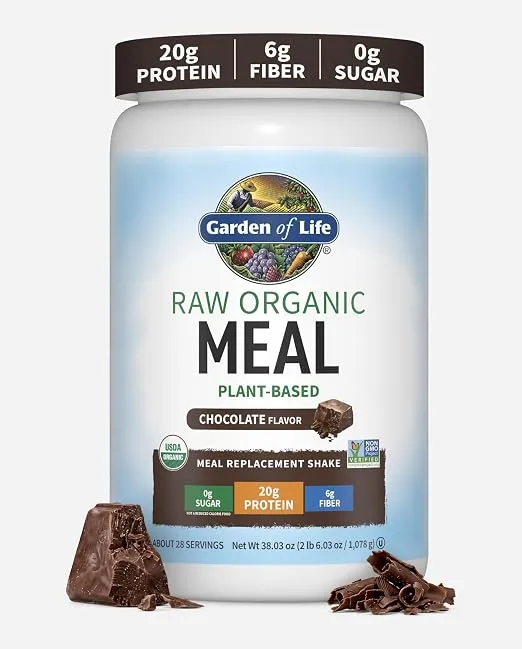
Garden of Life RAW Organic Meal provides 20 grams of organic plant protein per serving, along with 7 grams of fiber, 18 vitamins and minerals, greens, probiotics, and digestive enzymes. Its protein comes from a blend of 13 organic sprouted ingredients rather than a single isolated source.
Why it belongs in a different category
A protein powder and a meal replacement are not the same product.
Natural Force whey or The Organic Protein Co can add protein to food, but they do not automatically provide:
- Fiber
- A broad range of vitamins and minerals
- Greens
- Probiotics
- Digestive enzymes
- Additional carbohydrate and fat
RAW Organic Meal is intended to do more in one serving.
That can be useful when someone:
- Has little appetite after surgery
- Is too tired to prepare a full meal
- Needs something easy to drink
- Wants more than protein alone
- Is travelling to appointments
- Struggles to finish solid food
- Needs a practical backup meal in the cupboard
Current surgical-nutrition guidance emphasizes early oral nutrition and recommends oral nutritional supplements when normal food is not enough to meet a patient’s needs. The appropriate product depends on the procedure, nutritional status, medical conditions, and clinical plan.
What the longer ingredient list means
Earlier in this guide, a short ingredient list was treated as a strength.
That remains true for a simple protein powder – but a meal replacement has a different job.
RAW Organic Meal includes multiple sprouted plant proteins, greens, fiber, vitamins, minerals, probiotics, and enzymes because it is trying to provide a broader nutritional package.
The longer formula is therefore not automatically a weakness.
The more important question is whether you need those ingredients and tolerate them well.
Someone with a sensitive digestive system may prefer starting with a smaller serving or choosing a plain protein powder added to familiar food.
How to make it feel like real food
A powdered meal can become far more inviting when it is blended with simple whole-food ingredients.
- Creamy berry meal: one serving of RAW Organic Meal, unsweetened soy milk, frozen berries, half a banana, a small handful of kale, water as needed
- Gentle banana and oat shake: RAW Organic Meal, banana, unsweetened plant milk, a spoonful of oats, cinnamon
- Smaller recovery drink: blend half a serving with soy milk, silken tofu, and frozen berries
This can provide a smaller volume for someone who cannot comfortably finish a large shake.
Is it a complete replacement for every meal?
No powdered drink should automatically replace all ordinary meals.
Real food provides variety, texture, enjoyment, and combinations of nutrients that are difficult to recreate in one tub.
A more realistic role for RAW Organic Meal is:
- A backup breakfast
- One convenient meal during reduced appetite
- A drink taken alongside fruit or toast
- An option for a busy appointment day
- Temporary support when cooking feels difficult
People at significant nutritional risk after surgery may need a medically formulated oral nutrition product rather than a general retail meal powder. That decision should be made with the surgical or dietetic team.
Best for
- People who need more than protein alone
- Vegans and dairy-free households
- Reduced appetite
- Busy recovery days
- Travel and appointments
- Anyone wanting protein, fiber, and micronutrients in one drink
- Buyers who prefer an organic plant-based meal option
Worth knowing
The broad formula contains many more ingredients than the minimalist powders in this guide, so read the exact flavor label carefully when you have food sensitivities, digestive issues, or medication-related dietary restrictions.
Bottom line
Garden of Life RAW Organic Meal is the strongest meal-replacement option here because it combines organic plant protein with fiber and a wider nutritional package for the days when preparing and eating a conventional meal feels unusually difficult.
9. Natural Force Organic Collagen Peptides – Best Collagen Add-On
Why you’ll love it: This is an almost invisible way to add collagen to coffee, oatmeal, soup, or a smoothie. There is no vanilla flavor, no artificial sweetness, and no need to build an entire recipe around it.
View Natural Force Organic Collagen Peptides
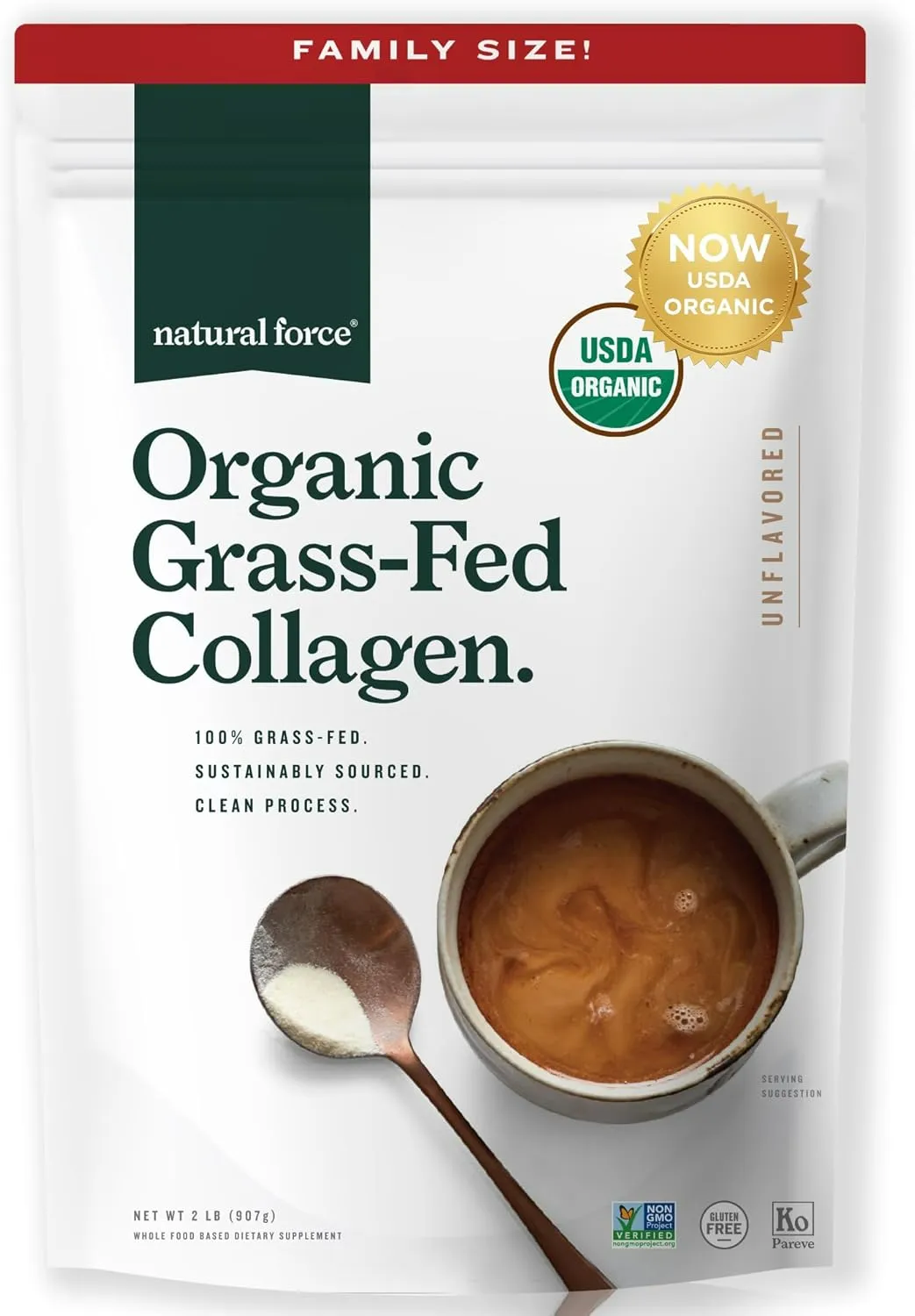
Natural Force Organic Collagen Peptides provide 10 grams of collagen protein per serving. The product is sourced from USDA Organic, grass-fed cattle hides and contains type I and III collagen. Natural Force states that it is third-party tested for heavy metals and publishes Certificates of Analysis for its organic collagen.
Why collagen is included – but not ranked as the main recovery protein
Collagen is often promoted for:
- Skin
- Connective tissue
- Tendons
- Ligaments
- Joints
- Wound healing
Those are understandable reasons to be interested in it.
But collagen is nutritionally different from whey, soy, eggs, dairy, or a complete plant-protein blend.
Collagen contains no tryptophan and is therefore classified as an incomplete protein. It also provides less leucine than proteins typically chosen to support muscle-protein synthesis.
That distinction matters during recovery.
If someone is eating too little protein after surgery, replacing complete protein with collagen would not be the strongest strategy.
The more responsible order is:
- Meet energy and complete-protein needs.
- Include varied whole foods.
- Use collagen only as an optional addition when appropriate.
What does the research say about collagen and healing?
Collagen supplements have been investigated for skin, joints, exercise recovery, burns, and wound-related outcomes.
Some results are promising, but the evidence does not justify promising that an ordinary collagen powder will accelerate healing after every type of surgery. Studies differ in product, dose, population, and the kind of wound being treated.
Collagen dressings applied directly to wounds are also entirely different from swallowing collagen peptides. Evidence for a medical wound dressing cannot be used as proof that an oral supplement will produce the same effect.
The honest reason to include collagen here is that it provides glycine-, proline-, and hydroxyproline-rich peptides and may be useful as one part of a broader protein-rich diet – not because it has been proven to replace clinical nutrition or complete protein.
How to use it
Because the powder is unflavored, it can be mixed into:
- Coffee
- Tea
- Smoothies
- Oatmeal
- Yogurt
- Soup
- Mashed vegetables
- Soft breakfast bowls
It dissolves most easily when stirred first into a small amount of liquid.
For a recovery smoothie, combine it with a complete protein source such as soy milk, silken tofu, whey, yogurt, skyr, or a complete plant-protein blend.
That way, collagen is an addition rather than the only protein in the meal.
Best for
- Buyers specifically seeking organic collagen
- Adding collagen without changing flavor
- Coffee, oats, smoothies, and soft food
- People who already consume adequate complete protein
- Those who value published heavy-metal testing
- An optional connective-tissue-focused addition
Worth knowing
Collagen is derived from cattle and is neither vegan nor a complete protein, so it should not be counted as the sole protein source in a recovery meal.
Bottom line
Natural Force Organic Collagen Peptides is the cleanest collagen add-on in this guide because it combines organic sourcing, a one-ingredient-style formula, neutral flavor, and visible contaminant testing – but complete protein should still come first.
How to Choose a Clean Organic Protein Powder
Begin with the protein source
Choose whey when you:
- Tolerate dairy
- Want a complete protein
- Prefer a naturally leucine-rich option
- Need a neutral powder for sweet and savory food
Choose a plant blend when you:
- Avoid dairy
- Eat vegan
- Prefer pea, rice, seed, bean, or lentil proteins
- Want a powder designed to provide all essential amino acids
Choose collagen only when:
- Complete protein is already covered
- You specifically want collagen peptides
- You understand that it is an addition rather than a replacement
Look for genuine organic certification
Words such as natural, farm-raised, clean, pure, green, and holistic are not substitutes for a recognized organic certification.
Look for the actual certifier or seal, such as:
- USDA Organic
- Organic Food Federation
- CCOF (California Certified Organic Farmers)
- An equivalent recognized regional organic standard
The exact certification may differ between US and UK versions.
Read the entire ingredient list
A minimalist powder may contain one ingredient.
A flavored protein may reasonably contain protein, cocoa, vanilla, monk fruit, fruit powder, and a small amount of flavoring.
A meal replacement will naturally contain far more.
The issue is not simply the number of ingredients. It is whether each one has a clear purpose.
Consider whether you want:
- Sweeteners
- Gums
- Emulsifiers
- Enzymes
- Probiotics
- Herbal blends
- Greens
- Added vitamins and minerals
More is not automatically better.
Look beyond the organic seal
Organic certification does not replace contaminant testing.
This is particularly important for plant-based powders because soil conditions and agricultural ingredients can influence naturally occurring heavy-metal levels.
Prefer companies that provide:
- Batch testing
- Certificates of Analysis
- Named third-party laboratories
- Heavy-metal screening
- Microbial testing
- Sport certification where relevant
Ora, Natural Force, and The Organic Protein Co stood out because their testing information is more visible than that of many competitors.
Choose the flavor around how you will use it
Choose unflavored protein for:
- Green smoothies
- Soup
- Oatmeal
- Yogurt
- Mashed food
- Savory recipes
- Maximum flexibility
Choose vanilla or chocolate for:
- Quick shakes
- Berry smoothies
- Breakfast bowls
- Recipes that need to feel more comforting
A powder you genuinely enjoy is more useful than a theoretically perfect product that remains unopened.
Check the actual protein per serving
Do not assume that one scoop equals one meaningful protein serving.
Compare:
- Scoop size
- Grams of powder
- Grams of protein
- Number of scoops required
- Protein from other meal ingredients
Garden of Life SPORT provides 30 grams in its stated serving, while several other products provide around 20–23 grams.
Collagen provides protein by weight but should be counted separately from complete protein when planning a recovery meal.
How to Use Protein Powder During Recovery
Add it to food you already tolerate
After surgery, familiar food may be more appealing than a large unfamiliar shake.
Try adding a suitable unflavored powder to:
- Porridge
- Yogurt
- Skyr
- Smoothies
- Pancake batter
- Mashed potato or vegetables
- Mild soup
- Soft scrambled eggs, when the product suits the recipe
Begin with a smaller amount when appetite or digestion is unsettled.
Spread protein through the day
It can be difficult to consume a large quantity of protein in one meal when appetite is low.
Smaller opportunities may feel easier:
- Protein in breakfast oats
- Yogurt mid-morning
- Soup with added protein at lunch
- A small smoothie in the afternoon
- Eggs, fish, tofu, beans, or poultry at dinner
Adequate protein and energy intake are both important; adding protein powder while eating too few total calories may still leave recovery nutrition incomplete.
Do not rely on powder alone
Protein works inside a larger recovery pattern that includes:
- Sufficient energy
- Fluids
- Fruit and vegetables
- Vitamin- and mineral-rich foods
- Appropriate movement
- Sleep
- Medical wound care
- Treatment of infection or complications
A powder cannot compensate for persistent vomiting, swallowing problems, severe weight loss, infection, or inability to eat.
Those situations require clinical attention.
Follow the surgical team’s instructions
Nutrition needs can change with:
- Kidney disease
- Liver disease
- Diabetes
- Cancer treatment
- Bariatric surgery
- Gastrointestinal surgery
- Fluid restrictions
- Food allergies
- Medication interactions
In those circumstances, the best retail protein powder may not be the best medical option.
Frequently Asked Questions
What is the best protein powder for surgery recovery?
For someone who tolerates dairy and wants a simple complete protein, Natural Force Organic Grass-Fed Whey is our overall choice.
Ora So Lean & So Clean is our preferred organic plant-based option.
The best product for an individual patient depends on the operation, appetite, allergies, kidney function, total food intake, and the surgical team’s advice.
Is whey or plant protein better after surgery?
Both can contribute useful protein.
Whey is naturally complete and rich in essential amino acids. A carefully formulated plant blend can also provide all essential amino acids and may be better for someone avoiding dairy.
The product a person can digest and use consistently is often more practical than choosing on ideology alone.
Is collagen the best protein for wound healing?
Collagen is not the best sole protein for recovery because it is incomplete and lacks tryptophan.
It may be used as an optional addition, but complete protein from whey, dairy, soy, eggs, food, or a complete plant blend should form the foundation.
Can protein powder make a wound heal faster?
Adequate nutrition supports normal healing, and insufficient protein can impair recovery.
But protein powder is not a medicine, and no retail powder can guarantee faster healing.
Its main value is helping someone meet nutritional needs when ordinary food is not enough or is difficult to eat.
How much protein do I need after surgery?
There is no single amount that is correct for every operation and patient.
Requirements depend on body size, age, baseline nutrition, type and extent of surgery, complications, activity level, kidney and liver function, and how much protein is already coming from food.
A dietitian or surgical team should provide an individual target when recovery needs are significant.
Can I put protein powder into hot soup?
Yes, provided the powder is suitable for savory food.
Mix it first with a small amount of cool or lukewarm liquid, then stir it into the finished soup.
Adding dry powder directly to boiling soup may create lumps and an unpleasant texture.
Is organic protein powder automatically free from heavy metals?
No.
Organic certification regulates agricultural production, but it does not guarantee that every contaminant is absent.
Look for third-party testing, batch reports, and Certificates of Analysis in addition to organic certification.
Are artificial sweeteners necessary?
No.
The products in this guide were selected partly because cleaner alternatives are available.
Options include unflavored powder, unsweetened powder, monk-fruit-sweetened powder, and powder sweetened naturally through fruit in the recipe.
Personal taste and digestive tolerance still matter.
Can a protein shake replace a meal?
A plain protein shake is not automatically a complete meal.
To make it more substantial, add fruit, vegetables, oats, soy milk, yogurt or tofu, seeds, or nut butter.
For practical combinations, see our guide to anti-inflammatory smoothies with protein, fiber, and whole-food ingredients.
A formulated meal replacement such as RAW Organic Meal provides more components than plain protein, but it still does not need to replace ordinary food routinely.
Can protein powder be added to a green smoothie?
Yes.
Add the liquid first, then the protein powder before the frozen fruit and greens. This helps prevent dry pockets.
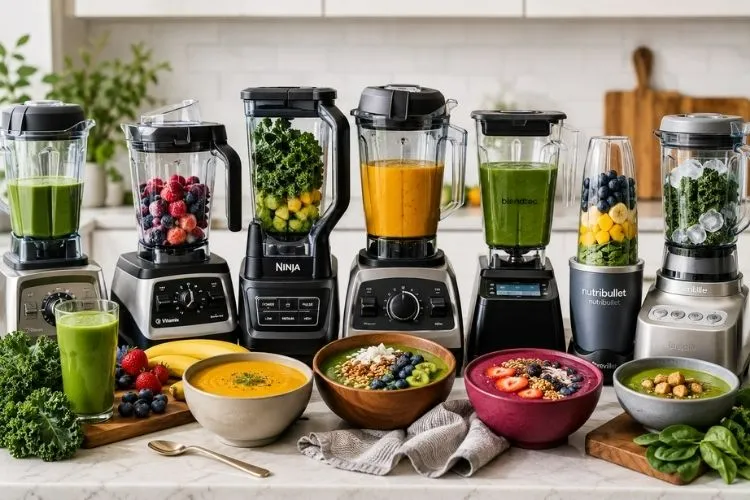
For machines capable of blending kale, seeds, oats, frozen fruit, and protein smoothly, see our guide to the best high-speed blenders for green smoothies.
Does protein matter more as we get older?
Ageing is commonly accompanied by gradual loss of muscle mass and strength.
Adequate protein combined with resistance exercise can help support muscle function and maintenance, although individual needs and medical circumstances vary.
Will these products ship outside the US and UK?
Most of the products in this guide are US or UK brands sold primarily through their own domestic Amazon marketplace. Several listings offer Amazon’s international shipping option to a wider range of countries, though delivery time and shipping cost will be higher than a domestic order.
European buyers concerned about cost or delivery speed may prefer The Organic Protein Co, the UK-based option in this guide, or should check current international shipping availability for the specific product and flavor before ordering.
Final Verdict
The Natural Force Organic Grass-Fed Whey is our best overall choice for buyers who tolerate dairy and want a clean, flexible, complete protein that works in both smoothies and ordinary food.
Choose Ora So Lean & So Clean when you want organic plant protein with particularly visible batch testing and no gums, stevia, erythritol, or artificial sweeteners.
The Organic Protein Co Pure Unflavoured Whey is the strongest UK option for people who value a one-ingredient formula and published laboratory results.
Choose Truvani Plant-Based Protein when pleasant flavor and a short organic ingredient list will make you more likely to use the powder consistently.
Orgain Organic Protein Powder is the easiest option to restock almost anywhere, making it a practical everyday choice even if its formula is less minimalist than some others here.
KOS Organic Plant Protein offers a genuinely multi-source amino-complete blend with a useful erythritol-free option for sensitive digestion.
Garden of Life SPORT Organic Protein is the high-protein plant choice for active adults and buyers who value NSF Certified for Sport status.
Garden of Life RAW Organic Meal is the more complete option for days when appetite, cooking, or finishing a normal meal feels difficult.
Finally, Natural Force Organic Collagen Peptides is the optional collagen addition – but not the main protein on which recovery should depend.
The best powder is not necessarily the one with the most superfoods, vitamins, enzymes, or promises.
It is the one that:
- Matches your dietary needs
- Provides a useful amount of protein
- Has transparent ingredients
- Shows meaningful quality testing
- Tastes mild enough to use regularly
- Fits naturally into real food
- Supports rather than replaces a varied diet
During recovery, simplicity can be a genuine strength.
A scoop blended with berries, kale, oats, soy milk, or tofu may make breakfast feel possible on a day when preparing a full meal does not.
That is where protein powder earns its place: not as a miracle cure, but as a practical way to help nourishment happen.